

The Epistle To The Romans combines the occasional character of an early Christian letter with extended theological argument concerning law, the Law, covenant, sin, salvation, and the relation between Jews and Gentiles. Written probably in the late 50s AD, and during Paul’s stay in Corinth, the letter was addressed to Christian communities in Rome which Paul had not himself founded. Unlike several of his other letters, Romans was not written primarily in response to a specific local crisis already familiar to him. Instead, it functions partly as an introduction to his teaching and partly as an attempt to address tensions emerging within mixed Jewish / Gentile communities in the imperial capital [ … ]
Saint Paul
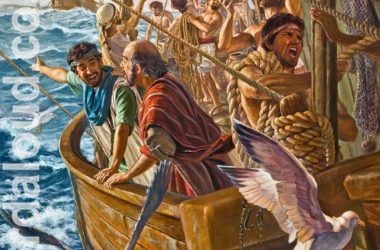
‘I Have Not Shunned To Declare Unto You All The Counsel Of God’ | Saint Paul | Acts 20
Acts chapter 20 records the latter stages of Paul’s missionary journeys and contains his farewell address to the elders of the church at Ephesus. The chapter combines travel narrative, ecclesial instruction, pastoral exhortation, and preparation for suffering. Luke presents Paul as a missionary, teacher, pastor, and witness whose ministry is shaped by service, endurance, and obedience to the calling of God [ … ]
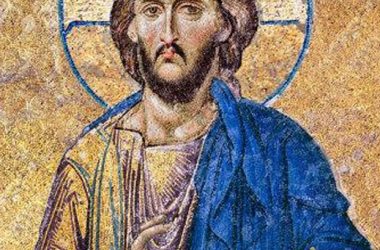
The More Excellent Way | Saint Paul | 1 Corinthians 13
Among all the writings of Saint Paul, few chapters have achieved the universal familiarity of 1 Corinthians 13. Its words are recited at weddings, memorial services, and public ceremonies, yet their familiarity has often obscured their true setting. The apostle did not compose these verses as a meditation upon romance, nor as an isolated hymn to affection; rather, he addressed a divided and vainglorious church whose members had turned spiritual gifts into occasions for rivalry, display, and pride. Into that contentious atmosphere Paul introduces ‘a more excellent way’ (1 Cor. 12:31): the way of charity [ … ]

Saint Paul | Apostle Of The Gentiles | Early Life, Conversion and Ministry | Who Was Saint Paul? | Journey To Damascus | Journeys Of Saint Paul | Acts Of The Apostles
Saint Paul, whose birth name was Saul, was born in Tarsus in the first century. Saint Paul was a member of the Jewish diaspora, meaning that he grew up outside of Palestine, in a community of Jews living in the Roman Empire. This would be in the Hellenic lands, meaning that these were Greek-speaking areas, as such dating from the conquests of Alexander the Great. Saul’s parents were both devout Jews, and he was raised in a strict religious environment that emphasized obedience to the Jewish law and traditions [ … ]