

Christian Art | Mission Of The Disciples
Matthew 10: 1-7 – Week 14 Ordinary Time, Wednesday | King James Audio Bible KJV
1 AND when he had called unto him his twelve disciples, he gave them power against unclean spirits, to cast them out, and to heal all manner of sickness and all manner of disease.
2 Now the names of the twelve apostles are these; The first, Simon, who is called Peter, and Andrew his brother; James the son of Zebedee, and John his brother;
3 Philip, and Bartholomew; Thomas, and Matthew the publican; James the son of Alphæus, and Lebbæus, whose surname was Thaddæus;
4 Simon the Canaanite, and Judas Iscariot, who also betrayed him.
5 These twelve Jesus sent forth, and commanded them, saying, Go not into the way of the Gentiles, and into any city of the Samaritans enter ye not:
6 But go rather to the lost sheep of the house of Israel.
7 And as ye go, preach, saying, The kingdom of heaven is at hand.
Jesus’ great Discourse of the Mission begins in these Gospel verses with the calling together of the twelve disciples and the summative naming of the twelve. These twelve apostles are mandated; they are sent to establish the first foundations of Christ’s Church, and they are empowered by Jesus to exorcise unclean spirits and to heal the sick, to perform the very miracles of Jesus as a sign that the Kingdom of God has come. Through exorcism, the apostles are called to an imitation of Christ, and so in this way to establish the Christian community.
Jesus tells the disciples to confine their mission to the Jews, going nowhere near the Gentiles or the Samaritans. This is to be an exclusively Jewish mission, to call the lost sheep of the people whom God originally chose to be His people. Pearls will not be cast before swine.
As we ask to understand the meaning of this mandate, we are aware of Jesus’ own work with non-Jews, and his journeying to exclusively Gentile territory, and Jesus’ subsequent commandments, including in Matthew’s Gospel, to go and preach the Gospel to all nations, to the whole world. It seems we must relate to one another what might seem contrary injunctions and impulses.
Perhaps we now think of the whole of the Bible, of God’s promises to Abraham, and the long salvation history which followed, as the people of Israel unwittingly moved toward the time when, from them, would come a light for all nations. We might think of the prophets especially, and of the psalms, through which we now are taught how to pray; more broadly, of all the ways in which God spoke in such wise as his words would descend to us. Just as the Old Testament provides the foundation of Christian faith, albeit radically overhauled by Jesus, so the first call of Jesus’ new Church is to the Jewish people.
Beyond this, the call will come for integration. This is one of Matthew’s concerns in relation to his readership, to bring the Jewish Christians and Gentile Christians together, to heal divisions so that all may be one in Christ. Here, distinctions are recognized, while it is also made clear in the Discourse of the Mission that many of the Jewish people will reject Christian teaching. Through this, we are taught to understand that to embrace Christianity raises one to a new reality, in which we transcend such questions of Gentile or Jew.
Concluding Prayer
O God, be gracious and bless us
and let your face shed its light upon us.
So will your ways be known upon earth
and all nations learn your saving help.
Let the people praise you, O God;
let all the people praise you. (Psalm 66/67)

King James Audio Bible | Endnotes
Jesus’ Disciples Are Sent Only To The Jews
Jesus calls his twelve disciples to him and gives them authority to heal the sick and cast out demons. Jesus then sends the twelve out on a mission, but with a specific instruction: ‘Go not into the way of the Gentiles, and into any city of the Samaritans enter ye not: But go rather to the lost sheep of the house of Israel.’ (Matthew 10:5-6 KJV)
This passage clearly indicates that Jesus intended his disciples to focus their ministry on the Jews, and not on Gentiles or Samaritans. The term ‘lost sheep’ is a reference to the Jewish people, who were seen as being in need of spiritual guidance and salvation.
Some may wonder why Jesus would limit his disciples’ ministry in this way. One explanation is that the Jews were God’s chosen people, and that they had a special relationship with him that Gentiles did not. As the Apostle Paul explains in Romans 9:4-5, the Jews were the recipients of ‘the adoption, and the glory, and the covenants, and the giving of the law, and the service of God, and the promises’. In other words, the Jews had a unique spiritual heritage that required special attention and care.
Additionally, it was important for the disciples to focus on the Jews because they were the ones who would ultimately spread the message of Jesus to the Gentiles. As Jesus explains in Acts 1:8: ‘But ye shall receive power, after that the Holy Ghost is come upon you: and ye shall be witnesses unto me both in Jerusalem, and in all Judaea, and in Samaria, and unto the uttermost part of the earth.’ In other words, the disciples needed to start with the Jews in order to prepare for the broader mission of spreading the Gospel to all nations.
Christian leaders have wrestled with the question of why Jesus sent his disciples only to the Jews. Some have argued that this was simply a practical decision, based on the fact that the disciples themselves were Jewish and would be most effective in reaching their own people. Others have suggested that it was a matter of divine providence, and that God had a specific plan for the Jews that required their attention and care.
Saint John Chrysostom, prominent early Christian theologian and Archbishop of Constantinople, argued that Jesus’ decision to focus on the Jews was based on the fact that they were in a state of spiritual darkness and needed to be brought into the light of Christ. He also suggested that the Jews were more receptive to the message of Jesus because of their familiarity with the prophetic tradition of the Old Testament.
Martin Luther, 16th Century Protestant reformer, also had thoughts on the matter. In his commentary on Matthew 10, Luther suggested that Jesus’ instructions to the disciples were primarily intended to teach them humility and obedience. He argued that the disciples needed to learn to follow Jesus’ instructions even when they didn’t fully understand them, in order to build their faith and trust in him.
In more recent times, Pope Benedict XVI has also addressed the question of why Jesus sent his disciples only to the Jews. In his book Jesus Of Nazareth, Pope Benedict argues that Jesus’ ministry was focused on restoring the unity of the people of God, which had been broken by sin. Pope Benedict suggests that by focusing on the Jews, Jesus was working to heal the divisions within the people of Israel and restore them to a right relationship with God.



In the Garden of Gethsemane, Jesus humbly surrendered his own desires to trust in God’s plan. Let us learn from Jesus’ example and place our trust in God, knowing that His plan is always best [ … ]
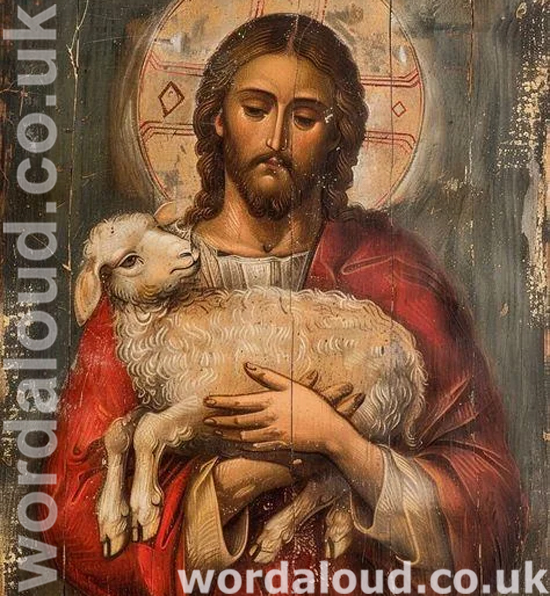
Saint Augustine develops his teaching on pastoral responsibility by focusing on how shepherds should address the realities of suffering and temptation in the Christian life. He begins with the principle from Hebrews 12:6: “God chastises every son whom he acknowledges.” This verse provides both warning and reassurance: chastisement is not a sign of rejection but of belonging, since even Christ, though sinless, endured suffering in the flesh. By sharing in discipline, the faithful are confirmed as adopted children of God and coheirs with Christ [ … ]

Saint Augustine turns to one of the most searching truths about prayer: that we do not always know what to ask of God. This confession, drawn from Saint Paul’s words in the Letter to the Romans, does not express ignorance of the Lord’s Prayer, but humility before the mystery of divine providence. Prayer is not the confident manipulation of outcomes but the surrender of the will into the wisdom of God [ … ]
