
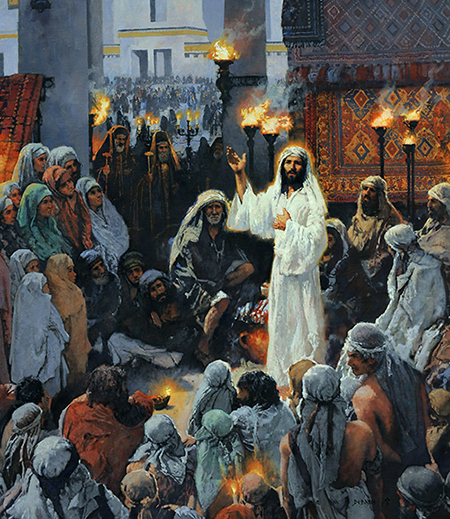
Christian Art | Jesus In Jerusalem
John 7: 1-2, 10, 25-30 – Lent Week 4, Friday (Audio Bible KJV, Spoken Word)
1 AFTER these things Jesus walked in Galilee: for he would not walk in Jewry, because the Jews sought to kill him.
2 Now the Jews’ feast of tabernacles was at hand.
10 ¶ But when his brethren were gone up, then went he also up unto the feast, not openly, but as it were in secret.
25 Then said some of them of Jerusalem, Is not this he, whom they seek to kill?
26 But, lo, he speaketh boldly, and they say nothing unto him. Do the rulers know indeed that this is the very Christ?
27 Howbeit we know this man whence he is: but when Christ cometh, no man knoweth whence he is.
28 Then cried Jesus in the temple as he taught, saying, Ye both know me, and ye know whence I am: and I am not come of myself, but he that sent me is true, whom ye know not.
29 But I know him: for I am from him, and he hath sent me.
30 Then they sought to take him: but no man laid hands on him, because his hour was not yet come.
John’s teaching of the journeys Jesus makes is more complete than the other Gospels. According to the other Gospels, Jesus travels only once to Jerusalem, when he goes to be crucified. According to John, Jesus travels at least two or three times to Jerusalem for the Feast of the Passover. This gives us the approximation of the duration of Jesus’ public life as being three years.
Christ’s is a progressive revelation through the Gospel of John, as he teaches the truth about himself to his disciples and the people. It has reached the point when the Jews wish to kill him. We recall with sadness the division, by the time John is writing, between the Jews and the Christians, and the anti-Semitism which is with us to this day. We remember that Christ is a Jew; he is born, he lives and he dies as a Jew. His formation was through Jewish religion and Jewish culture.
The people are confused, because they know where on earth Christ comes from, while according to Isaiah’s prophecy (Isaiah 53: 1-9), the Messiah’s origin would be unknown. Jesus tells them that they do indeed know him superficially, but their knowledge does not extend to the truth of his divinity and to God the Father. He asserts that he is from God the Father and that he is with him, that he is the Son of God and equivalent with the Father. This, to the Jews, is an outrageous blasphemy.
Nevertheless, they cannot lay hands on Christ. It is not for them to choose when Christ will suffer and die. It is for Christ to know the proper time when he will allow himself to be put to death.
‘It is an excellent thing, brothers, to go from one feast to another, to pass from one prayer to another, to advance from the keeping of one feast or solemnity to another. We are very near now to that time which is for us a new beginning, the commencement of the blessed Passover in which the Lord was sacrificed. We feed as on the food of life, and with his precious blood as from a fountain we always delight our souls. Nevertheless, our thirst and burning desire are never satisfied. But our Saviour is ready for those who are thirsty, and for his love he brings to this festival day those who thirst in their hearts, as he himself, our Saviour, told us, ‘If anyone thirsts, let him come to me and drink.’ St Athanasius


Audio Bible KJV | Endnotes
What Is The Feast Of Tabernacles?
The Feast of Tabernacles, also known as Sukkot, is one of the three major Jewish festivals. It is a seven-day celebration that takes place in the fall, typically in late September or early October.
The Feast of Tabernacles has both agricultural and historical significance. Agriculturally, it celebrates the fall harvest and the gathering of crops. Historically, it commemorates the Israelites’ time in the wilderness during the Exodus from Egypt, where they lived in temporary shelters or booths called sukkot.
The Feast of Tabernacles is one of the most joyous and festive celebrations in the Jewish calendar. It is a time for families and friends to gather together, share meals, and exchange gifts. The festival has a unique atmosphere, with streets and courtyards bustling with people, music, and dancing. The sukkot, the temporary dwellings built for the festival, are decorated with colorful fabrics, flowers, and fruit.
During the week-long celebration, there are daily rituals and customs. One of the most significant is the daily waving of the Four Species. The palm frond, myrtle branches, willow branches, and etrog are held together and waved in all directions, symbolizing God’s presence and sovereignty over all creation. The waving of the Four Species is accompanied by reciting special prayers and psalms.
Another important ritual is the water-drawing ceremony. During the festival, the Temple priests would draw water from the Pool of Siloam and pour it onto the altar in the Temple, symbolizing the blessings of rain and water from God. This ceremony was accompanied by singing, dancing, and music, creating a festive and joyful atmosphere.
In John 7, we see Jesus attending the festival in secret, not wanting to draw attention to himself. However, he eventually begins teaching in the Temple, attracting the attention of the religious authorities. Jesus’ teachings during the festival focused on his identity as the Son of God and the source of living water, which was a clear reference to the water-drawing ceremony. This led to a divided response from the crowd, with some believing in him and others rejecting him.
The Catholic Church recognizes the Feast of Tabernacles as a significant festival, with many of the themes and rituals of the festival appearing in Catholic liturgy and prayer. For example, the waving of the palm fronds on Palm Sunday, the Feast of the Transfiguration, and the Feast of Corpus Christi all have roots in the traditions of the Feast of Tabernacles.
In Protestant theology, the Feast of Tabernacles has been seen as a prophetic foreshadowing of the coming of Christ and the establishment of his kingdom on earth. Many Protestant theologians have linked the water-drawing ceremony to Jesus’ promise of the Holy Spirit in John 7:37-39, where he declares that whoever believes in him will have streams of living water flowing from within them.


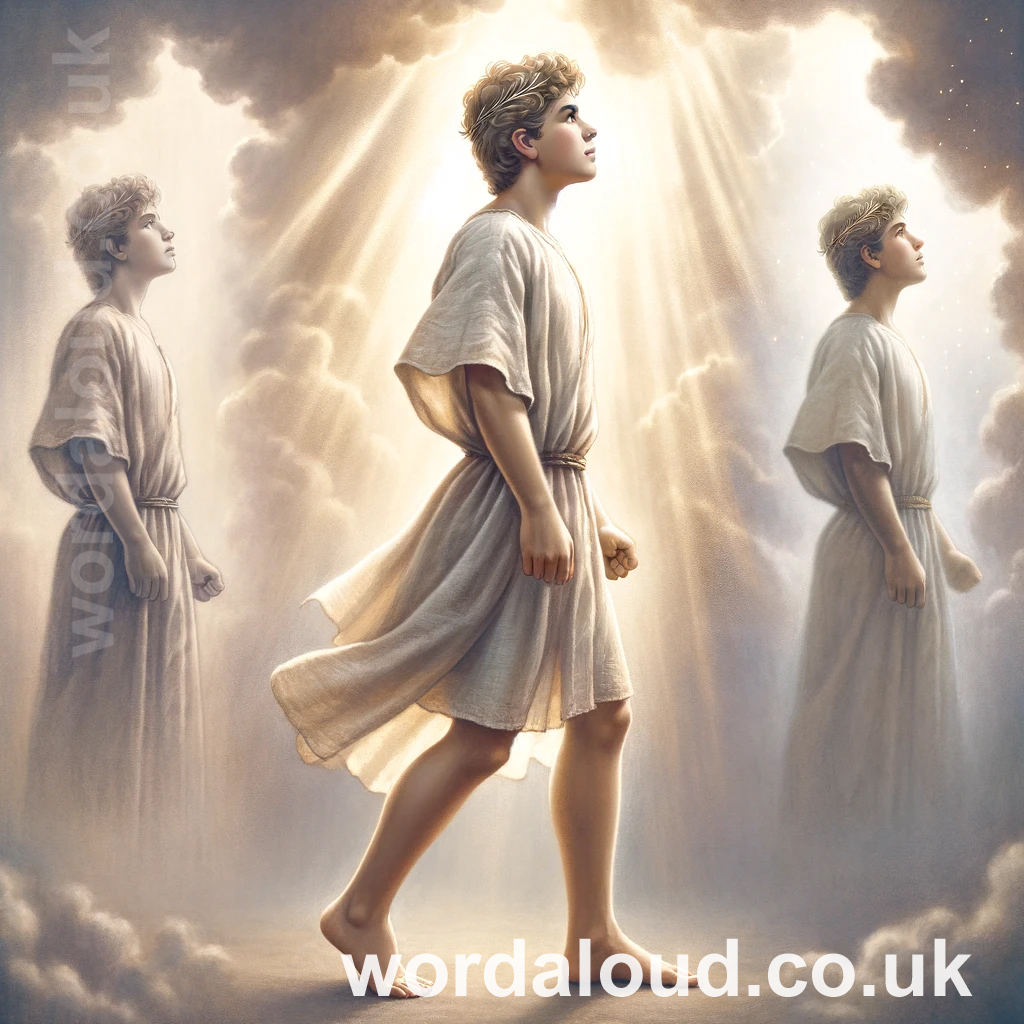
Gospel Reading: Matthew 25:35-36 (KJV) ‘For I was an hungred, and ye gave me no meat: I was thirsty, and ye gave me no drink: I was a stranger, and ye took me not in: Naked, and ye clothed me not: I was sick, and ye visited me not: I was in prison, and ye came unto me not.’ Reflection on the Gospel In these verses, Jesus speaks about compassion and how our actions towards others reflect our love for Jesus. Jesus teaches us that by caring for those in need, we are also caring for Jesus. This passage challenges us to look beyond ourselves and extend kindness and mercy to those around us. Prayer Heavenly Father, I come to you asking for a heart filled with compassion. Help me to see others through your eyes, to feel their pain, and to be moved to action. Teach me to love and care for those who are suffering, just as Jesus did. Let my actions reflect your love and bring comfort to those in need. Thank you for your endless compassion and grace. In Jesus’ name, I pray. Amen. Personal Reflection I think about a time when I was in need and someone showed me compassion. How did it make me feel? Now, I consider a time when I had the opportunity to help someone else. How did my actions impact them? Compassion is more than just feeling sympathy for others; it is about taking action to alleviate their suffering. By practicing compassion, I bring God’s love into the world. Meditation On The Prayer And Gospel Compassion begins with recognizing the humanity in others and responding with love and kindness. Jesus’ words in Matthew 25:35-36 remind me that my treatment of others is a reflection of my relationship with Jesus. This is not only a call to action but an invitation to embody God’s love in my daily life. As I meditate on this prayer, I remember the story of the Good Samaritan. Despite being a stranger, the Samaritan showed great compassion to a wounded traveler, demonstrating the kind of love Jesus calls me to show. This story illustrates that true compassion knows no boundaries and is driven by love. I think about those in my community who are in need. I visualize their faces and hold them in my thoughts. I imagine Jesus standing with me, encouraging me to extend compassion and kindness. I feel the warmth of Jesus’ love as I commit to making a difference in their lives. Compassion is not just about grand gestures but also about small acts of kindness that can transform someone’s day. It involves listening, understanding, and being present for others. As I practice compassion, I become a vessel of God’s grace, reflecting Jesus’ love to those around me. Prayer Lord Jesus, thank you for your example of compassion. Help me to follow your footsteps and show love to those in need. Grant me the strength and courage to act with kindness and mercy. Fill my heart with empathy and understanding, and let your love be evident in all that I do. Amen. Scripture Reading: Colossians 3:12 (KJV) ‘Put on therefore, as the elect of God, holy and beloved, bowels of mercies, kindness, humbleness of mind, meekness, longsuffering;’ Blessing May the compassion of God fill my heart and guide my actions. May His grace empower me to show love and kindness to those in need. Go forth in His love, extending mercy and compassion to all you meet. Amen.
Psalm 107 is a hymn of thanksgiving that celebrates God’s deliverance from distress. The psalm is structured into distinct sections, each depicting a different scenario of trouble and rescue, including wandering in the wilderness, imprisonment, illness, and storms at sea. These narratives symbolize a range of human crises and emphasize the recurring theme of calling out to God in times of trouble and experiencing God’s merciful intervention. The psalm highlights importance of giving thanks to God for His steadfast love and wondrous works. Psalm 107 resonates with universal experience of distress and deliverance, making it relevant across different eras and cultures. Psalm 107 is often interpreted as a reminder of God’s enduring presence and a call to recognize and celebrate God’s involvement in human affairs [ … ]
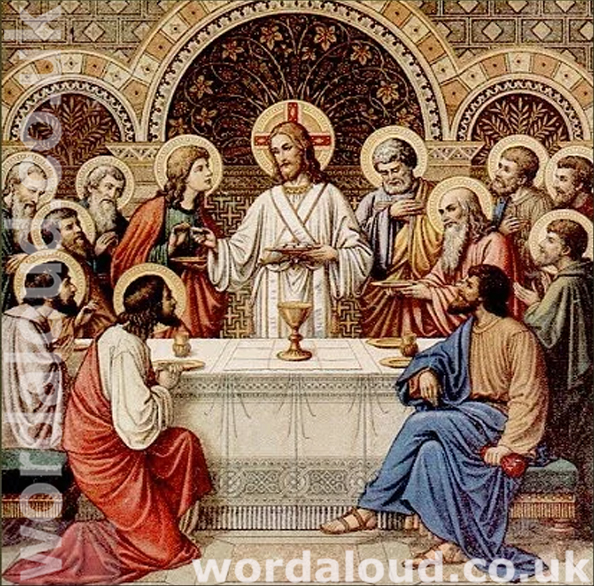
Saint Augustine’s sermon explores the relationship between divine grace and human works. He begins by stressing the importance of living according to what is heard and sung in worship: the word of God should not only be received but should bear fruit in deeds. Hearing is like planting a seed, but only action demonstrates that the seed has grown [ … ]
