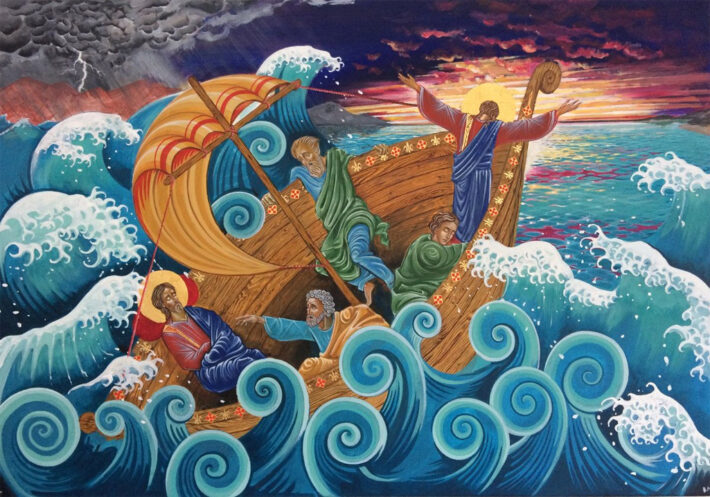
Christian Art | Jesus Calms The Storm
Mark 4: 35-41 – Week 3 Ordinary Time, Saturday – & 12th Sunday(B) (Audio Bible KJV)
35 And the same day, when the even was come, he saith unto them, Let us pass over unto the other side.
36 And when they had sent away the multitude, they took him even as he was in the ship. And there were also with him other little ships.
37 And there arose a great storm of wind, and the waves beat into the ship, so that it was now full.
38 And he was in the hinder part of the ship, asleep on a pillow: and they awake him, and say unto him, Master, carest thou not that we perish?
39 And he arose, and rebuked the wind, and said unto the sea, Peace, be still. And the wind ceased, and there was a great calm.
40 And he said unto them, Why are ye so fearful? how is it that ye have no faith?
41 And they feared exceedingly, and said one to another, What manner of man is this, that even the wind and the sea obey him?
Reading Mark’s Gospel, we have a wonderful sense of just how active and mobile Jesus’ ministry around Galilee was. The words ‘immediately’ and ‘straightway’ recur again and again. There is joy and purpose in these words. There is the sense of astonishment people experienced listening to Jesus. And there is the touch of danger, the revolutionary energy of Jesus, and the plots of his enemies.
In today’s Bible reading, Jesus and his disciples cross the Sea of Galilee. He is alone with his closest disciples, with whom he shares all his teaching. This is intimate. The crowds have been left on the shore, and Jesus is able to take a much needed rest, though there is a flotilla with Jesus’ boat.
Now we receive a lesson in Christian faith. Jesus sleeps and the storm arises. The disciples do not know what to do. They are afraid. And Jesus, when he wakes, makes clear to his disciples that this has been a small test of faith. It is a lesson for all time, when there are struggles and difficulties. Our Christian life is as a ship, and Jesus is here with us. Our faith should be always alert, awake, calming the dangers.


Saint Augustine had this to say about Jesus’ calming the storm in these verses of Mark’s Gospel:
‘By the Lord’s blessing, I will address you upon the lesson of the Holy Gospel which has just been read, and take occasion thereby to exhort you, that against the tempest and waves of this world, faith sleep not in your hearts. “For the Lord Christ had not indeed death nor sleep in His power, and peradventure sleep overcame the Almighty One as He was sailing against His will?” If ye believe this, He is asleep in you; but if Christ be awake in you, your faith is awake. The Apostle saith, “that Christ may dwell in your hearts by faith.” This sleep then of Christ is a sign of a high mystery. The sailors are the souls passing over the world in wood. That ship also was a figure of the Church. And all, individually indeed are temples of God, and his own heart is the vessel in which each sails; nor can he suffer shipwreck, if his thoughts are only good.
‘Thou hast heard an insult, it is the wind; thou art angry, it is a wave. When therefore the wind blows, and the wave swells, the ship is endangered, the heart is in jeopardy, the heart is tossed to and fro. When thou hast heard an insult, thou longest to be avenged; and, lo, avenged thou hast been, and so rejoicing in another’s harm thou hast suffered shipwreck. And why is this? Because Christ is asleep in thee. What does this mean, Christ is asleep in thee? Thou hast forgotten Christ. Rouse Him up then, call Christ to mind, let Christ awake in thee, give heed to Him. What didst thou wish? To be avenged. Hast thou forgotten, that when He was being crucified, He said, “Father, forgive them, for they know not what they do?” He who was asleep in thy heart did not wish to be avenged. Awake Him up then, call Him to remembrance. The remembrance of Him is His word; the remembrance of Him is His command. And then wilt thou say if Christ, awake in thee, What manner of man am I, who wish to be avenged! Who am I, who deal out threatenings against another man? I may die perhaps before I am avenged. And when at my last breath, inflamed with rage, and thirsting for vengeance, I shall depart out of this body, He will not receive me, who did not wish to be avenged; He will not receive me, who said, “Give, and it shall be given unto you; forgive, and it shall be forgiven you.” Therefore will I refrain myself from my wrath, and return to the repose of my heart. Christ hath commanded the sea, tranquillity is restored.
‘Now what I have said as to anger, hold fast as a rule in all your temptations. A temptation has sprung up; it is the wind; thou art disturbed; it is a wave. Awake up Christ then, let Him speak with thee. “Who is this, since the winds and the sea obey Him?” Who is this, whom the sea obeyeth? “The sea is His, and He made it.” “All things were made by Him.” Imitate the winds then, and the sea rather; obey the Creator. At Christ’s command the sea giveth ear; and art thou deaf? The sea heareth, and the wind ceaseth: and dost thou still blow on? What! I say, I do, I devise; what is all this, but to be blowing on, and to be unwilling to stop in obedience to the word of Christ? Let not the wave master you in this troubled state of your heart. Yet since we are but men, if the wind should drive us on, and stir up the affections of our souls, let us not despair; let us awake Christ, that we may sail on a tranquil sea, and so come to our country. “Let turn to the Lord.”’
Concluding Prayer
Give us perfect peace, Lord,
so that we may delight in serving you
all the days of our life,
and at the last, with our Lady’s help,
come safely to your presence.
Through Christ our Lord.


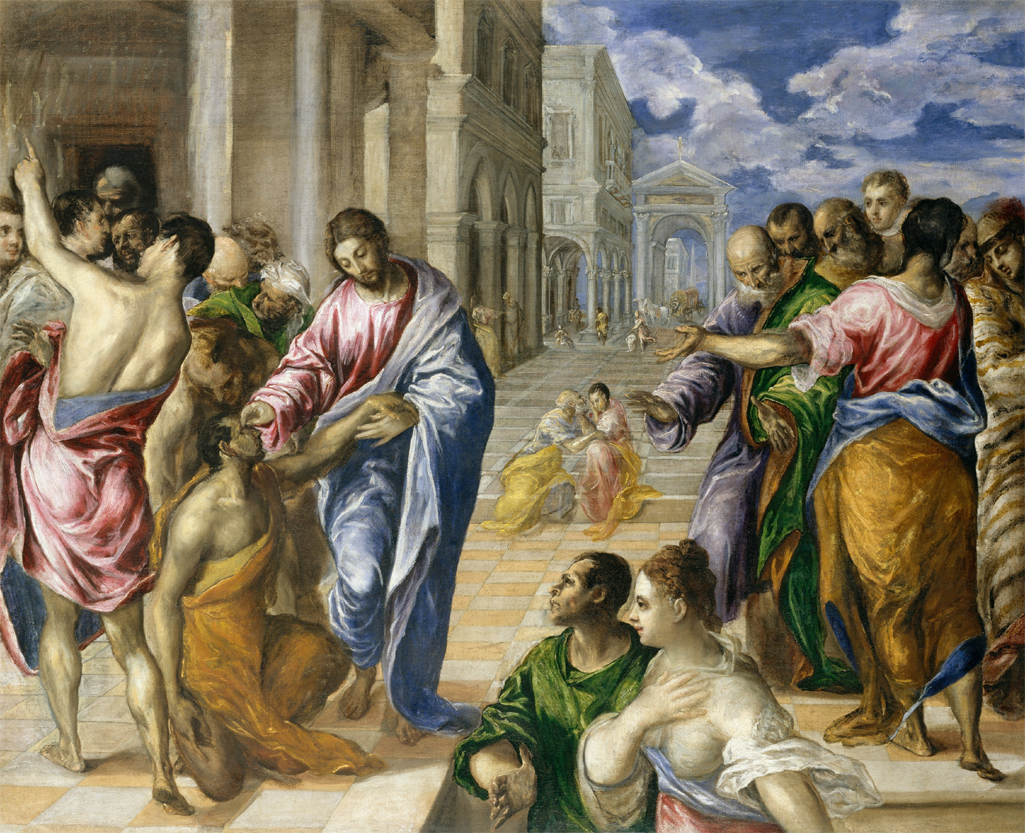
As Jesus died on the cross he would have looked like a leper. He had been scourged. Front and back, his skin would have been a bloody mess of welts, cuts and bruises. Being himself without sin, he died in the image of some of those most abject whom he came to save. Truly the self-sacrifice of our Lord was complete and extreme [ … ]
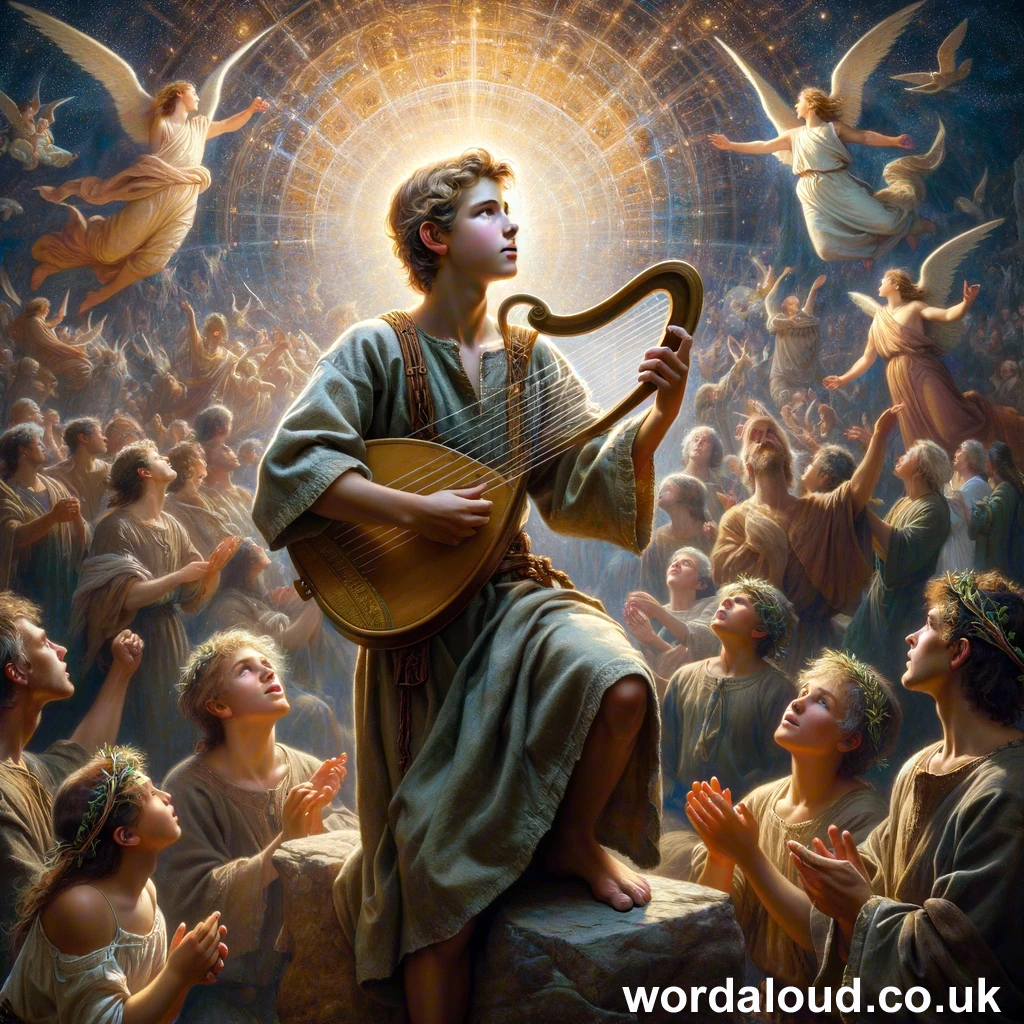
Psalm 150 concludes the Book of Psalms; a doxological finale, the psalm encapsulates essence of worship and praise. This psalm, concise yet profound in scope, commands praise for God across various mediums and settings, emphasizing universality and diversity of worship. The psalm is both capstone to the psalter and an invitation to all of creation to join in a chorus of adoration for God [ … ]

Origen reflects on the petition ‘Thy kingdom come’ as a request not for an external spectacle but for an interior reality. He begins with Christ’s teaching that the kingdom does not arrive with visible signs, for it is ‘within us and in our hearts’. With this, Origen redirects attention away from expectation of outward change and towards the inner life in which God’s reign is established through grace. The prayer for the kingdom is therefore a prayer for transformation: that God’s life may take root, grow, and reach its intended fullness within the believer [ … ]