
Christian Art | George Herbert | The Temple | The Church | Antiphon (1)
George Herbert | The Temple | The Church | Antiphon (1)
Chorus
Let all the world in ev’ry corner sing,
My God and King.
Verse
The heav’ns are not too high,
His praise may thither flie:
The earth is not too low,
His praises there may grow.
Chorus
Let all the world in ev’ry corner sing,
My God and King.
Verse
The church with psalms must shout
No doore can keep them out:
But above all, the heart
Must bear the longest part.
Chorus
Let all the world in ev’ry corner sing,
My God and King

George Herbert | The Temple | The Church | Antiphon (1)
The poem emphasizes universality and inclusivity of divine worship, suggesting that the entire world resounds with praise for God. The refrain, ‘Let all the world in every corner sing, / My God and King,’ creates a communal call to worship through the poem.
In the first verse, Herbert observes that no part of creation is too remote to participate in this act of praise. The ‘heavens are not too high’ implies that even loftiest parts of existence are within reach of God’s presence and praise. That the earth is ‘not too low’ suggests that God’s praise can flourish in every humble or hidden corner of the world. By connecting heaven and earth through praise, the poem knows that the divine is omnipresent and accessible, wherever one may be.
The second verse shifts focus to the Church as a collective body of worship; there is power of song to transcend physical barriers. ‘No door can keep them out.’ This implies that spiritual praise cannot be confined or silenced, no matter attempts to contain it. However, the poem underscores that genuine worship must ultimately be seated in the heart, as ‘the heart / Must bear the longest part’. This phrase suggests that while communal worship is important, the enduring and most meaningful aspect of worship is the individual, heartfelt devotion of each individual believer. We are all individuals with God.
By juxtaposing physical spaces – heavens, earth, the Church – with spiritual commitment of the heart, the poem presents worship as an act that is both outwardly communal and deeply personal. The refrain, which binds each verse, reinforces the idea that this praise is both continuous and unending, a shared endeavour that is boundless across place and person.



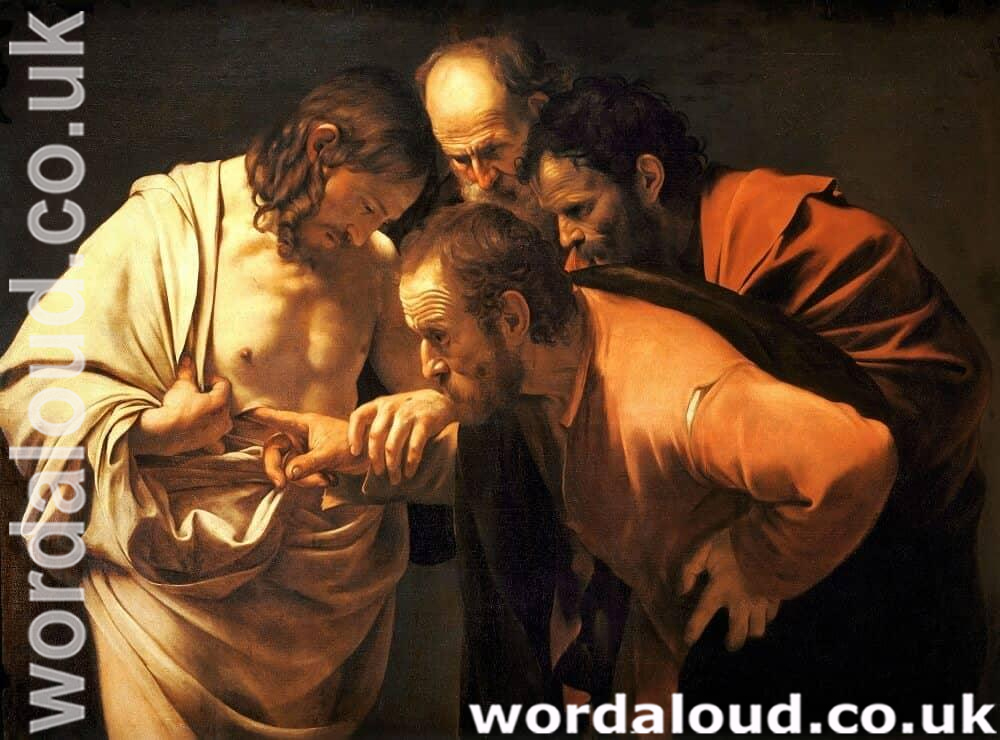
There is something deeply human about Thomas the Apostle. He is not content with hearsay, not satisfied with the testimony of others, even those closest to him. “Unless I see… unless I touch… I will not believe.” His words are often remembered as a failure—but they may also be understood as a kind of honesty. Thomas refuses to pretend [ … ]
Origen’s homily on the conquest of Jericho is far more than a meditation on ancient Israelite warfare. For Origen, the fall of Jericho symbolizes the decisive triumph of Christ over the world, sin, and spiritual blindness. It is a drama of redemption, where the unlikely heroine, Rahab the prostitute, becomes the image of the Church: redeemed, cleansed, and united to Christ [ … ]
Psalm 112 centralizes the concept of the righteous life. The psalm praises those who fear the Lord and delight in his commandments. This fear is not about being afraid, but about respecting and revering God, and finding joy in following his teachings. This respect for divine commandments sets the stage for a life guided by ethical and moral values [ … ]
