

Christian Art | George Herbert | The Temple | The Church | The Pearl
George Herbert | The Temple | The Church | The Pearl
I know the wayes of learning; both the head
And pipes that feed the presse, and make it runne;
What reason hath from nature borrowed,
Or of it self, like a good huswife, spunne
In laws and policie; what the starres conspire,
What willing nature speaks, what forc’d by fire;
Both th’ old discoveries, and the new-found seas,
The stock and surplus, cause and historie:
All these stand open, or I have the keyes:
Yet I love thee.
I know the wayes of honour, what maintains
The quick returns of courtesie and wit:
In vies of favours whether partie gains,
When glorie swells the heart, and moldeth it
To all expressions both of hand and eye,
Which on the world a true-love-knot may tie,
And bear the bundle, wheresoe’re it goes:
How many drammes of spirit there must be
To sell my life unto my friends or foes:
Yet I love thee.
I know the wayes of pleasure, the sweet strains,
The lullings and the relishes of it;
The propositions of hot bloud and brains;
What mirth and musick mean; what love and wit
Have done these twentie hundred yeares, and more:
I know the projects of unbridled store:
My stuffe is flesh, not brasse; my senses live,
And grumble oft, that they have more in me
Then he that curbs them, being but one to five:
Yet I love thee.
I know all these, and have them in my hand:
Therefore not sealed, but with open eyes
I flie to thee, and fully understand
Both the main sale, and the commodities;
And at what rate and price I have thy love;
With all the circumstances that may move:
Yet through the labyrinths, not my groveling wit,
But thy silk twist let down from heav’n to me,
Did both conduct and teach me, how by it
To climbe to thee.


George Herbert | The Temple | The Church | The Pearl
George Herbert’s poem reflects a spiritual reckoning with limitations of human pursuits in comparison to the inexhaustible worth of divine love. Herbert moves through an intricate meditation on human achievement—learning, honour, and pleasure—before affirming God as the ultimate object of devotion. The poem’s intellectual rigor and devotional focus are balanced by its reflective tone, and its structure underscores a process of realization: worldly endeavours, no matter how noble, ultimately fall short of the divine.
In the opening stanza, Herbert addresses the realm of learning. He claims mastery over human knowledge, from the natural sciences to philosophy and history: ‘I know the ways of learning; both the head / And pipes that feed the press.’ The ‘pipes’ suggest the mechanisms of intellectual dissemination, as if Herbert were privy to the very systems through which knowledge flows. The inclusion of ‘the stars conspire’ and ‘what forced by fire’ indicates familiarity with celestial and terrestrial phenomena alike. Yet the stanza ends with a profound concession: ‘Yet I love thee.’ This refrain, repeated throughout the poem, highlights the insufficiency of learning when placed beside the love of God. Herbert’s knowledge, vast as it is, does not provide the fulfilment he finds in divine communion.
The second stanza shifts focus to the domain of honour and social accomplishment. Herbert demonstrates an acute understanding of the social exchanges and emotional investments that sustain relationships: ‘How many drams of spirit there must be / To sell my life unto my friends or foes.’ The metaphor of selling underscores the transactional nature of social honour, reducing even profound acts of loyalty or sacrifice to exchanges measured in ‘spirit’. While such honour can bind people together, Herbert’s speaker identifies a tension within it. Honour, he suggests, relies on external validation, which pales in comparison to the self-sufficiency of divine love. The refrain—’Yet I love thee’—places this love as the central guiding force, one that supersedes the fleeting affirmations of worldly recognition.
The third stanza confronts the allure of sensory pleasure. Herbert acknowledges the depth of human appetites: ‘The lullings and the relishes of it; / The propositions of hot blood and brains.’ Herbert’s tone here is not dismissive but almost confessional, reflecting the vividness of earthly pleasure. By admitting that ‘my stuff is flesh, not brass; my senses live’, Herbert emphasizes the tension between spiritual aspiration and physical reality. This stanza is particularly resonant in its treatment of human weakness; Herbert does not claim to transcend his bodily nature but rather admits its limitations. Yet even as the body tempts and challenges, the refrain—’Yet I love thee’—reaffirms Herbert’s choice to prioritize God over ephemeral joys.
The final stanza moves beyond enumeration to resolution. Here, Herbert portrays his devotion to God as an informed, deliberate act: ‘Not sealed, but with open eyes.’ Herbert rejects the idea of blind faith, presenting love for God as a conscious, reasoned decision. The metaphor of the labyrinth conveys the complexity of navigating life’s challenges, but the image of ‘thy silk twist let down from heaven’ transforms the labyrinth from a place of entrapment to a path of divine guidance. This imagery highlights the role of grace, which ‘conduct[s] and teach[es]’ Herbert, making possible the ascent to God.
The poem’s refrain—’Yet I love thee’—grounds Herbert’s reflections, providing a unifying thread that weaves through each exploration of human endeavour. This repetition signals an unshakable commitment to God, even as Herbert grapples with the temptations and distractions of worldly pursuits. The balance Herbert achieves between acknowledging human frailty and affirming divine sufficiency is one of the poem’s most striking qualities. It is not Herbert’s accomplishments, knowledge, or strength that bring him to God but rather the recognition of his dependence on divine grace. This dependence is not passive; it requires the active choice to ‘climb to thee.’
In Herbert’s portrayal, divine love is not an abstraction but a concrete presence that reshapes Herbert’s understanding of all other pursuits. Learning, honour, and pleasure are not dismissed as unworthy but are placed in their proper context—as incomplete without God.



In the Sermon on the Mount, Jesus preached a message of love and acceptance. He called everyone to a new way of being, which would be true to God’s will. As the narrative account continues from chapter eight through nine, we see Jesus putting into practice the lessons he has taught. Jesus accepts lepers, foreigners, women, the sick, the possessed, paralytics, the unclean, and now a tax collector [ … ]
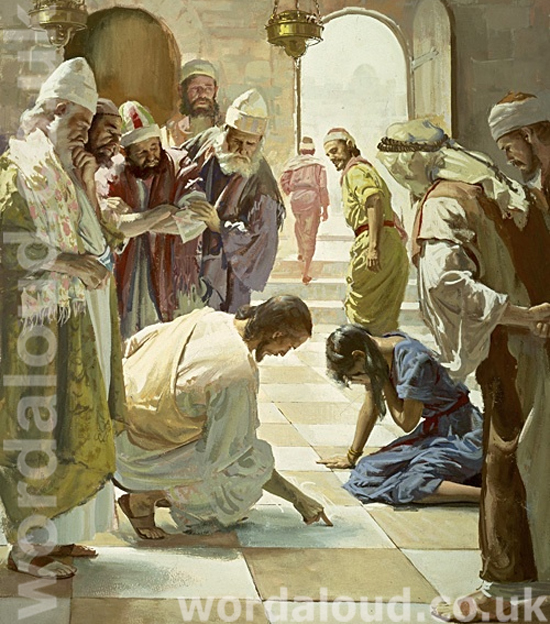
In this passage, Saint John Chrysostom sets out five distinct ‘paths’ by which Christians may repent of sin. His approach is notable for its simplicity and accessibility. He does not treat repentance as a single act confined to sacramental confession or to extraordinary ascetical practice, but as a set of daily habits open to every believer, regardless of wealth or circumstance [ … ]

Saint Cyril of Jerusalem, writing in the fourth century, speaks with a clarity and breadth that remains strikingly relevant for the Church today. In this catechetical excerpt, drawn most likely from his Catecheses delivered to those preparing for baptism, Cyril undertakes a profound reflection on what it means for the Church to be both Catholic and the assembly of God’s people. His insight provides not only a robust theological definition, but a spiritually rich vision of what it means to belong to the Church of Christ [ … ]
