

Dear Saint Winifred, Guide us on our spiritual journey. Help us to remain steadfast in our faith and to follow the path of righteousness. Inspire us with your example of dedication and piety. May we find strength in your intercession and comfort in your holy presence. Amen.
Early Life And Vocation
Saint Winifred, also known as Saint Winefride, was born in the 7th century in Wales. She was the daughter of a chieftain named Tyfid ap Eiludd. From a young age, Winifred was devoted to her faith, choosing a life of piety and religious dedication. She was greatly influenced by her uncle, Saint Beuno, a renowned Welsh saint and abbot, who played a significant role in her spiritual education.
The Legend Of Her Martyrdom
According to legend, Winifred was pursued by a local prince named Caradog, who sought her hand in marriage. When she refused his advances in favor of her religious vows, Caradog became enraged and beheaded her. Miraculously, where her head fell, a spring of pure water gushed forth. Saint Beuno is said to have restored her to life, and the spring became known for its healing properties, eventually becoming the site of pilgrimage known as Holywell in Flintshire, Wales.
Monastic Life
After her miraculous recovery, Winifred continued her religious life with renewed vigor. She joined a convent in Gwytherin, where she became the abbess. Her leadership and dedication to the monastic community were exemplary, and she was known for her holiness, wisdom, and commitment to the Rule of Saint Benedict.
Veneration And Legacy
Saint Winifred’s shrine at Holywell has been a place of pilgrimage for centuries, attracting people seeking healing and spiritual solace. Her feast day is celebrated on November 3rd. The spring at Holywell is often referred to as the ‘Lourdes of Wales,’ highlighting its significance in Christian devotion. The saint’s relics were translated to Shrewsbury Abbey in the 12th century, further cementing her legacy in both Welsh and English religious traditions.
Prayer And Meditation With Saint Winifred
- Prayer for Healing: ‘O Glorious Saint Winifred, who by the grace of God restored to life and health, intercede for me in my time of need. May your faith and devotion inspire me to trust in the divine mercy and healing of our Lord. Through your intercession, may I find strength and solace in my afflictions, and may God’s healing power flow through me. Amen.’
- Prayer for Faith: ‘Dear Saint Winifred, whose life was a testament to unwavering faith and divine miracles, guide me in my spiritual journey. Help me to cultivate a deep and abiding faith in God’s will, even in the face of trials and tribulations. May your story inspire me to trust in the Lord’s plan and embrace His grace. Amen.’
- Prayer for Perseverance: ‘Saint Winifred, who endured great suffering and was restored by God’s mercy, grant me the strength to persevere in my own challenges. Help me to remain steadfast in my faith and to find comfort in the promise of God’s eternal love and protection. May I draw strength from your example and continue to seek God’s presence in my life. Amen.’
- Meditative Prayer: ‘As I reflect on the life of Saint Winifred, I seek to understand the depths of her faith and the miracles of God’s love. In moments of quiet contemplation, may I feel the presence of Saint Winifred and be inspired by her devotion and purity. Let her story illuminate my path and draw me closer to the heart of Jesus. Amen.’



![<script async src="https://pagead2.googlesyndication.com/pagead/js/adsbygoogle.js?client=ca-pub-9927536161081875"
crossorigin="anonymous"></script>
<!-- In Body Text -->
<ins class="adsbygoogle"
style="display:block"
data-ad-client="ca-pub-9927536161081875"
data-ad-slot="1055374834"
data-ad-format="auto"
data-full-width-responsive="true"></ins>
<script>
(adsbygoogle = window.adsbygoogle || []).push({});
</script>](https://wordaloud.co.uk/wp-content/uploads/2023/09/034-psalm-king-james-audio-kjv-bible-word-aloud-001.jpg)
Psalm 34 expresses faith, gratitude and unwavering trust in the divine providence of the Lord. In the psalm, we encounter celebration of God’s goodness and a resounding call to praise God in all circumstances [ … ]
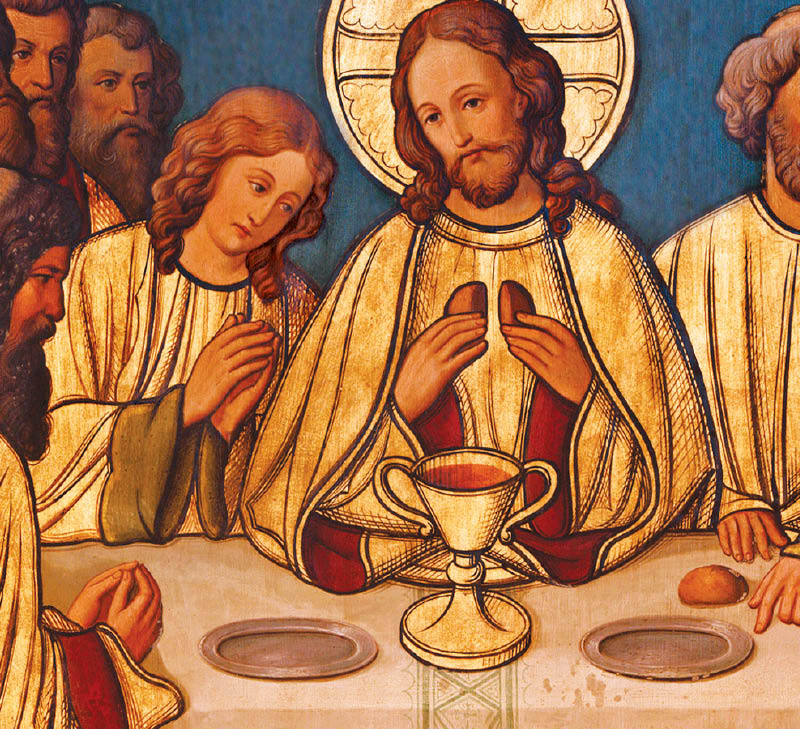
In the Bible, a miracle is an event that is not explicable by natural or scientific laws and is therefore attributed to a divine agency. Miracles are often seen as a sign of the intervention of God in the affairs of human beings. In the Old Testament, the most famous miracles are the Ten Plagues of Egypt, in which God punished the Pharaoh for refusing to release the Israelites from slavery, and the parting of the Red Sea, in which God allowed the Israelites to escape from the pursuing Egyptians by opening a path through the sea. In the New Testament, the miracles of Jesus are a central part of his ministry and are seen as evidence of his divinity. These include healings, such as the restoration of sight to the blind and the raising of the dead, and acts of nature, such as turning water into wine and walking on water. Is There A Theological Significance To Jesus’ Miracles? In the Christian tradition, the miracles performed by Jesus are seen as a manifestation of his divinity and as proof of his authority to teach and heal. Many of these miracles are described in the Gospels of the New Testament, which are the primary source of information about the life and teachings of Jesus. The purpose of the miracles, according to the Gospels, was to demonstrate Jesus’ power over natural forces and to show that he had the authority to forgive sins and offer salvation to those who believed in him. Why Did Jesus Ask To Keep His Miracles Secret? ‘Tell No One Of This.’ In the Gospels, there are a few instances where Jesus tells people not to tell others about what he has done for them. For example, in the Gospel of Matthew, after Jesus healed a man who was possessed by demons, he told the man, ‘See that you tell no one anything, but go, show yourself to the priest and offer the gift that Moses commanded, as a proof to them’ (Matthew 8:4). In this case, it seems that Jesus was concerned that the man’s testimony might not be believed or might be misunderstood, and so he asked him to keep the experience to himself for the time being. It is difficult to say for sure why Jesus might have asked someone to keep quiet about a miracle without knowing the specific context in which the request was made. However, some possible reasons that come to mind include: To avoid drawing unnecessary attention to himself. In the Gospels, Jesus often tries to avoid drawing too much attention to himself, especially from the authorities who are hostile to him. Asking someone to keep quiet about a miracle might be one way of avoiding unwanted attention and allowing Jesus to continue his ministry without interference. To allow the person who was healed to experience the transformation for themselves. In some cases, the person who was healed might have been skeptical or unsure of what had happened to them. Asking them to keep quiet about the miracle might have given them time to reflect on the experience and come to their own understanding of it without being influenced by others. To test the person’s faith. In some cases, Jesus might have asked someone to keep quiet about a miracle as a test of their faith. If they were truly grateful for what Jesus had done for them, they would be willing to follow his instructions and trust that he had a good reason for asking them to keep quiet. These are just a few possible reasons why Jesus might have asked someone to keep quiet about a miracle. It is important to remember that the Gospels are ancient texts and that we must be careful not to impose our own interpretations on them without considering the historical and cultural context in which they were written. To avoid creating conflict or division. In the Gospels, Jesus often encounters people who are skeptical or hostile to his teachings, and he sometimes tries to avoid confrontations with them. Asking someone to keep quiet about a miracle might be one way of avoiding a confrontation or a heated debate that could disrupt his ministry. To avoid being misunderstood or misrepresented. In some cases, the person who was healed might not have understood the full significance of what Jesus had done for them, and they might have tried to explain it in a way that distorted or misrepresented the truth. Asking them to keep quiet might have given Jesus time to explain things to them more fully and help them to understand the true meaning of the miracle. To avoid becoming a spectacle. In the Gospels, there are many instances where people are amazed by the miracles that Jesus performs, and they often try to make him into a kind of celebrity or showman. Asking someone to keep quiet about a miracle might have been one way of avoiding this kind of attention and keeping the focus on the message that Jesus was trying to convey. What Is The Significance Of Miracle Of The Wedding At Cana? In the Christian tradition, the wedding at Cana is significant because it is the first of the miracles performed by Jesus that is recorded in the Gospels of the New Testament. This event is described in the Gospel of John, where it is said that Jesus, along with his mother Mary and his disciples, attended a wedding in the town of Cana. At the wedding, the host ran out of wine, and Mary asked Jesus to help. In response, Jesus turned water into wine, which is seen as a miraculous act that demonstrated his power and authority. In the Gospel of John, after Mary asks Jesus to help with the wine at the wedding in Cana, he replies, “Woman, what does this have to do with me? My hour has not yet come” (John 2:4). This statement is often seen as indicating that Jesus was aware […]

As I meditate upon the love of Jesus Christ, I am struck by its boundlessness and its depth. His love is not limited by time or space, nor is it conditional upon our worthiness. Jesus loves us simply because we are his creation, his beloved children. In Jesus’ love, there is no fear, no judgment, only grace and mercy [ … ]
