

Christian Art | Jesus And His Disciples | A New Commandment I Give Unto You
Office Of Readings | Eastertide Week 4, Thursday | A Reading From The Homilies Of Saint Augustine On Saint John’s Gospel | Jesus And The New Commandment
‘A new commandment I give unto you, that you love one another.’
The Commandment Of Love | New Yet Ancient
Saint Augustine begins by acknowledging a tension in Jesus’ words: how can this commandment be ‘new’ when the command to love one’s neighbour already appears in the Old Law (Leviticus 19:18)? Augustine resolves this paradox by pointing out that it is not merely the instruction to love that is new, but how we are to love: ‘as I have loved you’.
This Christological standard of love redefines and deepens the earlier commandment. In Christ, love is no longer a general moral obligation but a specific, incarnate, and sacrificial love. It is not based on reciprocity, affection, or social duty, but on self-giving, forgiveness, and divine initiative. As Augustine notes, this is a love that ‘renews us’, transforming us into ‘new men’, and making us capable of being heirs of the New Covenant.
The Power Of Love To Renew | The Work Of Grace
For Augustine, this love is not merely moral or emotional—it is ontological and transformative. It changes the one who receives and lives by it. This love ‘renews the patriarchs and prophets of old’, continues to renew the apostles and the Church, and is forming the Bride of Christ—the Church clothed in white, as in the Song of Songs: ‘Who is she who is coming up, clothed in white?’
The ‘newness’ is not chronological, but spiritual: this commandment is ever ancient, ever new, because it is always fresh in the life of grace. It is ‘new’ to the degree that it is lived with new vitality through the Spirit. This reflects Augustine’s broader theology of renewal through charity (caritas)—where love is the principle by which the soul is reformed in the image of God.
The New People Of God | Unity Through Love
Augustine highlights the ecclesial dimension of this love. Love is not merely individualistic; it creates a people, a community, a body. ‘The members of the people of God have a mutual interest in one another,’ he writes, echoing St Paul: ‘If one member suffers, all suffer with it; if one is honoured, all rejoice.’ (1 Corinthians 12:26)
This communion is not sentimental or superficial. It is rooted in Christ’s own self-gift, and lived out as genuine participation in his body. Love thus becomes the bond of unity—the inner logic of the Church’s life. Augustine’s insistence that believers are not to ‘pretend to love’ or ‘love in a merely human way’ stresses that true Christian charity is divine in origin and telos (purpose). It is not about niceness, but about participation in God’s own love, expressed in Christ.
Christ The Source And Model Of Love | ‘As I Have Loved You’
Jesus’ words, ‘Just as I have loved you,’ are central to Augustine’s reflection. Christ loved first, unconditionally, to the point of death—and thus established the norm of Christian love. As Augustine writes: ‘He loved us so that we should love one another.’
This love is not a burden but a gift, one that draws believers into the very life of God. By loving us, Christ ‘bound us to one another in mutual love’ and formed us into a single body—his body—with himself as the Head. Here, Augustine’s theology is profoundly Christocentric and ecclesial: love is the path to unity because it flows from Christ and returns to him. The commandment is therefore both ethical and sacramental, lived out in daily charity and in the life of the Church.
The Fulfilment Of Desire | When God Will Be All In All
Finally, Augustine looks forward to the eschatological fulfilment of this commandment. He writes that God leads us by love ‘to the end that will bring us fulfilment and the true satisfaction of our real desires’. In heaven, where ‘God will be all in all’ (1 Corinthians 15:28), the love we now strive to live will find its full realization.
This hope gives purpose and energy to our present efforts: to love here and now with divine charity is to begin tasting eternity. Augustine’s vision here is one of profound hope and deep realism: love requires conversion and grace, but it is not an ideal beyond reach—it is the very life of God shared with us.

A Reading From The Homilies Of Saint Augustine On Saint John’s Gospel | Jesus And The New Commandment
The Lord Jesus declares that he is giving his disciples a new commandment, that they should love one another: I give you a new commandment: love one another.
But wasn’t this commandment already part of the ancient law of God, where it is written You shall love your neighbour as yourself? Why, then, is it called a new one by the Lord, when it is really so old? Is it new because he has divested us of our old humanity and clothed us with the new? It is true that love renews those who listen to it (or rather, those who act in obedience to it) but it is that particular love which the Lord distinguished from all carnal affection by adding love one another as I have loved you.
This is the love that renews us, making us new men, heirs of the New Testament, singers of the new song. It was this love, my beloved brethren, that renewed the patriarchs and prophets of old, and later renewed the blessed apostles. This is the love that is now renewing the nations, and from among the universal race of man, which overspreads the whole world, is making and gathering together a new people, the body of the newly-married spouse of the only-begotten Son of God. Of her the Song of Songs says, Who is she who is coming up, clothed in white? Clothed in white because she has been renewed; and how else can she have been renewed but by the new commandment?
Because of this, the members of the people of God have a mutual interest in one another; and if one member suffers then all the members suffer with it; and if one member is honoured then all the members rejoice with it. For this they hear and this they observe: I give you a new commandment: love one another: not as people who pretend to love in order to corrupt one another, nor indeed as people love one another genuinely but in a human way. Rather, they love one another as those who belong to God. All of them are children of the Most High and consequently brethren of his only Son. They share with each other the love with which he leads them to the end that will bring them fulfilment and the true satisfaction of their real desires. For when God is all in all, there is no desire that is unfulfilled.
This love is bestowed on us by him who said, Just as I have loved you, you also must love one another. He loved us so that we should love one another. By loving us he bound us to one another in mutual love, and by this gentle bond united us into the body of which he is the most noble Head.
Glossary Of Terms
New commandment
Refers to Jesus’ instruction in John 13:34 that his followers are to love one another as he has loved them—a love characterized by self-sacrifice and divine charity.
Old Law
The Mosaic Law from the Old Testament, particularly the commandment to “love your neighbour as yourself” (Leviticus 19:18), which Jesus deepens and transforms.
New Testament / Covenant
The new relationship between God and humanity established through Jesus Christ, marked by grace, faith, and love, superseding the Old Covenant.
Carnal affection
Love or emotional attachment based primarily on physical or earthly desire rather than spiritual or divine love.
Ecclesial
Pertaining to the Church, derived from the Greek ekklesia, meaning “assembly” or “called-out people.”
Body of Christ
A central metaphor in Christian theology describing the Church as a living, spiritual body united in and under Christ, who is its head.
Bride of Christ
A biblical and theological image of the Church, emphasizing its intimate, faithful, and covenantal union with Christ.
Mutual interest in one another
The idea that members of the Church share each other’s joys and sufferings, as described by Paul in 1 Corinthians 12:26.
Pretend to love
Hypocritical or false affection; love that is not genuine, often serving self-interest rather than reflecting God’s love.
Children of the Most High
A title for Christians, emphasizing their spiritual adoption by God through Christ and their resulting kinship with one another.
God is all in all
A reference to the ultimate fulfilment of God’s plan (1 Corinthians 15:28), when God’s presence will be the source of all joy and reality.
Head of the Body
Refers to Christ’s role as the source of life, authority, and unity for the Church, his mystical body.
Gentle bond
The spiritual connection that unites believers—not by compulsion, but through shared love in Christ.
Eschatological fulfilment
The complete realization of God’s promises at the end of time—eternal life, resurrection, and perfect communion with God.



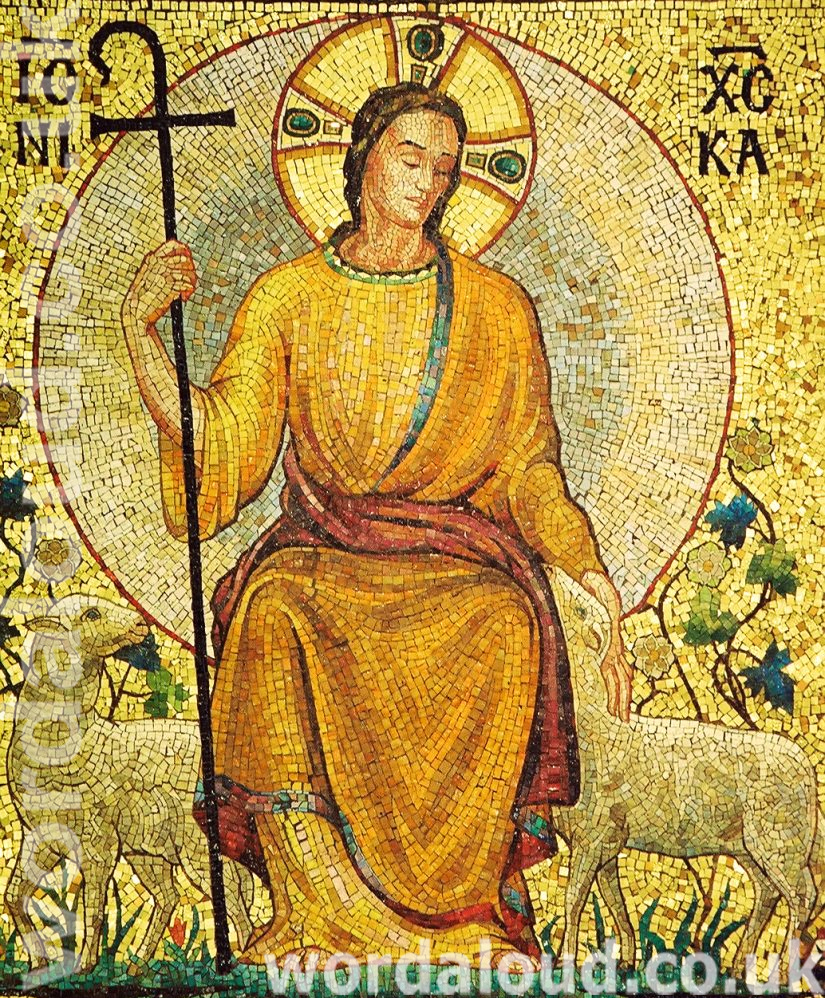
In his sermon, Saint Augustine turns again to the responsibilities of Christian pastors, drawing his example from the Apostle Paul. The passage is shaped by Paul’s words in his letter to the Philippians (Philippians 4:10–20), written from prison, in which he acknowledges the gifts sent by the community. Augustine highlights Paul’s dual emphasis: while grateful for material help, Paul’s deeper joy lies in the spiritual fruit shown by the generosity of the Philippians [ … ]

The publicans (tax collectors) and other sinners are drawn to hear Jesus’ teaching. Perhaps they feel Jesus offers hope to them especially. While the scribes and Pharisees, despising sinners, find Jesus behaviour as he mixes with such people to be utterly objectionable, Jesus receives all humanity with love, understanding and, where there is faith and repentance, forgiveness. It is as if the people know that they are not condemned but can be accepted by Jesus. He offers them hope [ … ]
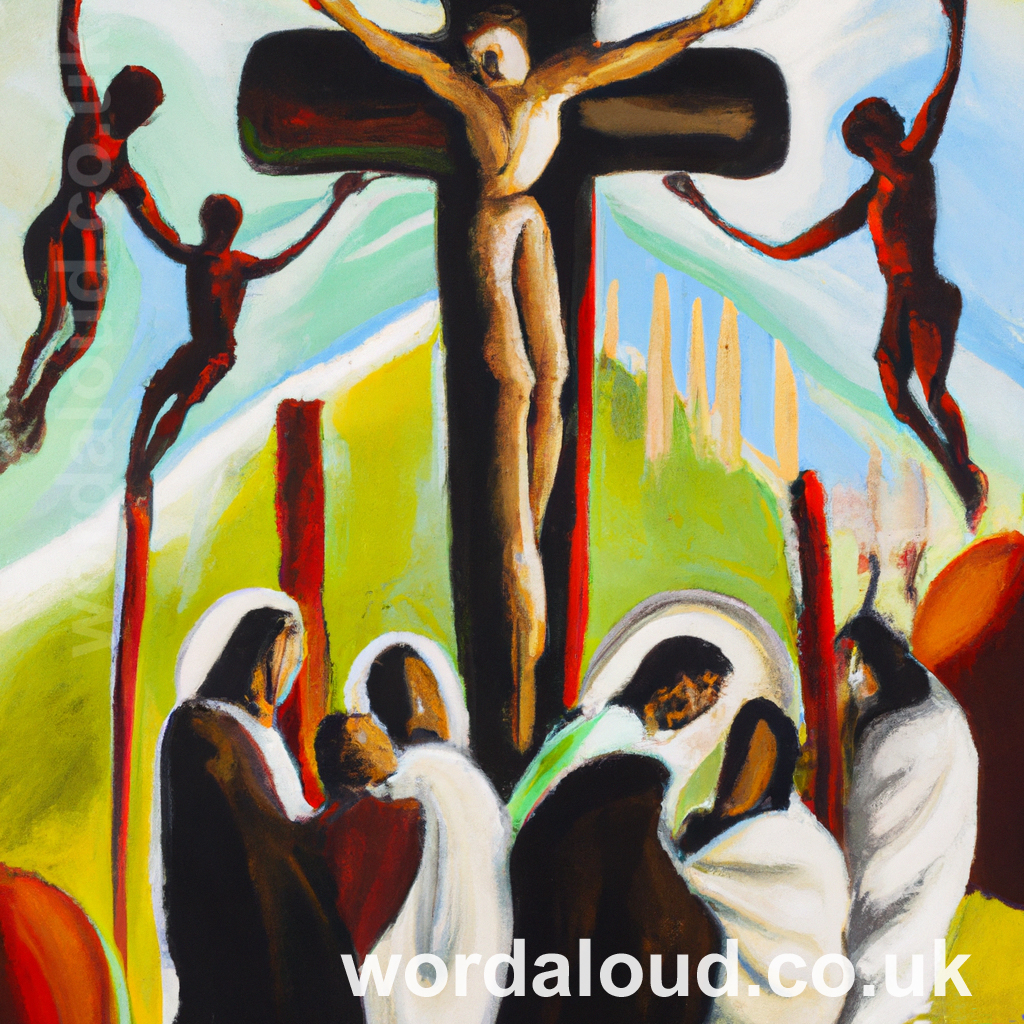
Explore the rich history and meaning behind Psalm 51(/50), a central text in the Christian religion. Discover different interpretations and the role of faith, prayer, and Bible study in understanding this revered psalm [ … ]
