Christian Art | The Holy Spirit At Pentecost | Prayer
Office Of Readings | Eastertide Week 7, Wednesday | A Reading From The Constitution Of The Second Vatican Council On The Church | The Mission Of The Holy Spirit
‘On the mission of the Holy Spirit in the Church.’
The Holy Spirit Was Sent At Pentecost
This passage from Lumen gentium, the Dogmatic Constitution on the Church promulgated at the Second Vatican Council, is a profound exposition on the life-giving, unifying and guiding presence of the Holy Spirit in the Church. It articulates not only doctrinal truths about the Spirit’s nature and mission but also gives pastoral encouragement to the faithful to discern and receive the Spirit’s activity in their lives.
The constitution begins by affirming that the Holy Spirit was sent at Pentecost, not merely as a final act of Christ’s mission, but as the beginning of a new age in the Church. The Spirit is described as the one who ‘sanctifies the Church unceasingly’ — not just on one historic occasion but continuously, enabling believers to access the Father ‘through Christ in the one Spirit’. This Trinitarian emphasis is vital: all Christian life and prayer is directed to the Father, through the Son, in the Spirit.
The Spirit is the ‘fountain of water welling up to give eternal life’, drawing from Christ’s words in John’s Gospel (Jn 4:14). This rich imagery of life-giving water invites reflection on the regenerative grace of baptism and the sustaining presence of the Spirit in the sacramental life of the Church. The phrase evokes not only vitality and freshness but constancy — an unceasing wellspring of divine life.
Jesus Sends The Holy Spirit To The Church
Moreover, the Spirit is said to ‘dwell in the Church and in the hearts of the faithful as in a temple’, echoing Pauline theology (cf. 1 Cor 3:16; Rom 8:9–11). This indwelling points to both the communal and personal dimensions of holiness: the Church as the Body of Christ, and the individual believer as the ‘temple of the Holy Spirit’. It is the Spirit who ‘prays in them’, as Romans 8:26 declares, and who ‘bears witness’ to their divine adoption — another deeply Pauline motif. Through this divine indwelling, the Spirit creates a new identity for the faithful: not merely followers, but sons and daughters of God.
The unity of the Church is shown to be a direct consequence of the Spirit’s action: he ‘leads the Church into all truth’ and provides ‘unity in communion and in service’. The Holy Spirit, while fostering diversity through a range of gifts, ministries and charisms, ultimately builds up one Church. The document’s reference to the ‘hierarchical and charismatic gifts’ reminds us that both institutional structure and spontaneous spiritual grace are expressions of the same Spirit. This insight, revitalized at Vatican II, helps to heal false dichotomies between order and freedom, office and inspiration.
Unity In Jesus In Christian Faith
The Spirit’s work is not static but dynamic: by ‘the power of the Gospel’ he makes the Church ever young, ever renewed, and always in expectation of the coming of the Lord. The citation ‘The Spirit and the Bride say to the Lord Jesus: ‘Come!’’ (cf. Rev 22:17) places this mission within an eschatological horizon. The Church is not merely preserving a tradition but yearning for the fulfilment of all things in Christ.
In one of the most striking affirmations of the Council, Lumen gentium proclaims that ‘the whole company of the faithful … cannot err in faith’. This infallibility is not located in individual brilliance but in the sensus fidei, the ‘supernatural instinct of faith’ which arises from the anointing of the Spirit. This instinct enables the whole Church, ‘from the bishops to the most ordinary lay person’, to express a collective fidelity to revealed truth. This is both a theological and a pastoral affirmation: it encourages a listening Church, where the voices of the faithful — grounded in prayer, sacraments and obedience — matter profoundly in discerning God’s will.
This sensus fidei is not a vague intuition, but is ‘awakened and kept in being by the Spirit of truth’. It ensures continuity with apostolic faith, while allowing for deeper penetration into its meaning and more faithful application in daily life. Importantly, this faithful discernment happens ‘under the guidance of the sacred teaching office’, preventing a collapse into mere subjectivism.
The Church Is The Body Of Jesus Christ
The document concludes with a reference to the charisms — the spiritual gifts poured out ‘on the faithful of every state of life’. These may be simple or remarkable, but all are necessary for the life and mission of the Church. The invocation of 1 Corinthians 12:7 — ‘To each is given the manifestation of the Spirit for a good purpose’ — underscores that the gifts of the Spirit are never for personal prestige but for building up the Body of Christ.
Here, then, the Council offers a vision of a vibrant, Spirit-filled Church: doctrinally faithful, communally united, personally sanctified, spiritually renewed, and eschatologically oriented. It reminds us that the Holy Spirit is not an abstract force or optional extra, but the very breath of the Church, her energy, her memory and her hope.
A Reading From The Constitution Of The Second Vatican Council On The Church | The Mission Of The Holy Spirit
When the Son completed the work with which the Father had entrusted him on earth, the Holy Spirit was sent on the day of Pentecost to sanctify the Church unceasingly, and thus enable believers to have access to the Father through Christ in the one Spirit. He is the Spirit of life, the fountain of water welling up to give eternal life. Through him the Father gives life to men, dead because of sin, until he raises up their mortal bodies in Christ.
The Spirit dwells in the Church and in the hearts of the faithful as in a temple. He prays in them and bears witness in them to their adoption as sons. He leads the Church into all truth and gives it unity in communion and in service. He endows it with different hierarchical and charismatic gifts, directs it by their means, and enriches it with his fruits.
By the power of the Gospel he enables the Church to grow young, perpetually renews it, and leads it to complete union with its Bridegroom. For the Spirit and the Bride say to the Lord Jesus: ‘Come!’
In this way the Church reveals itself as a people whose unity has its source in the unity of Father, Son and Holy Spirit.
The whole company of the faithful, who have an anointing by the Holy Spirit, cannot err in faith. They manifest this distinctive characteristic of theirs in the supernatural instinct of faith (‘sensus fidei’) of the whole people when, from the bishops to the most ordinary lay person among the faithful, they display a universal agreement on matters of faith and morals.
This instinct of faith is awakened and kept in being by the Spirit of truth. Through it the people of God hold indefectibly to the faith once delivered to the saints, penetrate it more deeply by means of right judgement, and apply it more perfectly in their lives. They do all this under the guidance of the sacred teaching office: by faithful obedience to it they receive, not the word of men but in truth the word of God.
Moreover, the Holy Spirit not only sanctifies and guides God’s people by the sacraments and the ministries, and enriches it with virtues, he also distributes special graces among the faithful of every state of life, assigning his gifts to each as he chooses. By means of these special gifts he equips them and makes them eager for various activities and responsibilities that benefit the Church in its renewal or its increase, in accordance with the text: To each is given the manifestation of the Spirit for a good purpose.
These charisms, the simpler and more widespread as well as the most outstanding, should be accepted with a sense of gratitude and consolation, since in a very special way they answer and serve the needs of the Church.

Glossary Of Terms
Lumen gentium: Latin for ‘Light of the Nations’, the Dogmatic Constitution on the Church from the Second Vatican Council (1964). It presents the Church’s nature and mission in light of Christ’s role as the light of humanity.
Pentecost: The fiftieth day after Easter, marking the descent of the Holy Spirit upon the apostles and traditionally seen as the birth of the Church.
Trinitarian: Referring to the doctrine of the Trinity — one God in three persons: Father, Son, and Holy Spirit.
Sanctify: To make holy; the action of the Holy Spirit in transforming individuals and the Church into the likeness of Christ.
Indwelling: The presence of the Holy Spirit within the Church and within individual believers.
Sons (and daughters) of God: A term that reflects the Christian belief in divine adoption through the Spirit (see Romans 8:15).
Hierarchical gifts: Spiritual gifts related to leadership and governance in the Church, typically exercised by ordained clergy.
Charismatic gifts: Gifts or charisms bestowed by the Holy Spirit on individuals for the benefit of the Church, including healing, prophecy, teaching, and more.
The Spirit and the Bride say: ‘Come!’: A phrase from Revelation 22:17, expressing the longing of the Church (the Bride) and the Spirit for the return of Christ.
Sensus fidei: Latin for ‘sense of the faith’, the spiritual instinct by which the faithful, as a whole, discern what is truly of God in matters of belief and morals.
Sacred teaching office (Magisterium): The official teaching authority of the Church, exercised by the Pope and the bishops in communion with him.
Charisms: Special gifts or graces of the Holy Spirit given to individuals to build up the Church. Can range from simple service to extraordinary abilities like prophecy or healing.
Supernatural instinct of faith: Another way to describe sensus fidei, the Spirit-led capacity of all the faithful to adhere to the truth of the Gospel.
The Word of God: Both Sacred Scripture and the person of Jesus Christ; also refers to authoritative Church teaching in fidelity to divine revelation.
Prayer With Jesus
Prayer to the Holy Spirit for the Church
Holy Spirit,
Breath of the Living God,
You who dwell in the Church as in your temple,
sanctify us anew with your presence.
Pour out upon us your gifts of unity and peace.
Guide our hearts into all truth,
and draw us into deeper communion with the Father,
through Jesus Christ our Lord.
Awaken in us the sensus fidei,
that supernatural instinct of faith,
so we may faithfully receive, live, and share
the Gospel entrusted to the saints.
Kindle again the charisms you have scattered across your people—
simple or great, hidden or public—
that we may use them not for ourselves,
but for the good of the Church and the glory of God.
Come, Spirit of the Bride, and renew your people.
Come, Spirit of holiness, and make us ready
for the return of the Lord of glory.
Amen.


The psalm extends from individual predicament towards cosmic reality – the overarching knowledge of God as the reality of the universe [ … ]
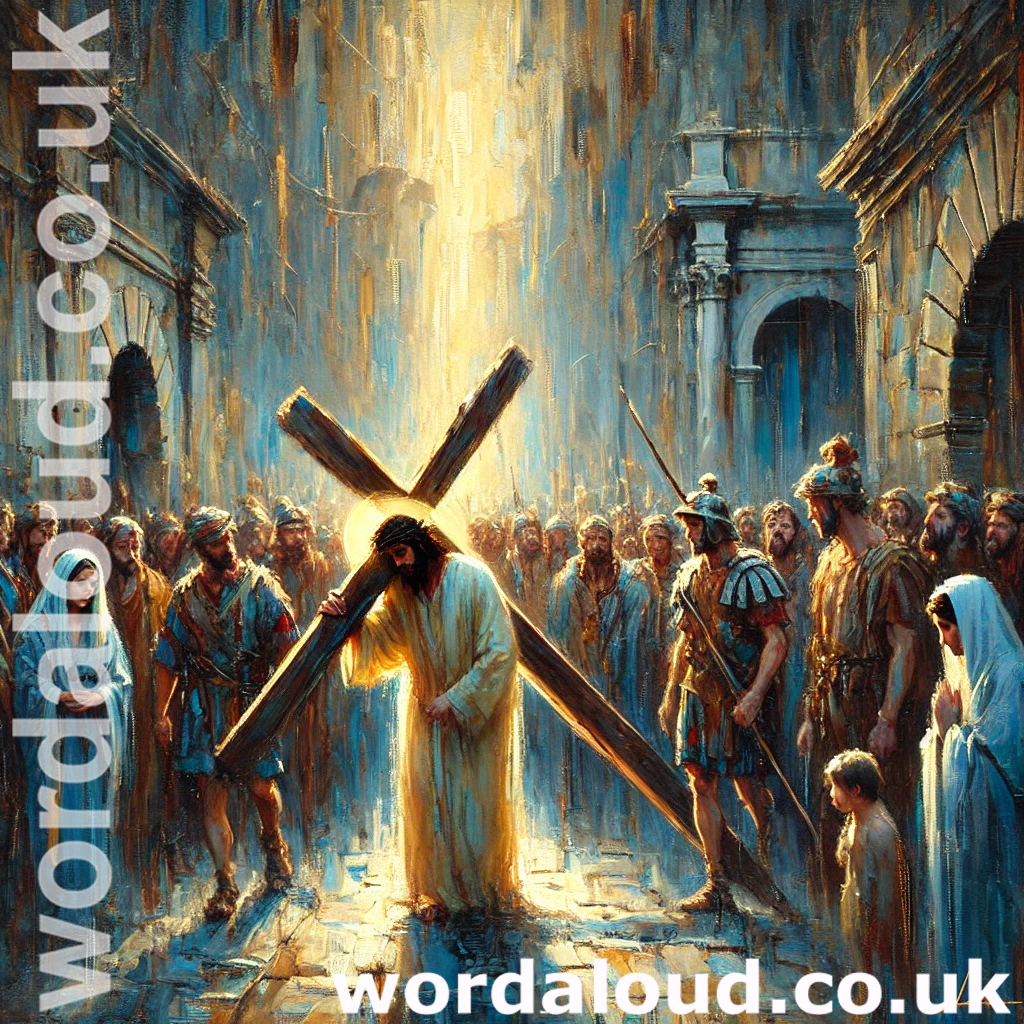
This deeply moving letter from Saint Ignatius of Antioch, composed on his journey to martyrdom in Rome around AD 107, is one of the earliest and most passionate testimonies to Christian witness through suffering. Ignatius, the bishop of Antioch and a disciple of the Apostle John, wrote this letter to the Christian community in Rome to plead that they not intervene in preventing his execution. Far from fearing death, he embraces it as the culmination of his discipleship in Christ. The letter is both a theological reflection and a spiritual testament on martyrdom, discipleship, and union with Christ [ … ]
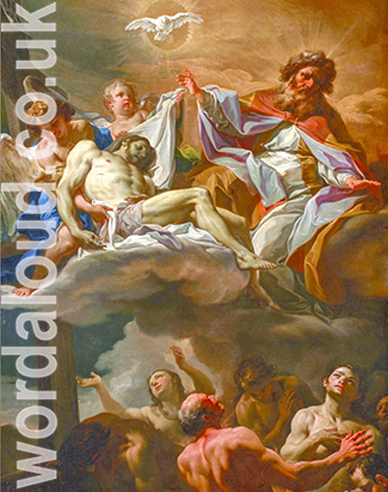
Saint Fulgentius reminds us that the great transformation of the resurrection begins now, in the hidden conversion of the heart. The ‘first resurrection’ is not merely an image but a real spiritual event: the passage from sin to grace, from darkness to light, from unbelief to faith. In this life, God works the first change within us — a change that prepares and guarantees the glorious change to come [ … ]