Office Of Readings | Tuesday, Lent Week 5 | A Reading From The Sermons Of Pope Saint Leo The Great
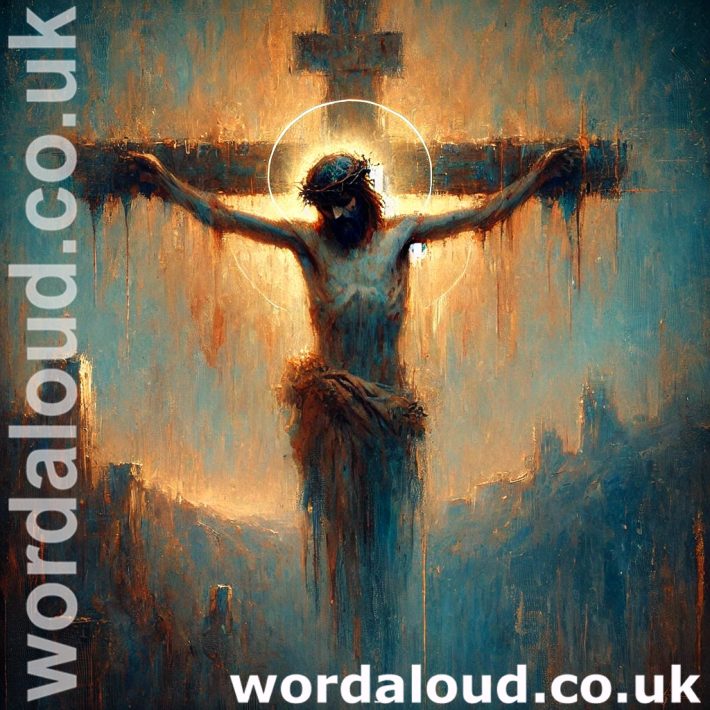
‘The cross of Christ is the source of all blessings, the cause of all graces.’
Context And Authority Of The Preacher
Pope Saint Leo the Great served as Bishop of Rome from 440 to 461, during a time of both doctrinal dispute and political upheaval in the Western Roman Empire. A formidable theologian and administrator, Leo is perhaps best known for his Tome to Flavian, which played a decisive role at the Council of Chalcedon in 451 in defining the doctrine of Christ’s two natures, divine and human, in one person.
In his sermons, Leo combined robust doctrinal teaching with pastoral urgency. His Lenten and Paschal homilies frequently dwell on the mystery of the Passion of Christ—not as an occasion for pity, but as the moment of divine triumph. This sermon reflects that theme with particular clarity, inviting believers to see the cross not as a defeat, but as the very axis around which salvation and history turn.
The Hour Of The Cross As The Hour Of Glory
Leo begins with the Johannine declaration: ‘The hour has come for the Son of Man to be glorified.’ (John 12:23) This ‘hour’ is the Passion—Jesus’ betrayal, suffering, crucifixion, and death. But for Leo, as for John, this hour is not one of defeat but of exaltation. The cross is the throne from which Christ reigns, the place where he exercises judgment, mercy, and kingship. ‘Now is the judgment of the world,’ Christ says. ‘Now will the prince of this world be cast out.’ (John 12:31)
The cross, Leo teaches, is the instrument by which the dominion of sin and the devil is overthrown. It is not merely a historical event, but an ongoing act of cosmic redemption. When Christ is ‘lifted up’, he draws all people to himself—not just by example, but by the objective power of his redemptive act.
The Cross As The Fulfilment Of All Sacrifices
Leo then turns to the sacrificial character of the cross. In doing so, he places Christ’s Passion in continuity with the sacrificial system of the Old Covenant. The temple rites, the offerings of animals, the ministry of the Levitical priesthood—all of these are fulfilled and transcended in the one perfect sacrifice of Christ.
‘The different sacrifices of animals are no more: the one offering of your body and blood is the fulfilment of all the different sacrificial offerings.’
Here Leo anticipates later Eucharistic theology by linking Christ’s self-offering on the cross with the offering of the Church in the Mass. He draws a typological line from the foreshadowings in the Law of Moses to their perfection in the Paschal mystery.
Importantly, Leo emphasizes that the cross did not simply end the old order; it transformed it. There is now a ‘more distinguished order of Levites’, referring to the Christian priesthood, and a ‘greater dignity for the rank of elders’. The Christian sacramental economy flows directly from the cross.
The Cross And The Unity Of The Church
One of the most profound claims in this sermon is that the cross is not only redemptive but unitive:
‘There is also one kingdom gathered from all peoples.’
This is a subtle but powerful statement of ecclesiology. The cross unites the scattered children of God into one body—the Church. It is through the cross that division, especially between Jew and Gentile, is overcome (cf. Ephesians 2:14–16). Christ’s Passion creates a universal communion, not merely by calling all nations, but by reconciling them through his blood.
For Leo, the Church is not an afterthought to the cross but its very fruit and fulfilment.
Christ Died For Sinners | The Unmerited Nature Of Grace
Leo next turns to the soteriological core of the Christian message:
‘Christ died, not for the righteous or the holy but for the wicked and the sinful.’
This line echoes Romans 5:8 and stresses the unmerited nature of divine mercy. There is no room for self-righteousness or spiritual pride in Leo’s theology. Salvation is the free initiative of God, who meets humanity in its need, not in its strength.
Leo uses the language of substitution: though the divine nature cannot suffer, Christ assumed a human nature ‘so that he could offer something on our behalf.’ The idea is not that God required suffering, but that only by taking on our condition could Christ redeem it. His death is a confrontation with death itself—a defeat of death by means of death.
The quotation from Hosea 13:14—’O death, I will be your death’—highlights the dramatic reversal: death, once the master of humanity, has been overcome by the dying and rising of Christ.
The Cross As The Pattern Of Christian Life
While the sermon focuses on the objective power of the cross, its pastoral implication is never far from view. For Leo, the believer is not merely a recipient of the benefits of the cross but is called to share in its pattern.
Although Leo does not explore this in detail in this passage, his broader corpus makes clear that the Christian must imitate Christ’s humility, obedience, and love. The cross is not only a source of grace but a template for discipleship.
This is particularly relevant during Lent, when the Church contemplates the Passion in preparation for the renewal of baptismal vows at Easter.
A Reading From The Sermons Of Pope Saint Leo The Great
Our understanding, which is enlightened by the Spirit of truth, should receive with purity and freedom of heart the glory of the cross as it shines in heaven and on earth. It should see with inner vision the meaning of the Lord’s words when he spoke of the imminence of his passion: The hour has come for the Son of Man to be glorified. Afterwards he said: Now my soul is troubled, and what am I to say? Father, save me from this hour. But it was for this that I came to this hour. Father, glorify your Son. When the voice of the Father came from heaven, saying, I have glorified him, and will glorify him again, Jesus said in reply to those around him: It was not for me that this voice spoke, but for you. Now is the judgement of the world, now will the prince of this world be cast out. And I, if I am lifted up from the earth, will draw all things to myself.
How marvellous the power of the cross; how great beyond all telling the glory of the passion: here is the judgement-seat of the Lord, the condemnation of the world, the supremacy of Christ crucified.
Lord, you drew all things to yourself so that the devotion of all peoples everywhere might celebrate, in a sacrament made perfect and visible, what was carried out in the one temple of Judaea under obscure foreshadowings.
Now there is a more distinguished order of Levites, a greater dignity for the rank of elders, a more sacred anointing for the priesthood, because your cross is the source of all blessings, the cause of all graces. Through the cross the faithful receive strength from weakness, glory from dishonour, life from death.
The different sacrifices of animals are no more: the one offering of your body and blood is the fulfilment of all the different sacrificial offerings, for you are the true Lamb of God: you take away the sins of the world. In yourself you bring to perfection all mysteries, so that, as there is one sacrifice in place of all other sacrificial offerings, there is also one kingdom gathered from all peoples.
Dearly beloved, let us then acknowledge what Saint Paul, the teacher of the nations, acknowledged so exultantly: This is a saying worthy of trust, worthy of complete acceptance: Christ Jesus came into this world to save sinners.
God’s compassion for us is all the more wonderful because Christ died, not for the righteous or the holy but for the wicked and the sinful, and, though the divine nature could not be touched by the sting of death, he took to himself, through his birth as one of us, something he could offer on our behalf.
The power of his death once confronted our death. In the words of Hosea the prophet: Death, I shall be your death; grave, I shall swallow you up. By dying he submitted to the laws of the underworld; by rising again he destroyed them. He did away with the everlasting character of death so as to make death a thing of time, not of eternity. As all die in Adam, so all will be brought to life in Christ.


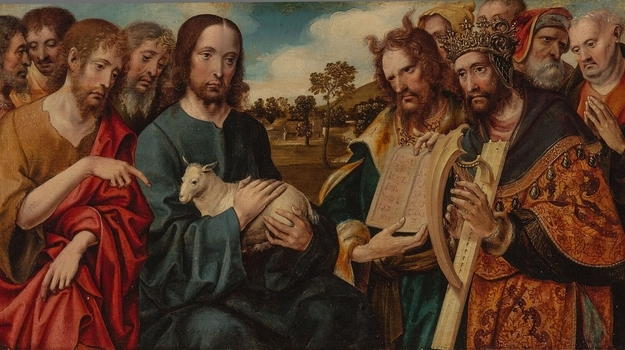
The Feast of the Dedication commemorates the episode in Jewish history, as recorded in Maccabees, when, in the year 165 BC, after he had liberated Jerusalem from the control of the Seleucid kings of Syria, Judas Maccabeus cleansed the Temple of the profanations of Antiochus Epiphanes. Falling toward the end of the year, it is also known as the Festival of Lights, because it was the custom to place lamps, signifying the Law, in the windows of houses [ … ]
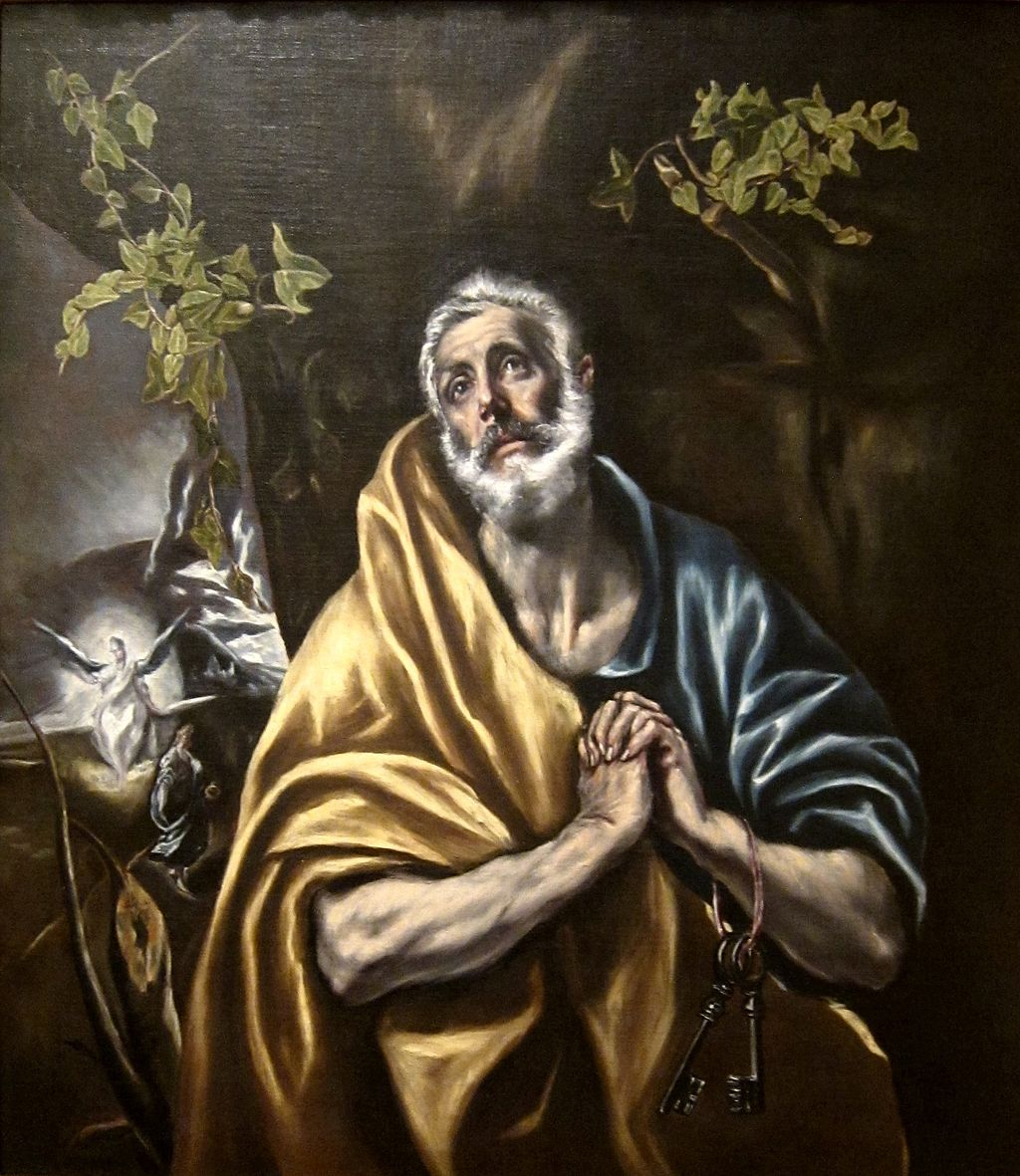
Today’s Gospel verses invite us once more to consider the true identity of Jesus. This scene is filled both with a sense of preconceptions and expectations, and with the over-riding knowledge of the new, which is the truth of Jesus. Additionally, we are asked by Jesus to declare the truth of our knowledge of who Jesus is. We are invited by Jesus to confess our Christian faith [ … ]
The psalm calls the world to worship. The psalm unfolds as an harmonious blend of exuberant praise, acknowledging the God’s sovereignty, the divine relationship with His people, and the everlasting nature of God’s goodness, mercy, and truth. As worshippers are beckoned into the presence of God with gladness, Psalm 100 is a profound expression of gratitude and an enduring anthem of celebratory worship [ … ]