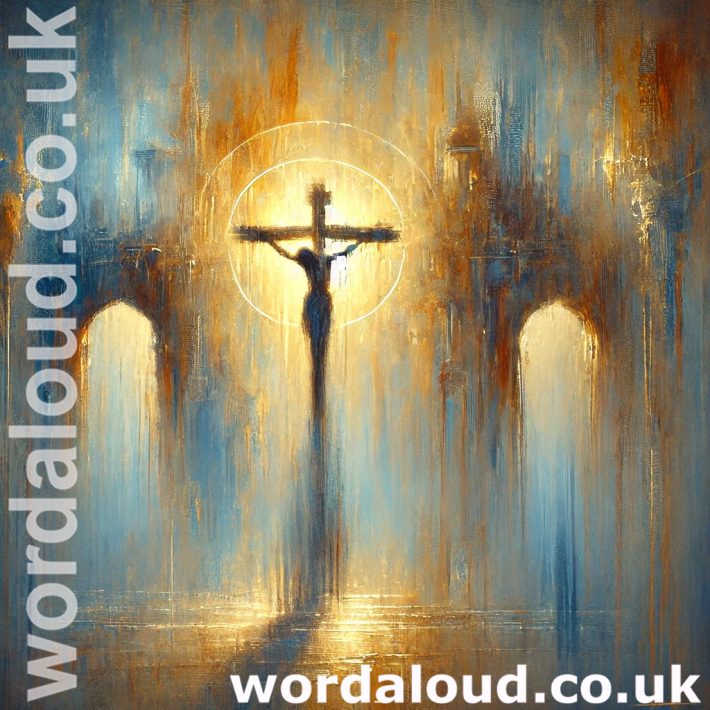
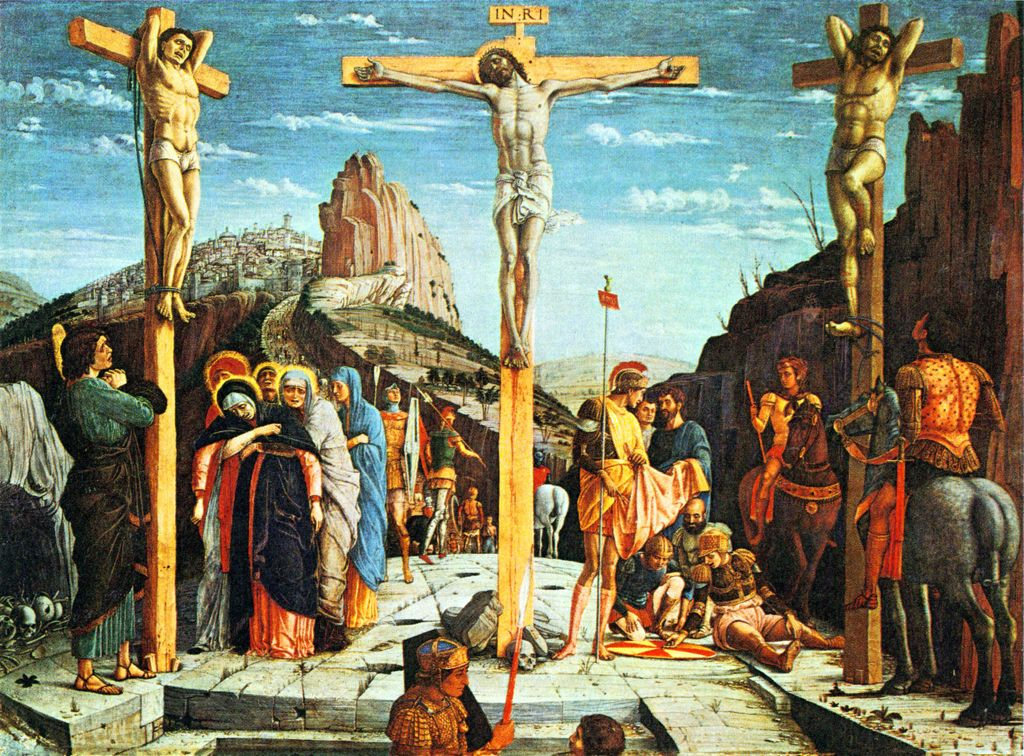
Christian Art | Crucifixion Of Jesus | Jesus Christ Is The Fulfilment Of Prophecy
Office Of Readings | Week 10, Thursday, Ordinary Time | A Reading From The Homilies Of Origen On The Book Of Joshua | The Conquest Of Jericho
‘The conquest of Jericho.’
A Trumpet That Shakes The Walls
Origen’s homily on the conquest of Jericho is far more than a meditation on ancient Israelite warfare. For Origen, the fall of Jericho symbolizes the decisive triumph of Christ over the world, sin, and spiritual blindness. It is a drama of redemption, where the unlikely heroine, Rahab the prostitute, becomes the image of the Church: redeemed, cleansed, and united to Christ.
Jericho As The World | A City Set For Judgment
Origen follows a long tradition in interpreting Jericho not merely as a Canaanite city, but as a symbol of the fallen world—a place of moral compromise and spiritual darkness. In Scripture, Jericho is associated with:
- The traveler in the parable (Luke 10:30), who ‘goes down’ from Jerusalem to Jericho and falls among robbers—a type of Adam’s descent from grace to exile.
- The blind men healed in Jericho (Matt. 20:29-34), symbolizing humanity’s ignorance awaiting enlightenment.
In Origen’s vision, Jericho must fall, not through violence, but through the divine proclamation—trumpets that announce the coming judgment and the new creation.
The Trumpets | Heralds of the Eschaton
The priests march around Jericho not to intimidate, but to proclaim. The trumpet blasts are acts of faith, not war. For Origen, these trumpets anticipate the eschatological trumpet of St. Paul:
‘The trumpet will sound, and the dead in Christ will rise imperishable.’ (1 Cor. 15:52)
This connection elevates Jericho’s fall into a cosmic event. The collapse of the city walls prefigures the collapse of the old world—a world conquered not by arms, but by the Word and Spirit of God. The priests’ trumpets thus symbolize:
- The proclamation of the Gospel.
- The voice of the Church calling the world to repentance.
- The final trumpet of the Resurrection, when Christ will return and all things will be made new.
Rahab | From Sin To Sanctity
Rahab, once a prostitute, becomes the surprising heroine of this story. She welcomes the spies (Joshua 2), hides them, and is saved because of her faith and actions—a theme echoed in Hebrews 11:31 and James 2:25.
Origen sees Rahab as a symbol of the Church:
- Once sinful, now redeemed and espoused to Christ.
- She hides the Apostles as she once hid the spies—embracing the messengers of truth and becoming their advocate.
- She is the embodiment of Paul’s words:
‘Such were some of you. But you were washed, you were sanctified, you were justified.’ (1 Cor. 6:11)
Her conversion story becomes the pattern for the Church’s own identity: not composed of the perfect, but of those saved by mercy.
The Scarlet Cord | Blood Of Redemption
Rahab is told to hang a scarlet cord from her window as a sign of safety. For Origen, this cord is a direct symbol of the Blood of Christ—visible, red, and salvific. This sacramental imagery is rich:
- Like the Paschal blood on the doorposts in Exodus, it marks the household of the faithful.
- It parallels the sacraments of the Church—especially Baptism and the Eucharist—by which the faithful are joined to Christ and spared the coming judgment.
- The Church clings to Christ’s blood as Rahab clung to the cord.
The Church As The Redeemed Jericho
After Jericho’s fall, only Rahab and her household are saved. Origen concludes with an image of Rahab transformed—not only forgiven but now a chaste virgin, joined to her heavenly spouse, Christ. This recalls:
- Paul’s image: ‘I betrothed you to one husband, to present you as a pure virgin to Christ.’ (2 Cor. 11:2)
- The Church’s ongoing sanctification in Christ: ‘washed clean, sanctified, justified.’ (1 Cor. 6:11)
Her story is not just individual redemption but ecclesial transformation. Jericho—the fallen city—yields Rahab—the faithful Church. Thus, from sin comes salvation, and from a ruined city comes a new creation.
Contemporary Application | Walls Still Fall | Jesus Today
The conquest of Jericho is not merely history. For every Christian:
- Jericho still stands for the world’s pride, sin, and self-reliance.
- The trumpet still sounds—through the Church’s teaching and witness.
- Rahab still welcomes the Gospel with hospitality, trust, and courage.
- The scarlet cord still waves over the homes of the faithful—a sign of mercy and protection.
Origen’s homily invites us to:
- Listen for the trumpet of Christ’s voice in our lives.
- Let go of old identities and live as Rahab did—trusting in the promise.
- Embrace the sacraments as our scarlet cord of redemption.
Reflection | Love Revealed By Jesus Christ
In Origen’s hands, the fall of Jericho is not a story of conquest, but of conversion. The world will not be overcome by violence, but by the Word proclaimed, by faith lived out, and by the blood of Christ poured out for all. Like Rahab, we are not defined by our past but redeemed for a future, made new in Jesus Christ, to whom belongs all glory and power forever. Amen.

A Reading From The Homilies Of Origen On The Book Of Joshua | The Conquest Of Jericho
Jericho is besieged and surrounded but has yet to fall. How is it to be conquered? Not with arrows or swords or battering-ram. Nothing is deployed but the priests’ trumpets, and the walls of Jericho crumble.
In Scripture we often find Jericho used as a symbol of the world. Even in the Gospel, when the traveller from Jerusalem to Jericho is set upon by robbers, is he not an image of Adam, thrown out of paradise into exile in this world? And again, those blind men who were in Jericho, when Jesus came to them to give them sight, are they not an example of those who live in this world, oppressed by the blindness of ignorance until the Son of God enlightens them?
And so this Jericho – this world – must fall. The consummation of this present age has long been prophesied by the sacred books.
How will this consummation come about? By what means? Scripture tells us, at the sound of the trumpet. What trumpet is that? Paul gives you the key to this secret. Listen to him: The trumpet will sound, and the dead who are in Christ will be raised, imperishable. At the trumpet of God, the voice of the archangel will call out the command and the Lord himself will come down from heaven. Then, therefore, our Lord Jesus will come with trumpets to conquer Jericho and throw it down, so that out of all its people there will survive only the prostitute and her household. Our Lord Jesus will come down, come down with the sound of the trumpet.
May he save that one woman who gave succour to his spies, who received his Apostles in trust and obedience and hid them in her roof. May he take that prostitute and give her a share with the house of Israel. But let us not go over this story again and label her with the name of her past sin. She may have been a prostitute once but now she is a chaste virgin, joined to her chaste spouse, who is Christ. Listen to what St Paul says about her: I arranged for you to marry Christ so that I might give you away as a chaste virgin to this one husband. And he was still speaking of her when he said: There was a time when we too were ignorant, disobedient and misled and enslaved by different passions and luxuries.
Do you want to know more about how the prostitute ceased to be a prostitute? Listen again to Paul: These are the sort of people you were once, but now you have been washed clean, and sanctified, and justified through the name of the Lord Jesus Christ and through the Spirit of our God. To enable her to escape the destruction of Jericho she received from the spies a powerful sign of safety, the scarlet rope. For it is through the blood of Christ that the whole Church is saved, in Jesus Christ our Lord, to whom belong glory and power throughout all the ages. Amen.
Glossary Of Christian Terms
Jericho – A city near the Jordan River. In this homily, Jericho symbolizes the fallen world destined for judgment and renewal in Christ.
Rahab – A Canaanite woman, formerly a prostitute, who sheltered Israelite spies (Joshua 2). In Christian tradition, she prefigures the Church—once sinful, now redeemed and joined to Christ.
Trumpets – Instruments sounded by priests in the siege of Jericho. Spiritually interpreted as the proclamation of the Gospel or the eschatological call at Christ’s return.
Scarlet cord – A red rope Rahab used to mark her home, ensuring her household’s safety during Jericho’s fall. It symbolizes the blood of Christ and the sign of salvation.
Typology – A method of biblical interpretation where events, persons, or institutions in the Old Testament prefigure those in the New Testament. Origen uses typology extensively in his homily.
Eschaton / Eschatological – Referring to the end of time and the final judgment. The fall of Jericho is interpreted by Origen as a foreshadowing of this cosmic event.
Sanctification – The process of becoming holy, purified from sin, and conformed to God. For Origen, Rahab’s transformation is a type of sanctification in the Church.
Catechumen – A person preparing for baptism in the early Church. Origen often addresses them in his homilies, using Old Testament stories to illustrate stages of conversion.
Mystagogy – The deepening of understanding after receiving the sacraments. Origen’s commentary functions mystagogically, interpreting Old Testament events in light of Christian mystery.
Prayer With Jesus
Lord Jesus Christ,
at the sound of Your voice the walls of the world fall,
and the strongholds of sin are shattered.
You come not with weapons, but with mercy,
not to destroy but to redeem.
Let the trumpet of Your Gospel sound in my heart.
Break down every wall I have built in pride, fear, or disobedience.
Make me like Rahab: open to Your messengers,
welcoming Your truth, and clinging to the sign of Your blood.
By Your scarlet cord, save me from the judgment of this world.
Wash me, sanctify me, and make me a pure dwelling for Your Spirit.
Let my past be left behind,
and my future be joined to You, my faithful and loving Spouse.
Come again in glory, O Lord,
and bring down every Jericho that opposes Your reign,
that Your Church may stand redeemed, radiant, and ready.
To You be all power, honor, and glory,
with the Father and the Holy Spirit,
now and forever. Amen.



Saint Andrew of Crete reflects on Christ’s coming by drawing together three interconnected themes: Christ’s humble entry, his continual approach to the soul, and the revelation of his glory upon the cross. His starting point is the Church’s memory of Palm Sunday, but he immediately shifts our attention from outward gestures to the inward dispositions that welcome Christ rightly. The ‘palm branches’ he asks us to offer are works of mercy; the ‘garments’ spread beneath Christ’s feet are the thoughts and intentions of the heart submitted to him. In this way, the historical event becomes the pattern of the Christian life: Christ desires to enter not only a city, but the whole being of each believer [ … ]
Saint Cyprian reflects on something very ordinary and very difficult: waiting. He insists that patience is not just a virtue floating on its own but is a necessary companion to faith and hope. Faith looks to God; hope leans toward what God has promised; but patience is what keeps both alive in the long spaces where nothing seems to be happening [ … ]
Psalm 102 explores human vulnerability, search for divine solace, and the resilient thread of hope that persists even in the darkest moments [ … ]