

Christian Art | Jesus Miracle Healing | Love Revealed By Jesus Christ
Office Of Readings | Week 23, Wednesday, Ordinary Time | A Reading From The Sermons Of Saint Bernard | On Degrees Of Contemplation
‘On the degrees of contemplation.’
Saint Bernard describes contemplation as a gradual ascent, moving from self-knowledge to the knowledge of God. His framework reflects a well-established monastic tradition of distinguishing between different stages of prayer: meditation, self-examination, contrition, and finally contemplation.
The first stage is self-examination before God’s will. The human person, confronted with divine holiness, recognises his own failings. Bernard cites the Psalms and prophets, where prayers for healing and mercy acknowledge human frailty before God’s justice (cf. Jeremiah 17:14; Psalm 41[40]:4). This humility is not despair but a necessary preparation: purification of the heart makes the soul capable of perceiving God’s will.
The second stage moves beyond self-preoccupation. Once purified, the soul begins to find delight in the contemplation of God’s own goodness, no longer concerned primarily with ‘what God wills for me’, but with God’s will in itself. This transition echoes the monastic movement from timor Domini (fear of the Lord) to amor Dei (love of God), a journey traced in the Rule of Saint Benedict and earlier in Augustine’s writings.
Bernard then identifies a dynamic interplay: contemplation of self produces humility and fear, contemplation of God brings joy and hope. The two together form the rhythm of the Christian spiritual life, preventing presumption on the one hand and despair on the other. The ultimate aim is union with God’s will, where the soul recognises that in seeking God’s will ‘in itself’, it discovers the deepest truth of its own life.
Bernard’s teaching reflects his broader theology of love. The spiritual life begins in self-knowledge but is completed only in God-knowledge, where the human will is conformed to divine will through grace. This is not achieved at once, but in stages, through continual purification, prayer, and openness to the Spirit who ‘gazes into the deep things of God’ (1 Corinthians 2:10).

A Reading From The Sermons Of Saint Bernard | On Degrees Of Contemplation
Let us take our stand on the tower, leaning with all our strength on Christ, the most solid rock, as it is written: He has set my feet on a rock, he has guided my steps. Thus firmly established, let us begin to contemplate, to see what he is saying to us and what reply we ought to make to him.
The first stage of contemplation, my dear brothers, is to consider constantly what God wants, what is pleasing to him, and what is acceptable in his eyes. We all offend in many things; our strength cannot match the rightness of God’s will and cannot be joined to it or made to fit with it. So let us humble ourselves under the powerful hand of the most high God and make an effort to show ourselves unworthy before his merciful gaze, saying Heal me, Lord, and I shall be healed; save me and I shall be saved. And again, Lord, have mercy on me; heal my soul because I have sinned against you.
Once the eye of the soul has been purified by such considerations, we no longer abide within our spirit in a sense of sorrow, but abide rather in the Spirit of God with great delight. No longer do we consider what is the will of God for us, but rather what it is in itself.
For our life is in his will. Thus we are convinced that what is according to his will is in every way better for us, and more fitting. And so, if we are concerned to preserve the life of our soul, we must be equally concerned to deviate as little as possible from his will.
Thus having made some progress in our spiritual exercise under the guidance of the Spirit who gazes into the deep things of God, let us reflect how gracious the Lord is and how good he is in himself. Let us join the Prophet in praying that we may see the Lord’s will and frequent not our own hearts but the Lord’s temple; and let us also say, My soul is humbled within me, therefore I shall be mindful of you.
These two stages sum up the whole of the spiritual life: when we contemplate ourselves we are troubled, and our sadness saves us and brings us to contemplate God; that contemplation in turn gives us the consolation of the joy of the Holy Spirit. Contemplating ourselves brings fear and humility; contemplating God brings us hope and love.
Christian Prayer With Jesus
Lord God,
grant us humility to recognise our weakness,
patience to bear our faults,
and trust to seek your mercy.
Purify our hearts,
that we may learn to love your will in all things,
and rejoice in the knowledge of your goodness.
Through Christ our Lord. Amen.
Glossary Of Christian Terms
Contemplation – A form of prayer in which the soul rests in God, beyond words or discursive thought.
Self-examination – The practice of reflecting on one’s actions and motives in the light of God’s will.
Contrition – Sorrow for sin, arising from love of God and recognition of having offended him.
‘Heal me, Lord, and I shall be healed’ – Jeremiah 17:14, a prayer acknowledging dependence on God for restoration.
‘Heal my soul because I have sinned against you’ – Psalm 41[40]:4, expressing repentance and trust in God’s mercy.
Rule of Saint Benedict – A foundational monastic text (6th century), emphasising humility, obedience, and prayer as a path to God.
Fear of the Lord (timor Domini) – Reverence and awe before God’s holiness, considered the beginning of wisdom (Proverbs 1:7).
Love of God (amor Dei) – The goal of the Christian life, where love unites the soul to God’s will.




Saint Gregory Nazianzen, known in the Christian tradition as the Theologian, is one of the greatest voices of the early Church on the mystery of the Incarnation. Few writers speak with such reverence, precision, and lyrical force about the identity of Christ. This reading is a condensed expression of his lifelong insistence on one central truth: only the full, undiminished God could save us, and therefore the One who became human for us is truly God, truly man, united in one person [ … ]
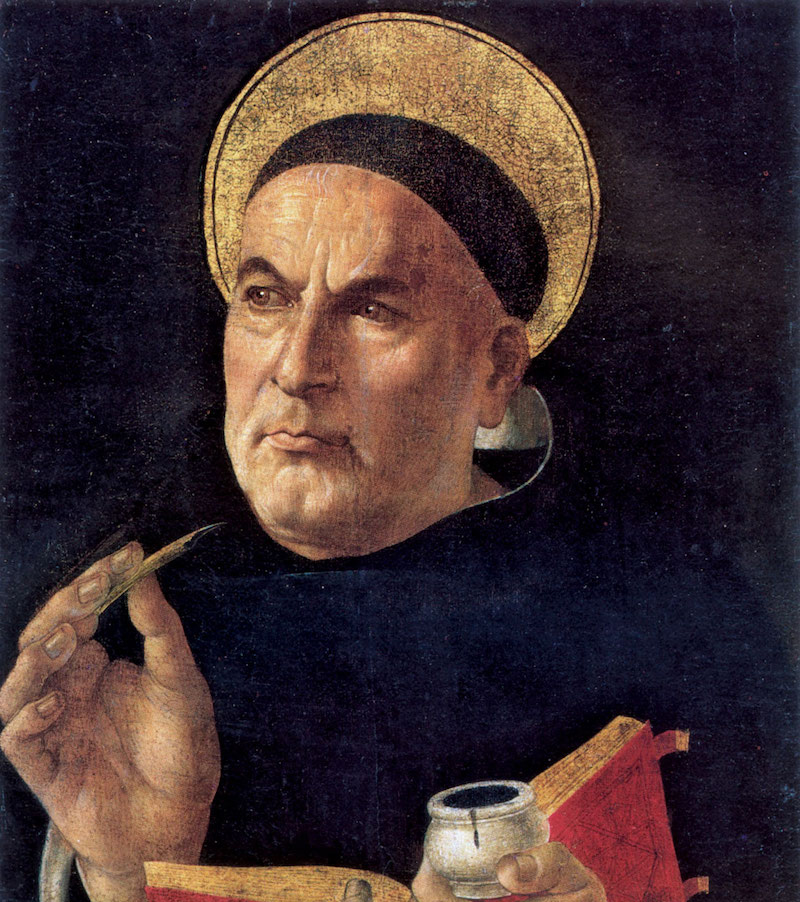
Saint Thomas Aquinas’ philosophy was grounded in Aristotelianism, but he was also heavily influenced by the works of Augustine. He sought to reconcile the insights of reason with the truths of revelation, arguing that faith and reason are complementary rather than contradictory [ … ]
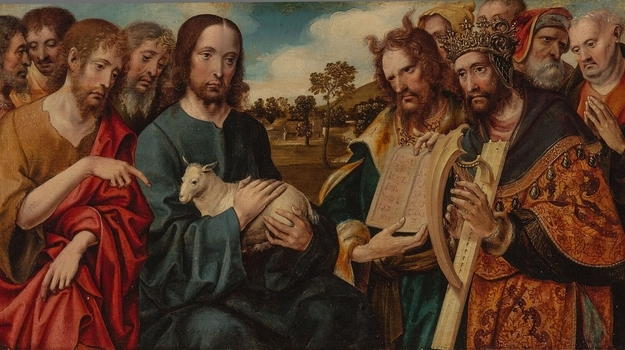
The Feast of the Dedication commemorates the episode in Jewish history, as recorded in Maccabees, when, in the year 165 BC, after he had liberated Jerusalem from the control of the Seleucid kings of Syria, Judas Maccabeus cleansed the Temple of the profanations of Antiochus Epiphanes. Falling toward the end of the year, it is also known as the Festival of Lights, because it was the custom to place lamps, signifying the Law, in the windows of houses [ … ]
