

Christian Art | Pieta | Stabat Mater
Office Of Readings | Week 26, Wednesday, Ordinary Time | From The Letter Of Saint Polycarp To The Philippians | Let Us Run In Faith And Holiness
‘Let us run our race in faith and righteousness.’
Saint Polycarp speaks as both pastor and elder brother in the faith, urging his community to perseverance, unity, and moral integrity. His tone is both encouraging and corrective, grounded in the example of the saints and martyrs who have already completed their earthly race.
He begins by recalling figures such as Ignatius, Zosimus, Rufus, Paul, and the apostles—those who, through faith and endurance, suffered for the Gospel and are now with the Lord. Their steadfastness under trial demonstrates that Christian discipleship is not passive belief but active perseverance. Faith must be lived with ‘righteousness and patience’, echoing the Apostle Paul’s own image of life as a race to be run to its end.
Polycarp’s call to ‘boundless patience’ reveals his awareness of the challenges faced by early Christians—persecution, temptation, and internal division. His advice is practical: love one another, show gentleness, be united in truth, and live honourably among those who do not share the faith. The emphasis on public conduct reflects the conviction that the Church’s witness depends upon the moral credibility of its members. ‘The Lord will not be blasphemed because of you,’ he writes—linking personal virtue to the reputation of the Gospel itself.
He also warns against avarice and moral weakness, pointing to the example of Valens, a former presbyter who has fallen into error. Polycarp’s treatment of him is strikingly balanced: he neither excuses the sin nor condemns the person. Instead, he urges the community to seek Valens’ repentance, reminding them that those who go astray are still part of the body of Christ. This reflects a pastoral realism rooted in compassion—the Church must uphold truth while seeking to restore those who have fallen.
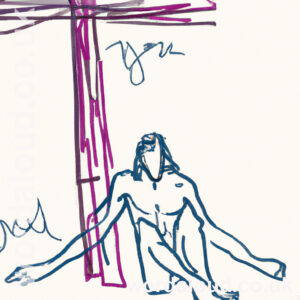
From The Letter Of Saint Polycarp To The Philippians | Let Us Run In Faith And Holiness
I ask you all to respond to the call of righteousness and to practice boundless patience. your own eyes have seen it not only in blessed Ignatius, Zosimus and Rufus, but in others from among you as well, to say nothing of Paul and the other apostles. Be assured that all these men did not run their race in vain. No, they ran it in faith and in righteousness and are now with the Lord in the place that they have earned, even as they were once with him in suffering. Their love was not for this present world; rather, it was for him who died for our sakes and, on account of us, was raised up again by God.
Be steadfast, then, and follow the Lord’s example, strong and unshaken in faith, loving the community as you love one another. United in the truth, show the Lord’s own gentleness in your dealings with one another, and look down on no one. If you can do good, do not put it off, because almsgiving frees one from death. Be subject to one another, and make sure that your behavior among the pagans is beyond reproach. Thus you will be praised for the good you have done, and the Lord will not be blasphemed because of you. But woe to that man on whose account the Lord’s name is blasphemed. Therefore, teach everyone to live soberly, just as you live yourselves.
I am greatly saddened on account of Valens who at one time was presbyter among you; he does not understand the position to which he was called. So I urge all of you to be chaste and honest, to avoid avarice and to refrain from every form of evil. If a man cannot control himself in these ways, how can he teach someone else to do so? If he does not avoid greed, he will be defiled by idolatrous practices and will be reckoned as one of the pagans who know nothing of the Lord’s judgment. Or, as Paul teaches: Do we not know that the holy ones will judge the world?
However, I have never seen of heard of anything of that sort among you, for whom blessed Paul labored and whom he commends at the beginning of his letter. For he boasted about you in all the churches which at that time were the only ones that had come to know God, we ourselves had not yet come to that knowledge.
Brothers, I am deeply sorry for Valens and for his wife; may the Lord grant them true repentance. As for yourselves, be self-controlled in this respect. Do not look upon such people as enemies, but invite them back as frail members who have gone astray, so that the entire body of which you are a part will be saved. In doing this you are contributing to your own spiritual development.
Christian Prayer With Jesus Christ
God of mercy and righteousness,
you have called us to run with perseverance the race set before us.
Strengthen us in faith and patience,
that we may follow the example of your saints
and remain steadfast in love and truth.
Guard us from pride and greed,
and make us gentle towards those who fall,
that your Church may grow in unity and holiness.
Through Jesus Christ our Lord,
who endured for our sake and reigns with you for ever.
Amen.
Glossary Of Christian Terms
Ignatius, Zosimus, Rufus – Early Christian martyrs remembered for their steadfast faith and endurance under persecution.
Apostles – The first followers of Jesus Christ, chosen to bear witness to his resurrection and to preach the Gospel.
Faith and righteousness – Core Christian virtues; faith is trust in God’s promises, while righteousness is right conduct before God and others.
Almsgiving – The act of giving to those in need; seen as both an act of charity and a means of spiritual purification.
Presbyter – An elder or priest in the early Christian community, responsible for teaching, leadership, and pastoral care.
Avarice – Excessive desire for wealth; regarded in Christian tradition as one of the seven deadly sins.
Idolatrous practices – In biblical and early Christian thought, any devotion that places worldly desires or possessions before God.
Repentance – Turning away from sin and returning to God with sincere sorrow and renewed purpose.
The race of faith – A metaphor from St Paul (1 Corinthians 9:24–27) describing the Christian life as a disciplined pursuit of salvation and holiness.



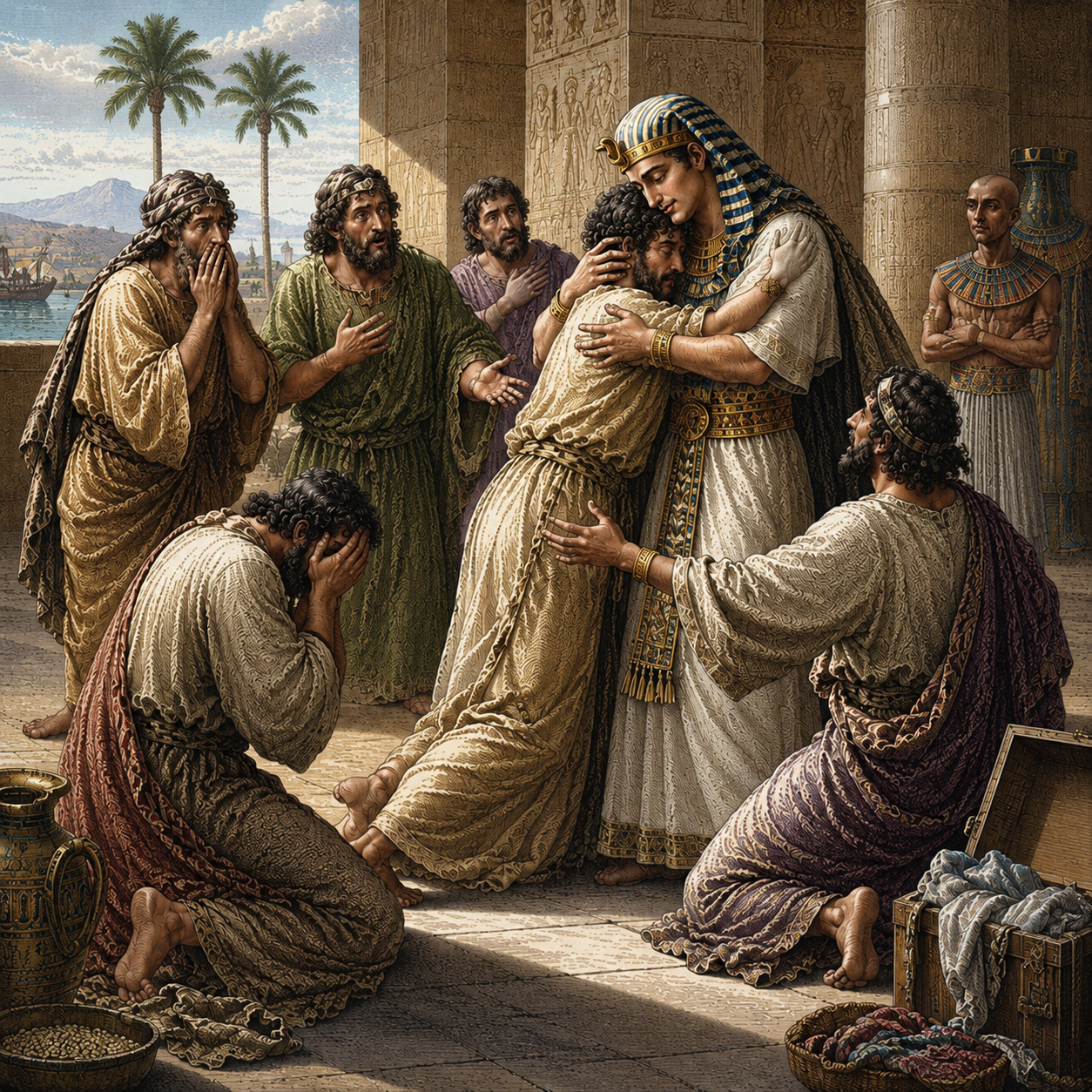
The story of Joseph begins within a family already marked by division. Genesis has traced generations shaped by rivalry, favouritism, deception and estrangement. The conflict between Cain and Abel established early the destructive force of jealousy between brothers. Later narratives repeat similar patterns in different forms: Isaac and Ishmael, Jacob and Esau, Leah and Rachel. By the time Joseph appears, the family of Jacob already carries deep instability within itself [ … ]
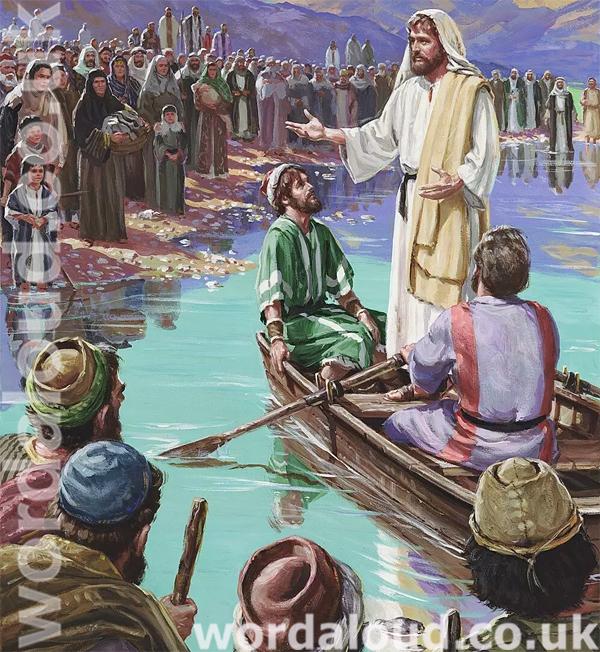
Saint Clement’s reflection on divine fidelity presents an early instance of Christian reasoning that links observation of the natural order with trust in the promise of resurrection. The structure of the argument proceeds by analogy: the visible alternation of night and day, the decay and renewal of seed, the continuous pattern of the seasons, all provide evidence that death does not end a process but belongs within it. The ordered rhythm of nature is treated not as mere metaphor but as a form of testimony, available to perception and open to interpretation by faith [ … ]

In Jerusalem, Jesus teaches in the Temple and is tested by the Sadducees and the Pharisees. These are tests concerning Scripture, concerning the Law, and concerning Jesus’ identity, i.e. concerning Jesus being God the Son. Jesus’ response to the tests flows from two sources especially: from Jesus’ perfect knowledge of Scripture, and from Jesus’ true identity as God the Son incarnate. Ultimately, Jesus’ knowledge of Scripture, and freedom perfectly to interpret Scripture, flows from his true identity as God the Son [ … ]
