Loading...
Divine Office | Office Of Readings

Office Of Readings | Week 4, Wednesday, Ordinary Time | A Reading From The Treatise On Spiritual Perfection By Diadochus Of Photice | The Art Of Discernment Of Spirits Is Acquired By A Spiritual Taste

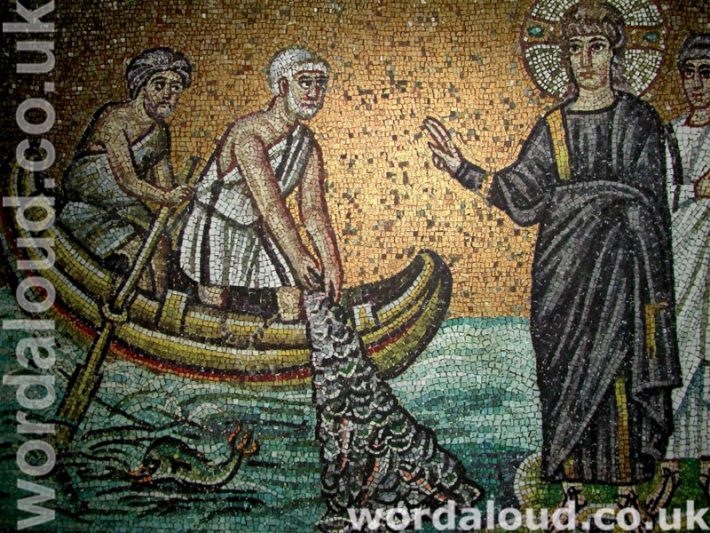
Jesus Calls Fishermen To Follow Him And Be Fishers Of Men

Christian Art | Jesus Calls His Disciples | Fishers Of Men

Office Of Readings | Week 4, Wednesday, Ordinary Time | A Reading From The Treatise On Spiritual Perfection By Diadochus Of Photice | The Art Of Discernment Of Spirits Is Acquired By A Spiritual Taste

The mind has a spiritual sense which teaches us to distinguish between good and evil.

In this reading from On Spiritual Perfection, Diadochus of Photiké reflects on discernment, presenting it as a spiritual capacity formed by stillness, grace, and love. The mind, he argues, has a spiritual sense that enables it to distinguish reliably between good and evil when it is illuminated by true knowledge.

Diadochus begins by linking discernment to light. True knowledge brings clarity, allowing the mind to recognise the difference between what leads towards God and what draws away from him. This knowledge is not abstract information but a way of seeing shaped by love for God. The path of justice leads the mind into a light that does not diminish, because it is sustained by confident seeking of God.

A key condition for this clarity is interior stillness. Even in struggle, the mind must be kept calm. Diadochus explains that stillness allows a person to recognise the origin of thoughts. Thoughts inspired by God are to be welcomed and remembered, while those arising from evil are to be rejected. His comparison with the sea illustrates this clearly: when the sea is calm, its depths are visible; when it is stormy, even skill is of no use. In the same way, agitation clouds judgement, while peace reveals what lies beneath.

Diadochus then emphasises the role of the Holy Spirit. Discernment is not achieved by human effort alone. Only the Spirit can purify the mind and restore what has been taken by deception. For this reason, peace of soul is essential, as it provides a dwelling place for the Spirit. When the Spirit abides, the light of knowledge exposes temptation and weakens its influence.

Diadochus warns that this light can be lost if the Spirit is grieved. Drawing on the Apostle Saint Paul, Diadochus explains that while the Spirit himself is not diminished, his withdrawal leaves the mind in darkness. Discernment depends on a living relationship with the Spirit, sustained by right action and thought.

The reading concludes by returning to the image of spiritual perception. Just as physical taste discerns what is nourishing when the body is healthy, so the mind, when strengthened and free from anxiety, can recognise what truly consoles and leads to life. Love preserves the memory of this experience and guides future choice. Discernment, therefore, grows where love deepens, enabling the believer to choose what is best with confidence.
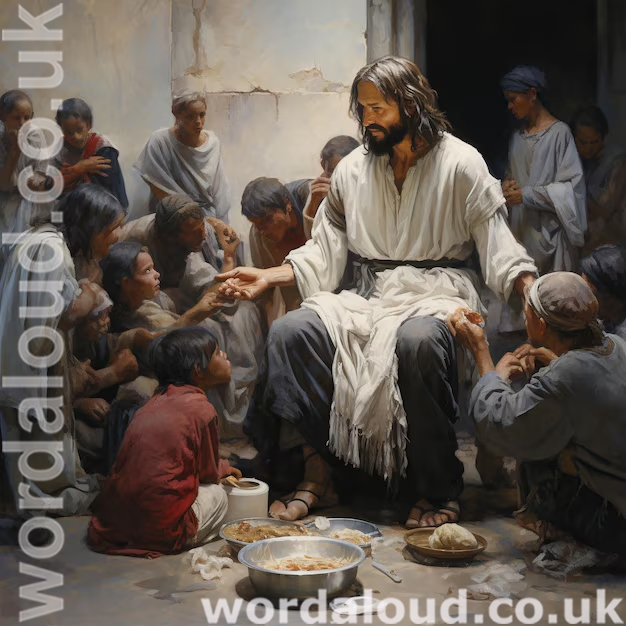
Jesus Serves The Poor | Christian Charity

A Reading From The Treatise On Spiritual Perfection By Diadochus Of Photice | The Art Of Discernment Of Spirits Is Acquired By A Spiritual Taste

The light of true knowledge makes it possible to discern without error the difference between good and evil. Then the path of justice, which leads to the sun of Justice, brings the mind into the limitless light of knowledge, since it never fails to seek the love of God with all confidence.

Therefore, we must maintain great stillness of mind, even in the midst of our struggles. We shall then be able to distinguish between the different types of thoughts that come to us: those that are good, those sent by God, we will treasure in our memory; those that are evil and inspired y the devil we will reject. A comparison with the sea may help us. A tranquil sea allows the fisherman to gaze right to its depths. No fish can hide there and escape his sight. The stormy sea, however, becomes murky when it is agitated by the winds. The very depths that it revealed in its placidness, the sea now hides. The skills of the fisherman are useless.

Only the Holy Spirit can purify the mind: unless the strong man enters and robs the thief, the booty will not be recovered. So by every means, but especially by peace of soul, we must try to provide the Holy Spirit with a resting place. Then we shall have the light of knowledge shining within us at all times, and it will show up for what they are, all the dark and hateful temptations that come from demons, and not only will it show them up: exposure to this holy and glorious light will also greatly diminish their power.

This is why the Apostle says: Do not stifle the Spirit. The Holy Spirit is the Spirit of goodness: do not grieve him by your evil actions and thought, and so deprive yourself of the defense his light affords you. In his own being, which is eternal and life-giving, he is not stifled, but when his is grieved he turns away and leaves the mind in darkness, deprived of the light of knowledge.

The mind is capable of tasting and distinguishing accurately whatever is presented to it. Just as when our health is good we can tell the difference between good and bad food by our bodily sense of taste and reach for what is wholesome, so when our mind is strong and free from all anxiety, it is able to taste the riches of diving consolation, and to preserve, through love, the memory of this taste. This teaches us what is best with absolute certainty. As Saint Paul says: My prayer is that your love may increase more and more in knowledge and insight, and so enable you to choose what is best.

Christian Prayer With Jesus Christ

God of light and wisdom,
you have given the mind a desire for truth
and the heart a longing for what is good.

Grant us stillness of soul
in the midst of our struggles,
that we may recognise what comes from you
and turn away from what leads us astray.

Send your Holy Spirit to dwell within us.
Purify our thoughts,
enlighten our judgement,
and strengthen us against temptation.

May your light remain with us always,
guiding our choices
and teaching us to love what is best.
Through Jesus Christ our Lord.
Amen

Glossary Of Christian Terms

True knowledge | Spiritual understanding that leads the mind towards God
Discernment | The ability to distinguish between good and evil
Sun of Justice | A title for Christ as the source of righteousness and light
Stillness of mind | Interior calm that allows clear spiritual judgement
Thoughts | Inner movements of the mind, either good or evil
Holy Spirit | God’s Spirit, who enlightens and purifies the mind
Peace of soul | Inner freedom from anxiety and disturbance
Temptation | Thoughts or impulses that lead away from God
Light of knowledge | Clarity given by the Spirit to recognise truth
Grieve the Spirit | To resist or reject the Spirit through wrong action or thought
Divine consolation | Spiritual comfort given by God
Spiritual sense | The mind’s capacity to perceive and judge spiritual realities
Insight | Deep understanding that guides right choice

Meditations On The Love Of Jesus Christ | Word Aloud | Prayer And Reflection
  • Jesus | Gospels | Historical Jesus | Audio KJV | Oliver Peers

    Christian Art | Life Of Jesus In The Gospels | King James Audio Bible KJV The Gospel Of Saint John 14: 1-7 | King James Audio Bible YouTube: Connection With The Life Of Jesus In The Gospels | King James Audio Bible The Gospels are not just a collection of stories or teachings, but a window into the life of Jesus. By reading and reflecting on the Gospels, we gain a deeper understanding of who Jesus was and what he came to do. As we read the Gospels, we see that Jesus was a man of great compassion and love. Jesus showed mercy to the outcasts and the marginalized, and he offered healing and hope to those who were in need. He also taught with authority, challenging the religious leaders of his day and offering a new way of living based on love and service. But the Gospels are not just a history lesson. They are also an invitation for us to enter into a relationship with Jesus. By reading and meditating on the Gospels, we can come to know Jesus more personally and deeply. We can learn from his example and seek to follow in his footsteps. So we may be encouraged to read the Gospels, perhaps starting with the Gospel of Mark or the Gospel of John, as we read paying attention to how Jesus interacted with others and how he responded to different situations. We may ask ourselves what you can learn from his words and actions, and how we can apply them to our own lives. And as we read, we can allow ourselves to be drawn into a closer relationship with Jesus. There truly is an historical Jesus. May the Gospels be a source of guidance, inspiration, and transformation for us all. How Much In The Gospels Is Historical, And How Much Is Myth, Legend, Trope, Figurative Thinking? It is difficult to say with certainty how much of the Gospels is historical in the modern sense of the word and how much is myth, legend, trope, or figurative thinking. The Gospels were written some years after the events they describe, and they were written from the perspective of the early Christian community. This means that the Gospels may contain a mix of historical facts and interpretation, as well as elements of myth, legend, and figurative thinking. That being said, scholars believe that the Gospels contain a good deal of historical information. For example, the Gospels describe specific places and events, such as the places where Jesus preached and the events of his trial and Crucifixion. These details suggest that the writers of the Gospels had access to historical information and intended to provide an accurate account of what happened. On the other hand, the Gospels also contain elements that are not seen by all as historical, howsoever this goes to the root of the faith, such as the miracles performed by Jesus and the accounts of his resurrection. Some see these as legends or myths that were added to the Gospels to help convey the message of the early Christian community. The question of how much of the Gospels is historical and how much is myth, legend, or figurative thinking is complex. What is important is that we approach the Gospels with an open mind and a willingness to engage with the stories and teachings they contain. We are in the Gospels in conversation with God – and with the many people who have had such faith and conversations – as with the historical Jesus. Why Do The Gospels Say Were People Afraid Of Jesus? There are several reasons why people may have been afraid of Jesus, according to the Gospels. One reason is that Jesus was a powerful and charismatic figure who challenged the religious and political authorities of his time. He spoke out against corruption and injustice, and he called on people to repent and turn to God. This type of behaviour was seen as threatening by those in positions of power, and they may have been afraid of losing their influence or authority. Another reason is that Jesus performed many miracles, such as healing the sick and casting out demons. These miracles were seen as evidence of his divine power, and they may have made people afraid of him. Some people may have been afraid of being healed or possessed by Jesus, while others may have been afraid of what would happen if they did not believe in him. Finally, some people may have been afraid of Jesus because of the prophecies and expectations of the coming of a messiah. The Jews of Jesus’ time were looking for a saviour who would deliver them from oppression and establish a kingdom of God on earth. When Jesus arrived on the scene, he may have been seen as a threat to the status quo, and some people may have been afraid of what he might do. Might The Fear Be Related To The Fear Of God – The Injunction To Fear God? Yes, it is possible that the fear of Jesus mentioned in the Gospels may be related to the fear of God. In the Old Testament, the fear of God is often used to describe a deep reverence and awe for God, as well as a sense of humility and obedience in the face of his greatness. This fear of God is seen as a positive and necessary quality for a faithful believer, and it is often linked to the idea of fearing God’s punishment or judgement. In the New Testament, the fear of God is also mentioned, but it is often portrayed in a more positive light. For example, in the Gospel of Luke, Jesus tells his followers not to be afraid of those who can only kill the body, but to fear God, who can destroy both body and soul (Luke 12:4-5). This suggests that the fear of God is not just about punishment, but about a deep respect for […]

  • King Herod | Audio Bible | KJV | Oliver Peers | Jesus

    King James Audio Bible | KJV | King James Version King Herod There were several individuals named Herod who played significant roles in ancient history, particularly in the history of the Roman Empire and the region of Palestine. Here is a brief overview of the most notable Herods: Herod the Great: Also known as Herod I, he was a Roman client king of Judea, ruling from 37 BC to 4 BC. He is perhaps most famous for his role in the biblical story of the birth of Jesus, in which it is said that he ordered the slaughter of all male children in Bethlehem under the age of two in an attempt to kill the newborn Jesus. Herod Antipas: Also known as Herod II, he was the son of Herod the Great and ruled over Galilee and Perea, two regions in Palestine, from 4 BC to 39 AD. He is mentioned in the New Testament as the ruler who imprisoned John the Baptist and later had him beheaded. Herod Agrippa I: Also known as Herod III, he was the grandson of Herod the Great and ruled over Judea from 41 to 44 AD. He is mentioned in the New Testament as the ruler who imprisoned the apostle Paul. Herod Agrippa II: Also known as Herod IV, he was the great-grandson of Herod the Great and ruled over parts of Palestine and Syria from 50 to 100 AD. He is mentioned in the New Testament as the ruler who heard Paul’s defence before the Roman governor Festus. These rulers, who were known as the Herodian dynasty, were not Jewish but rather descended from a Greek family that had converted to Judaism. Despite this, they were appointed as rulers by the Roman Empire and were generally unpopular among the Jewish population due to their collaboration with the Roman occupation and their often brutal methods of rule. Herod The Great Herod the Great, also known as Herod I, was a Roman client king of Judea who ruled from 37 BC to 4 BC. He was born in 73 BC in Idumea, a region in southern Palestine, and was the son of Antipater the Idumean, an Edomite who had been appointed as a governor of Judea by the Roman general Pompey. Herod rose to power after the Roman general Julius Caesar appointed him as king of Judea in 40 BC. He consolidated his power over the next few years by defeating his rivals and establishing himself as the undisputed ruler of the region. As king, Herod embarked on a massive building program that included the expansion and renovation of the Temple in Jerusalem, the construction of the port city of Caesarea Maritima, and the fortification of several cities in Judea. He also commissioned the construction of a number of palaces and other buildings, including the famous Herodium, a palace-fortress located south of Jerusalem. Despite his many accomplishments, Herod was a controversial figure who was known for his harsh rule and his willingness to use violence to maintain his power. He was married several times and had a large number of children, several of whom he had executed when they posed a threat to his rule. One of the most famous stories associated with Herod is the biblical account of the birth of Jesus, in which it is said that he ordered the slaughter of all male children in Bethlehem under the age of two in an attempt to kill the newborn Jesus. According to the New Testament, Jesus was saved by his parents, who fled to Egypt, and later returned to Palestine after Herod’s death. Herod died in 4 BC at the age of 70, leaving a legacy as one of the most significant rulers in the history of ancient Palestine. Herod Antipas Herod Antipas, also known as Herod II, was the son of Herod the Great and ruled over Galilee and Perea, two regions in Palestine, from 4 BC to 39 AD. He was born in 20 BC and was named after his father’s patron, the Roman emperor Augustus. Like his father, Herod Antipas was known for his ambitious building projects, including the construction of the city of Tiberias on the Sea of Galilee and the expansion of the Temple in Jerusalem. He was also known for his political cunning and his ability to navigate the complex political landscape of the Roman Empire. Herod Antipas is mentioned in the New Testament as the ruler who imprisoned John the Baptist, a prominent religious figure who criticized Herod’s marriage to his sister-in-law, Herodias. According to the New Testament, John was eventually beheaded at the request of Herodias’ daughter, Salome, who danced for Herod and his guests at a banquet. Herod Antipas is also mentioned in the New Testament as the ruler who oversaw the trial and execution of Jesus. Although he initially wanted to release Jesus, he ultimately handed him over to the Roman authorities at the urging of the Jewish religious leaders. Herod Antipas’ rule came to an end in 39 AD when the Roman emperor Caligula exiled him to Gaul, modern-day France. He died in exile a few years later. Herod Agrippa I Herod Agrippa I, also known as Herod III, was the grandson of Herod the Great and ruled over Judea from 41 to 44 AD. He was born in 10 BC and was the son of Aristobulus and Bernice, two of Herod the Great’s children. Herod Agrippa I was well-educated and fluent in both Greek and Hebrew, and he was highly regarded by the Roman authorities for his loyalty and his ability to maintain order in Judea. He was appointed as king of Judea in 41 AD by the Roman emperor Claudius, who was impressed by his abilities and saw him as a reliable ally in the region. As king, Herod Agrippa I continued the building projects of his grandfather and expanded the Temple in Jerusalem. He also implemented a number of reforms aimed at improving the lives of the […]

  • Psalm 65 KJV | King James Audio Bible | Word Aloud | Oliver Peers

    Psalm 65 is a song of gratitude and praise to the Divine. In this beautiful hymn, the psalmist reflects on the majesty and mercy of God, expressing a deep sense of awe and thanksgiving for the bountiful blessings bestowed upon the earth. The psalm opens with a resounding declaration that praises are reserved for God in Zion, the sacred city, and vows made to the Almighty will be fulfilled [ … ]

Search Google Here | A Holy Land Jerusalem Pilgrimage? | A Safari? | An Escape..