

Christian Art | Parable Of The Pharisee And The Tax Collector
Luke 18: 9-14 | Week 3 Saturday Lent | Audio Bible KJV
9 And he spake this parable unto certain which trusted in themselves that they were righteous, and despised others:
10 Two men went up into the temple to pray; the one a Pharisee, and the other a publican.
11 The Pharisee stood and prayed thus with himself, God, I thank thee, that I am not as other men are, extortioners, unjust, adulterers, or even as this publican.
12 I fast twice in the week, I give tithes of all that I possess.
13 And the publican, standing afar off, would not lift up so much as his eyes unto heaven, but smote upon his breast, saying, God be merciful to me a sinner.
14 I tell you, this man went down to his house justified rather than the other: for every one that exalteth himself shall be abased; and he that humbleth himself shall be exalted.
This is among the most perfect of the parables to listen to during Lent – indeed, it has resonances that must extent to each and every time we receive the Eucharist. We are simply not worthy. And God’s mercy extends to us nonetheless.
The prayer of the Pharisee is false. It is not true prayer. We see him, standing there in the presence of God and congratulating himself, as if he does not need God for his redemption, as if he can redeem himself.
‘I do this, I do that, I do the other…’ As if he has bought his place in heaven though observance of the Law – the letter and not the spirit thereof.
The Pharisee shows his lack of love and humility before God, and too before his fellow human beings.
It is not so strange that people of Bible times, before and without the acceptance of Jesus’ teaching, would have considered the Pharisee the more justified before God. He is, perhaps, living his life as well as anyone could according to the Old Law alone. He is probably a ‘good man’, living as best as he knows how. This is one reason why Jesus’ message is so radical, and so dangerous: because this, justification by good works, is not enough; it is the publican who empties himself before God, and who gives himself utterly as a helpless sinner, begging mercy, who is justified. We may imagine that, in the light of the squabbles among the Jews and the dangerously disintegrating effects of sectarianism, Jesus is seeking to shock his listeners into a new and universal awareness of every man’s true, and only true, relationship with God, and so with himself and with his fellow man.
The parable reminds us of our own proper and true frame of mind as we approach Jesus. The publican, the tax collector, cannot see himself as able to approach God closely and remains afar off. For all his sins, he has humility. He cannot lift up his eyes to heaven. He knows that he is a sinner. He only offers God sincere repentance.
We remember this man when we are called to behold the Lamb of God.
Jesus teaches this parable to help us to have confidence to repent, to confess our sins, and to recognise that it is honesty about ourselves, and our relationship with God, that God most values. We are not here to show off to God; we are here to ask him for everything that we cannot do for ourselves, and to admit that, on our own, we cannot do so.
‘Lord, I am not worthy that you should enter under my roof, but only say the word and my soul shall be healed.’


Audio Bible KJV | Endnotes
The Parable of the Pharisee and the Tax Collector is one of many parables told by Jesus to illustrate the importance of humility and the danger of self-righteousness.
In the parable, Jesus contrasts the attitudes of two men who went to the Temple to pray. One was a Pharisee, a member of a religious sect known for their strict adherence to the law and their sense of superiority over others. The other was a tax collector – in the KJV a ‘publican’ – a hated figure among the Jewish people because of their collaboration with the Roman occupiers.
The Pharisee prayed with great self-assurance, thanking God that he was not like other men, nor like the tax collector. He also listed his good deeds, such as fasting and giving tithes, as evidence of his righteousness. On the other hand, the tax collector, recognizing his sin and unworthiness, simply prayed: ‘God, be merciful to me, a sinner.’
The parable teaches an important lesson for Christians, who are called to humility and self-awareness of their own sin, rather than boasting about our righteousness. As Jesus taught in his Sermon on the Mount: ‘Blessed are the poor in spirit: for theirs is the kingdom of heaven.’ (Matthew 5:3)
In the Christian tradition, the parable of The Pharisee and The Tax Collector is often associated with the larger theme of the Crucifixion of Jesus – the Christian Cross as sign of the redemption of humanity from sin. Through his death and Resurrection, Jesus brings salvation to the penitent – he who prays: ‘God, be merciful to me, a sinner.’ Through such modesty, through becoming small, becoming as a child, we may receive the unmerited gift of eternal life in heaven, rather than condemnation to hell.
Baptism, Christian prayer, the celebration of the Passion of the Christ in Christian worship, recall us to the Cross, as to the glorified Christ the Redeemer. We are asked to pray with Jesus as it were in the Garden of Gethsemane. As Jesus taught in the Parable of the Prodigal Son, we are asked to humble ourselves and so be welcomed home.


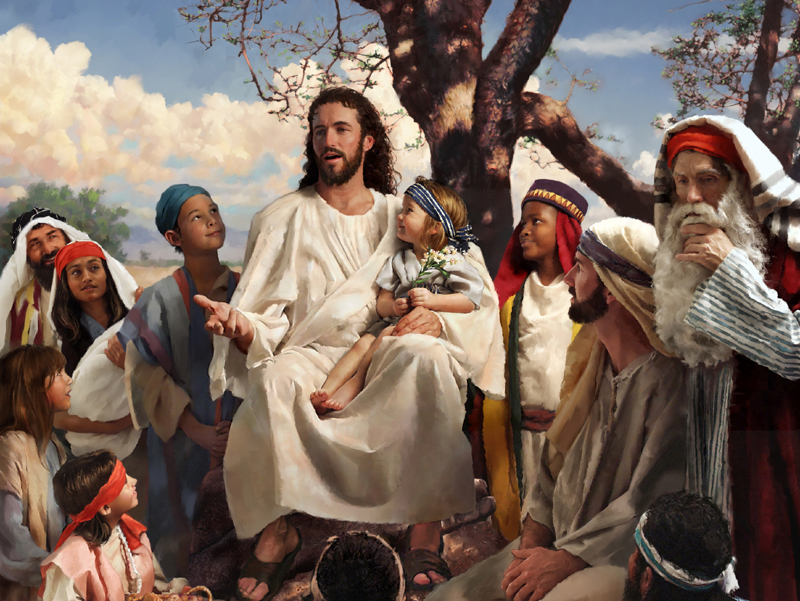
Many of the Jews of Christ’s time, including the disciples of John the Baptist, followed complicated rituals of fasting and purification, elaborated to the point where they could obscure genuine piety. It is noted that the followers of Christ do not follow such rituals. This must have seemed particularly strange to the followers of John. After all, John foretold Christ’s coming and saw that he was the Messiah as he began his ministry. Later, John’s uncertainty is such that he will send from prison to ask Christ if he is indeed the one who is to come. The reality of Christ present and the manner of his ministry must have been confusing and troubling to the Jews [ … ]
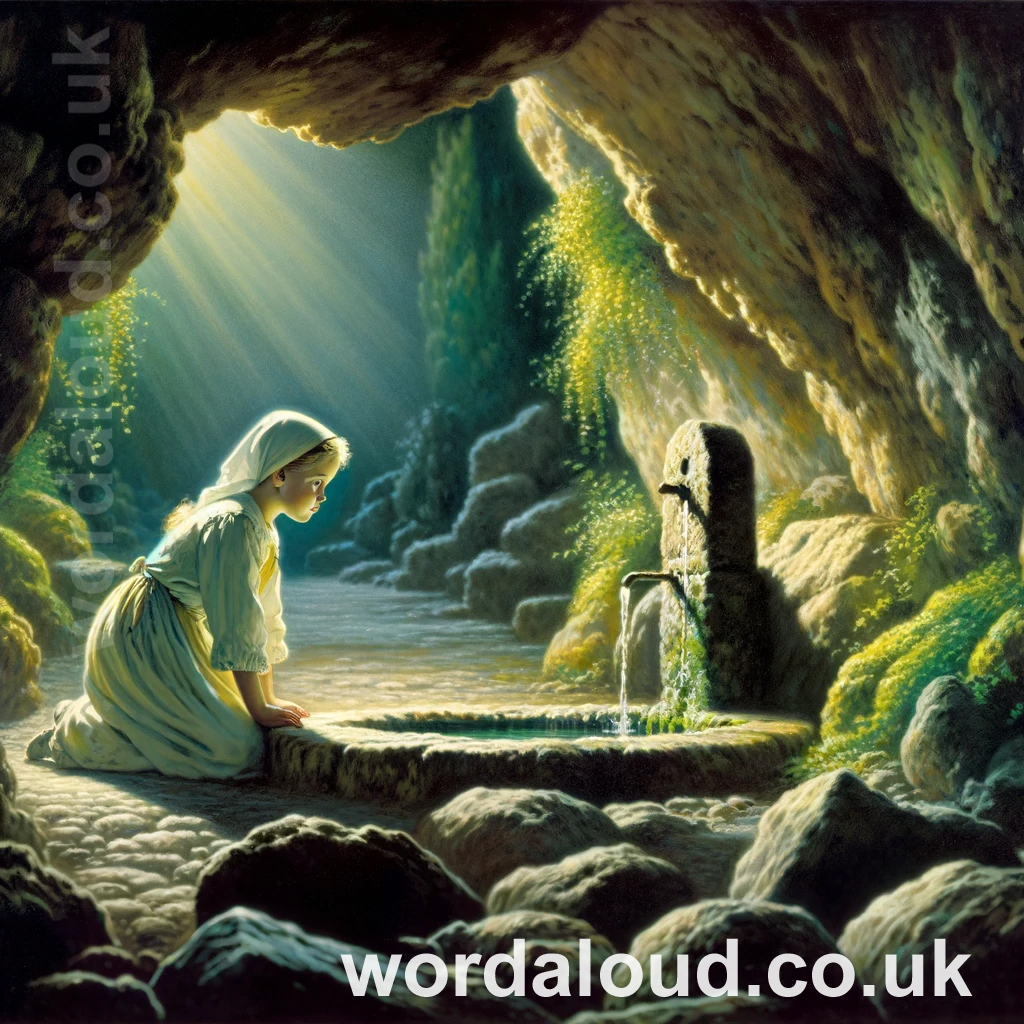
John 4:13-14 (KJV) ‘Jesus answered and said unto her, Whosoever drinketh of this water shall thirst again: But whosoever drinketh of the water that I shall give him shall never thirst; but the water that I shall give him shall be in him a well of water springing up into everlasting life.’ Introduction to the Life of Saint Bernadette Saint Bernadette Soubirous, a humble peasant girl from Lourdes, France, lived her life of faith, humility, and divine grace. Born on January 7, 1844, in the small town of Lourdes, Bernadette was the eldest of nine children in a poor and struggling family. Her father, François Soubirous, was a miller, and her mother, Louise, a laundress. The family lived in a former prison cell known as the Cachot, a damp and cramped space, according to their dire financial situation. Despite their poverty, the Soubirous family was deeply rooted in their Christian faith, a foundation that would profoundly shape Bernadette’s life and spiritual journey. Bernadette’s early years were marked by significant health challenges. She suffered from asthma and other respiratory ailments, which often left her weak and unable to attend school regularly. This lack of formal education meant that Bernadette struggled with reading and writing, and her understanding of Christian doctrine was limited. Nevertheless, she possessed a remarkable simplicity and purity of heart, qualities that would make her an ideal recipient of divine revelations. Bernadette’s life changed irrevocably on February 11, 1858, when she experienced the first of eighteen apparitions of the Blessed Virgin Mary at the grotto of Massabielle. On that cold winter day, Bernadette, her sister Toinette, and a friend were gathering firewood near the grotto when she heard a rustling sound and saw a beautiful lady dressed in white with a blue sash, holding a rosary. The lady, who later identified herself as the Immaculate Conception, appeared to Bernadette over the course of several months, delivering messages of penance, prayer, and the need for a chapel to be built at the site. Despite initial skepticism from her family and the local authorities, Bernadette remained steadfast in her account of the apparitions, enduring intense scrutiny and even ridicule. The apparitions drew enormous attention. Soon, people from all over France and beyond began to visit Lourdes, hoping to witness a miracle. One of the most significant messages conveyed by the Virgin Mary to Bernadette was the instruction to dig in the ground near the grotto, which led to the discovery of a spring. This spring, believed to have healing properties, became the focal point of the pilgrimage to Lourdes. Many miraculous healings have been attributed to the waters of Lourdes, reinforcing the belief in Bernadette’s visions and the sanctity of the site. As the apparitions concluded, Bernadette’s life took a different turn. In 1866, she joined the Sisters of Charity in Nevers, taking the name Sister Marie-Bernard. Her time in the convent was marked by continued poor health and humility, as she carried out menial tasks and lived a life of quiet service. Despite her physical suffering, Bernadette remained devout and accepted her hardships with grace, often repeating the phrase, “I am happier here in my little corner of the convent.” Her unwavering faith and dedication to her religious duties exemplified the depth of her spiritual commitment. Bernadette Soubirous passed away on April 16, 1879, at the age of 35, after a prolonged battle with tuberculosis. Her legacy, however, endured far beyond her earthly life. In 1933, she was canonized as a saint by Pope Pius XI, recognized for her humility, faith, and the miraculous events associated with her life. Today, millions of pilgrims flock to Lourdes each year, seeking spiritual renewal and physical healing at the site of her visions. Saint Bernadette’s life continues to inspire countless individuals around the world, reminding us of the power of faith, the virtue of humility, and the enduring presence of divine grace in our lives. To Visit Lourdes Visiting Lourdes, in the picturesque foothills of the Pyrenees in southwestern France, is an experience that transcends the physical journey, drawing pilgrims into a profound spiritual adventure. The small town, known for the Marian apparitions witnessed by Saint Bernadette Soubirous in 1858, has become one of the world’s most revered pilgrimage sites. As we approach the Sanctuary of Our Lady of Lourdes, the atmosphere is imbued with a palpable sense of reverence and anticipation. The grand basilicas, the tranquil Grotto of Massabielle and the gently flowing waters of the miraculous spring together create a sacred environment that invites reflection, prayer, and a deep connection with the divine. The focal point of any visit to Lourdes is the Grotto, where Bernadette experienced the apparitions of the Blessed Virgin Mary. Here, pilgrims can touch the rock face, light candles, and drink or bathe in the spring’s water, believed to possess healing properties. The profound silence and sense of sacredness at the Grotto allow visitors to contemplate their faith, seek solace and find spiritual renewal. The Rosary Basilica, with its mosaics, and the Basilica of the Immaculate Conception, perched above the Grotto, offer spaces for communal worship and personal meditation. The nightly candlelight processions, where pilgrims from around the globe unite in prayer and song, highlight the universal bond of faith and hope that Lourdes represents. Beyond its physical beauty and historical significance, visiting Lourdes offers a deeply personal and transformative experience. Pilgrims often arrive burdened with ailments, grief, or spiritual crises, seeking comfort and miracles. The stories of healing and faith that emerge from Lourdes are testimonies to the enduring power of belief and the intercession of the Blessed Virgin Mary. The communal aspect of the pilgrimage—sharing meals, prayers, and stories with fellow believers—fosters a sense of solidarity and mutual support. For many, the visit to Lourdes is a journey of healing, not only of the body but also of the soul, providing a renewed sense of purpose, peace, and spiritual clarity that lingers long after returning home. Prayer With Saint Bernadette Prayer for Intercession Dear […]
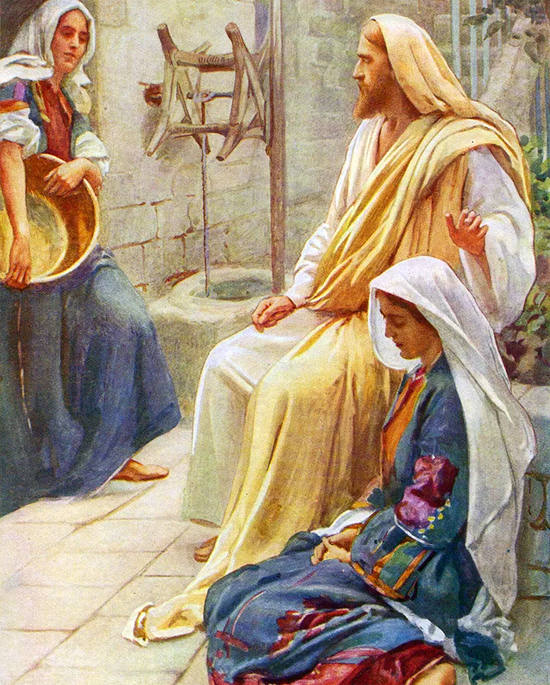
Saint Clement’s letter turns from theological reflection to moral exhortation. Its concern is the interior and social coherence of the Christian community at Corinth, expressed through humility, discipline, and collective worship. The passage belongs to the part of the epistle where Clement seeks to restore harmony after the divisions that had arisen within the Church—a recurring concern in early Christian correspondence, notably in Paul’s own letters to the same community [ … ]
