
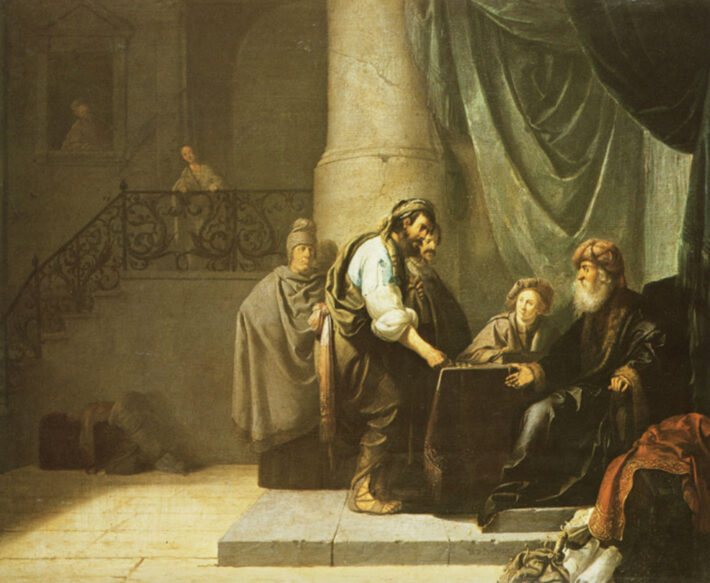
Christian Art | Parables Of Jesus | King James Audio Bible KJV
Matthew 25: 14-30 | Saturday Week 21 | King James Audio Bible | KJV | King James Version | Parables Of Jesus
14 ¶ For the kingdom of heaven is as a man travelling into a far country, who called his own servants, and delivered unto them his goods.
15 And unto one he gave five talents, to another two, and to another one; to every man according to his several ability; and straightway took his journey.
16 Then he that had received the five talents went and traded with the same, and made them other five talents.
17 And likewise he that had received two, he also gained other two.
18 But he that had received one went and digged in the earth, and hid his lord’s money.
19 After a long time the lord of those servants cometh, and reckoneth with them.
20 And so he that had received five talents came and brought other five talents, saying, Lord, thou deliveredst unto me five talents: behold, I have gained beside them five talents more.
21 His lord said unto him, Well done, thou good and faithful servant: thou hast been faithful over a few things, I will make thee ruler over many things: enter thou into the joy of thy lord.
22 He also that had received two talents came and said, Lord, thou deliveredst unto me two talents: behold, I have gained two other talents beside them.
23 His lord said unto him, Well done, good and faithful servant; thou hast been faithful over a few things, I will make thee ruler over many things: enter thou into the joy of thy lord.
24 Then he which had received the one talent came and said, Lord, I knew thee that thou art an hard man, reaping where thou hast not sown, and gathering where thou hast not strawed:
25 And I was afraid, and went and hid thy talent in the earth: lo, there thou hast that is thine.
26 His lord answered and said unto him, Thou wicked and slothful servant, thou knewest that I reap where I sowed not, and gather where I have not strawed:
27 Thou oughtest therefore to have put my money to the exchangers, and then at my coming I should have received mine own with usury.
28 Take therefore the talent from him, and give it unto him which hath ten talents.
29 For unto every one that hath shall be given, and he shall have abundance: but from him that hath not shall be taken away even that which he hath.
30 And cast ye the unprofitable servant into outer darkness: there shall be weeping and gnashing of teeth.
We are taught to use the great gifts God has given us, not to bury our abilities, to take risks, not to be afraid of your Master, to work the gifts we have received to bear fruit for God and the Kingdom, to open ourselves fully to God in the spirit of the New Law, then the Kingdom will grow and welcome all of us.
In the Parable of the Talents, the gifts each servant receives are not identical. They are given ‘to every man according to his several ability’. God does not overwhelm us with more than our capacities can bear – though we note that one talent corresponds to, roughly, 34 kilograms of gold, a considerable amount. It might seem to us that this initial distribution is unfair, and yet Jesus tells us that the Master is equally pleased with the servants given five and two talents. Each has used his gifts well. They have shown themselves worthy to enter into the joy of God’s Kingdom: ‘Well done, thou good and faithful servant: thou hast been faithful over a few things, I will make thee ruler over many things: enter thou into the joy of thy lord.’
We may experience some sympathy for the servant given only one talent. Perhaps, we may find ourselves wondering, there was a reason for this, a certain lack of capacity. And after all, the servant keeps his one talent safe to return it to his Master. It has not been lost.
This difficulty in the story is akin to other challenging thoughts throughout the parables. It demands we reflect on Christ’s meaning. It is a challenge to our preconceptions, to how we think of ourselves, our world and of God. We may need to adjust our ideas of what is true and good.
The servant’s own words condemn him. ‘Lord, I knew thee that thou art an hard man, reaping where thou hast not sown, and gathering where thou hast not strawed: And I was afraid, and went and hid thy talent in the earth: lo, there thou hast that is thine.’ The servant, in other words, has acted, or failed to act, through a false idea of God. He has seen in God a ‘hard man’, a severe master, before which false idea of God the human being is afraid; he closes himself up in himself, becoming incapable of growth and freedom, of doing good in community with others, of bearing fruit for the Kingdom. The Master points out the wrongness of the servant’s idea of him, saying: Well then, if you supposedly ‘knew’ I’m as mean as all that, you could at least have had the sense to put my money in the bank to earn some interest. There is implied here an attack on the Pharisees, who cling to a meticulous observance of the Old Law, while lacking faith.
And so the servant is punished. His talent is taken away from him and given to the servant with most. ‘For unto every one that hath shall be given, and he shall have abundance: but from him that hath not shall be taken away even that which he hath.’ Be open to God and bring your gifts out into the world. Love your fellow man. Help your community to grow in joy and freedom. Your reward will be everything. But fall away from God and your fellow human beings and you’ll have nothing; the Kingdom shall not be yours; ‘there shall be weeping and gnashing of teeth’.
‘First he came in the person of his preachers and he has filled the whole earth. We must not resist his first coming and then we shall not have cause to dread his second coming…. Give from your riches. From whose riches do you give except from his? If you gave from your own riches it would be bounty, but if you give from his, it is only a repayment. For what have you that you did not receive? The most pleasing sacrifices to God are mercy, humility, confession, peace, love. If we bring these to God, then we shall await without fear the coming of the judge who will judge the world with righteousness and the peoples with his truth.’ St Augustine



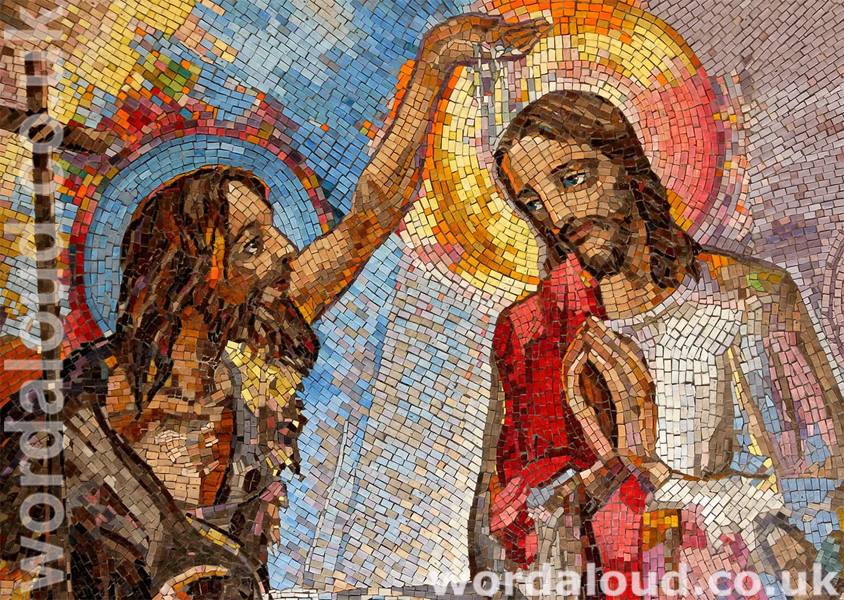
This sermon, attributed to Leo the Great, develops the theme of ‘Christ being formed in the believer’ by situating it within a broader account of creation, incarnation, and eschatological fulfilment. In contrast to the more pastoral and introspective tone of Augustine of Hippo, Leo adopts a declarative and liturgical style, marked by rhetorical elevation and doctrinal clarity [ … ]
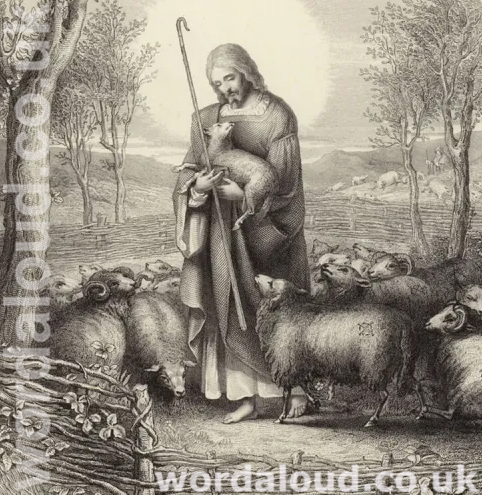
Saint Augustine reflects on Christ’s words: ‘My sheep hear my voice and follow me.’ From this, he draws the principle that all true shepherds are united in Christ, the one true shepherd. Individual pastors do not act independently, for their voice is authentic only when it is the voice of Christ speaking through them. Unity is therefore essential: the many who share in Christ’s ministry form one in him, since division would contradict the reality of the one flock [ … ]

In this reading, Saint Jerome offers a layered interpretation of Ecclesiastes, moving from a literal reading of human labour and enjoyment to a more developed spiritual understanding. The text reflects Jerome’s characteristic method: a progression from the observable realities of life to their theological fulfilment in Christ [ … ]
