Office Of Readings | Wednesday, Lent Week 1 | From A Demonstration By Aphraates, Bishop
‘Circumcision of the heart.’
Aphraates was a prominent Syriac Christian writer of the early Church, active in the 4th century. He is best known for a series of homilies called the Demonstrations, which provide valuable insights into the theology, liturgy, and practices of the early Syriac Church. Aphraates is often referred to as the Persian Sage, reflecting his origins in the region of the Sasanian Empire (modern-day Iraq and Iran).
This reading reflects on the progression of God’s covenants with humanity, culminating in the new covenant established by Christ. It traces the key moments in salvation history, beginning with Adam, where God introduced a law forbidding him from eating from the tree of life. With Noah, God provided the rainbow as a sign of His promise. Abraham received the mark of circumcision, while Moses was given the Passover lamb as a sign of deliverance.
Each of these covenants was distinct, yet all came from the same God. When the Mosaic covenant was no longer observed, God promised a new and final covenant: one in which all would know Him directly. This new covenant no longer required outward signs like physical circumcision but instead called for an inward transformation — the circumcision of the heart.
The text draws a parallel between Jesus, son of Nun (Joshua), who led the Israelites across the Jordan into the Promised Land, and Jesus Christ, who leads believers to eternal life. Both figures perform acts of renewal: Joshua circumcised the people with a stone knife, while Christ brings spiritual renewal through baptism and His Word.
The reading emphasizes that those circumcised in heart — those renewed in faith and baptism — are heirs to the promise given to Abraham, uniting all believers in the covenant of Christ.
From A Demonstration By Aphraates, Bishop
Law and covenant have been entirely changed. God changed the first pact with Adam, and gave a new one to Noah. He gave another to Abraham, and changed this to give a new one to Moses. When the covenant with Moses was no longer observed, he gave another pact in this last age, a pact never again to be changed.
He established a new law for Adam, that he could not eat of the tree of life. He gave to Noah the sign of the rainbow in the clouds. He then gave Abraham, chosen for his faith, the mark and seal of circumcision for his descendants. Moses was given the Passover lamb, the propitiation for the people.
All these covenants were different from each other. Moreover, the circumcision that is approved by the giver of those covenants is of the kind spoken of by Jeremiah: Circumcise your hearts. If God’s pact with Abraham was firm, so also is this covenant firm and trustworthy, nor can any other law be laid down, whether it originates outside the law or among those subject to the law.
God gave Moses a law together with his prescriptions and precepts, and when it was no longer kept, he made the law and its precepts of no avail. He promised a new covenant, different from the first, though the giver of both is one and the same. This is the covenant that he promised: All shall know me from the least to the greatest. In this covenant there is no longer any circumcision of the flesh, any seal upon the people.
We know, dearly beloved, that God established different laws in different generations which were in force as long as it pleased him. Afterwards they were made obsolete. In the words of the apostle: In former times the kingdom of God existed in each generation under different signs.
Moreover, our God is truthful and his commandments are most trustworthy. Every covenant was proved firm and trustworthy in its own time, and those who have been circumcised in heart are brought to life and receive a second circumcision beside the true Jordan, the waters of baptism that bring forgiveness of sins.
Jesus, son of Nun, renewed the people’s circumcision with a knife of stone when he had crossed the Jordan with the Israelites. Jesus, our Saviour, renews the circumcision of the heart for the nations who have believed in him and are washed by baptism: circumcision by the sword of his word, sharper than any two-edged sword.
Jesus, son of Nun, led the people across the Jordan into the promised land. Jesus, our Saviour, has promised the land of the living to all who have crossed the true Jordan, and have believed and are circumcised in heart.
Blessed, then, are those who are circumcised in heart, and have been reborn in water through the second circumcision. They will receive their inheritance with Abraham, the faithful leader and father of all nations, for his faith was credited to him for righteousness.




O most loving Sacred Heart of Jesus, as I meditate on your love revealed at the Last Supper, I am humbled by your act of service in washing the feet of your disciples. Help me to have a servant’s heart and to always be ready to serve others. May your words of comfort and assurance be with me always, especially in times of trial. Help me to remember your ultimate sacrifice on the Cross and to love others as you have loved me. Amen [ … ]

Elizabeth is introduced in Luke 1:5 as a woman ‘of the daughters of Aaron,’ indicating her priestly lineage, which complements her husband Zachariah’s role as a priest ‘of the course of Abia’ (Luke 1:5). Both Elizabeth and Zachariah are described as ‘righteous before God, walking in all the commandments and ordinances of the Lord blameless’ (Luke 1:6). This emphasizes their piety and faithfulness to God’s law. Despite their righteousness, the couple is childless because Elizabeth is barren, and both are advanced in age (Luke 1:7) [ … ]
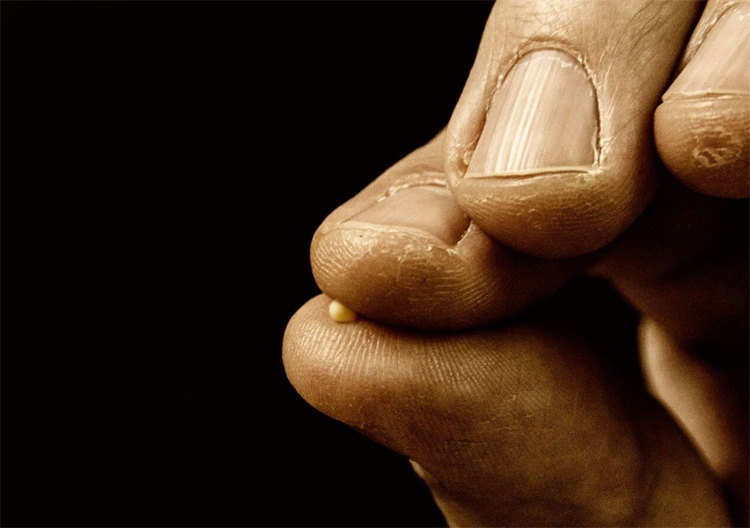
Just as Jesus teaches in these parables of that which is small becoming great, through the process of being hidden, in the earth or in the as yet unleavened dough, so Jesus teaches us, as the Gospel Evangelist teaches us, that the parables themselves reveal that which has been hidden, drawing the listener from a particular instance, readily recognizable from everyday life, to an understanding of matters of deep spiritual and cosmic significance [ … ]