
Christian Art | George Herbert | Sepulchre | The Church | The Quidditie
George Herbert | The Temple | The Church | The Quidditie
My God, a verse is not a crown,
No point of honour, or gay suit,
No hawk, or banquet, or renown,
Nor a good sword, nor yet a lute:
It cannot vault, or dance, or play;
It never was in France or Spain;
Nor can it entertain the day
With a great stable or demain:
It is no office, art, or news,
Nor the Exchange, or busie Hall;
But it is that which while I use
I am with thee, and Most take all.

George Herbert | The Temple | The Church | The Quidditie
This poem meditates on the nature and purpose of a ‘verse’, emphasizing simplicity and spiritual focus. Herbert frames the verse not as grand poetry or artistic achievement but as a humble, personal offering to God. By reflecting on what a verse is not, Herbert situates the act of writing in a starkly different realm from that of worldly pursuits or markers of success. Humility embedded in the term ‘verse’, which can mean a single line or small unit of expression, underscores the poet’s theological concerns: how the simplest acts, when directed toward God, can acquire immense spiritual value.
The poem opens by rejecting any association between a verse and trappings of honour or vanity: ‘My God, a verse is not a crown, / No point of honour, or gay suit.’ Here, Herbert juxtaposes the spiritual act of creating poetry with material symbols of achievement, such as a crown, a fine outfit, or renown. This poem is not a public declaration or an ornament for the poet’s ego; it exists in direct contrast to things that signify power or self-glorification in human terms.
Herbert contrasts his poem with other worldly pursuits: ‘It cannot vault, or dance, or play; / It never was in France or Spain.’ Unlike courtly entertainments or exotic travels, the poem is rooted in stillness rather than spectacle. It also stands apart from the social world of commerce or governance: ‘It is no office, art, or news, / Nor the Exchange, or busie Hall.’ Through this litany of negations, Herbert positions his verse outside spheres of human enterprise that dominate daily life. Herbert’s poem exists in a different category: neither a public action nor a means of gaining attention, it is purely an act of personal devotion.
By emphasizing what a poem lacks, Herbert leads to its true purpose: ‘But it is that which while I use / I am with thee, and Most take all.’ Herbert’s poem – his verse – becomes an intimate act of communion with God. Its spiritual weight derives not from its form or beauty but from its function as a conduit for divine connection. This final couplet encapsulates central paradox: despite its modesty, Herbert’s verse becomes the poet’s ultimate offering, achieving more than any worldly pursuit because it places the poet in God’s presence.
Herbert’s choice of the term ‘verse’ rather than ‘poetry’ or ‘poem’ sharpens this dynamic. A verse, as an individual unit, emphasizes smallness, humility, and precision. This resonates with the poet’s theological vision, in which even smallest acts acquire immense value when oriented toward God. Each line of the poem reflects the modesty inherent in this offering—structured, deliberate, and free of embellishment. Herbert’s verse embodies what it describes: a simple but profound gesture of devotion.
Herbert transforms the act of writing into a spiritual practice. The poem insists that a verse’s worth lies not in its artistic ambition but in its capacity to draw the soul closer to God. Its rejection of worldly markers of value underscores theological conviction that true fulfilment lies in spiritual, not earthly, pursuits. Thus, the verse, modest in its origins, becomes an act of surrender to divine love.


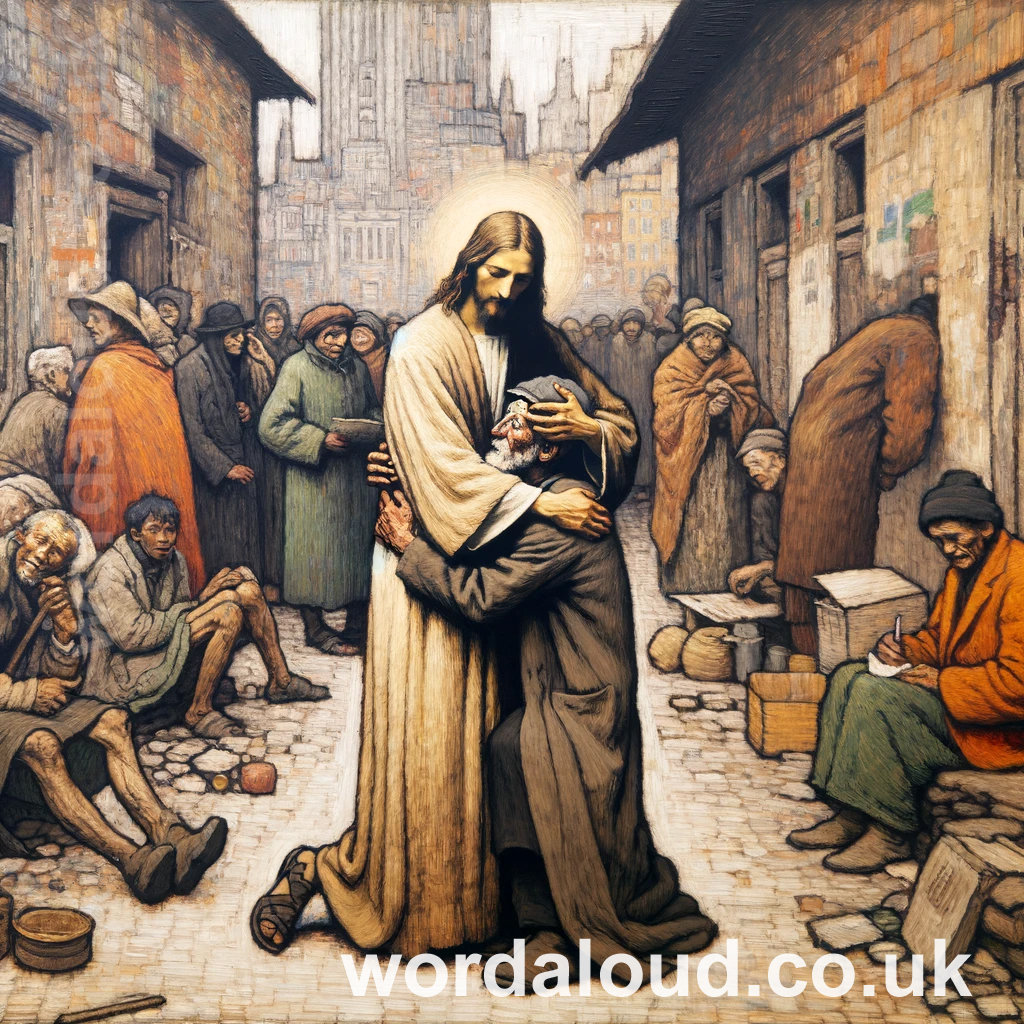
Dear Jesus, You have taught us the value of each person and the importance of justice. Open my eyes to see the suffering and injustice around me. Fill my heart with compassion and the desire to act. Help me to stand up for those who are oppressed and marginalized, to speak out against injustice, and to work tirelessly for a world that reflects your love and justice. Guide my steps and use my voice to bring about change. May your spirit of justice be my guide, and may I be a beacon of your love in a world that so desperately needs it [ … ]
Psalm 89 is a majestic hymn, a symphony of faithfulness, and a reflection on the enduring promises of God. Attributed to Ethan the Ezrahite, this psalm is a profound meditation on the covenant established with David, a covenant marked by divine pledges of steadfast love, eternal kingship, and an unbreakable lineage. The psalmist weaves history, theology, and the psalmist’s own individual spiritual contemplation [ … ]
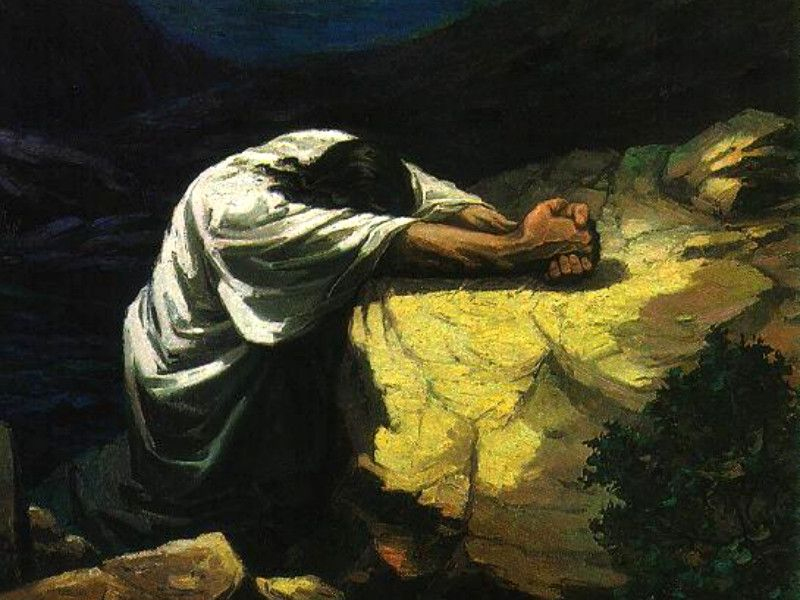
Prayer is a form of communication between a person and a higher power. It can take many forms, from a casual conversation to a formal ritual, and can involve petition, thanksgiving, and confession. Prayer can be silent or spoken, individual or communal, and may be directed to God, a saint, an angel, or any other object of worship. Through prayer, an individual expresses their innermost thoughts and feelings to the divine, seeking comfort, guidance, and strength. Prayer can be used to foster a connection to the spiritual realm, bring a sense of peace, and help one cultivate a sense of purpose and meaning in life [ … ]
