

Christian Art | Love Revealed By Jesus Christ | Truth, Faith, Money, Sex, Power
Matthew 4: 1-11 | King James Audio Bible | King James Version KJV
‘Lord Jesus, Help me to discover truth in your life and in your life alone. Protect me from the devil’s false promises. Help me please to be closer with you. Please and thankyou. Amen.’
‘What is truth?’ So asks Pontius Pilate at the show-trial of Jesus. Pilate’s question dismisses and inherently rejects categorical truth as value. Pilate throws the truth to the masses – who cry for the blood of Jesus. As Christians, we hope – we pray, we ask – to adhere to truth. This is our truth: that Jesus is the Son of God, that Jesus died for our sins, and that through Jesus we can attain salvation. Yet, even as we seek to live in the truth, we are tested and tempted, just as Jesus was in the wilderness by Satan.
The temptation of Jesus by Satan in the wilderness illustrates challenges of staying true to belief in the face of temptation. As recounted in the Gospel of Matthew, Jesus was led by the Spirit into the wilderness to fast and pray for 40 days and 40 nights. During this time, Satan appeared to Jesus and offered him various temptations.
First, Satan tempted Jesus to turn stones into bread, but Jesus responded by quoting Scripture: ‘Man shall not live by bread alone, but by every word that proceedeth out of the mouth of God.’ (Matthew 4:4, KJV) Next, Satan took Jesus to the pinnacle of the temple and urged Jesus to jump, saying that the angels would save him. But Jesus replied, ‘Thou shalt not tempt the Lord thy God.’ (Matthew 4:7, KJV) Finally, Satan took Jesus to a high mountain and showed to Jesus all the kingdoms of the world, offering them to Jesus if Jesus would bow down and worship Satan. But Jesus again quoted Scripture, saying, ‘Get thee hence, Satan: for it is written, Thou shalt worship the Lord thy God, and him only shalt thou serve.’ (Matthew 4:10, KJV)
The temptation of Jesus in the wilderness highlights tension between faith and worldly temptations, and the importance of maintaining a steadfast faith in the face of adversity. Just as Jesus was tempted to compromise his mission and his integrity, modern Christians may face temptations such as greed, selfishness and lust that can undermine faith and our relationship with God.
As we strive to live in the truth of Jesus Christ, we are asked by Jesus to be vigilant against temptations that seek to lead us astray. We must be mindful of the ways in which our faith can be tested and challenged, and seek to deepen our understanding of the Word of God so that we may stay on a path of righteousness.
The devil tempts Jesus with false promises and lies, offering to Jesus power and wealth (the irony here!) in exchange for Jesus’ allegiance. But Jesus resists the temptation and remains faithful to truth.
This tension between truth and deception is evident in Jesus’ teachings about money and sex. In the Gospel of Matthew, Jesus warns his followers about the dangers of wealth, urging his disciples to store up treasures in heaven rather than on earth. Jesus also teaches the importance of sexual purity and fidelity, and harmful effects of lust and adultery.


Love Revealed By Jesus Christ | Truth, Faith, Money, Sex And Power | Gospel Truth About Money
The story of Jesus’ temptation by Satan in the wilderness is a powerful reminder of the challenges that we face in our lives as Christians. Like Jesus, we are often tempted by the false promises of wealth, power, and pleasure, and we must remain vigilant in our commitment to truth and righteousness.
Pope Francis wrote: ‘We must be on guard against the temptation to fall into a facile and superficial way of life that obscures the depth and richness of human existence.’ (Pope Francis, Laudato Si’, 2015)
In the Gospel of Matthew, Jesus teaches that we cannot serve both God and mammon, and that our true treasures are to be found in heaven. This is a radical message that challenges the values of our modern consumerist society, which often equates success and happiness with material wealth and possessions.
Pope Benedict wrote: ‘The greatest poverty of all is not to know Christ.’ (Pope Benedict XVI, Deus Caritas Est, 2005) In other words, our true wealth and abundance come not from the things we accumulate in this world, but from our relationship with God and our commitment to living a life of truth, justice, and compassion.
The Message Of Jesus On Money And Possessions
Jesus’ message on money and possessions is clear and unambiguous: we cannot serve both God and mammon (Matthew 6:24). Jesus challenges his followers to re-evaluate their priorities and to seek first the kingdom of God and his righteousness (Matthew 6:33). Jesus warns against the dangers of wealth, which can lead to greed, selfishness, and spiritual poverty.
In the Gospel of Luke, Jesus tells the parable of the rich fool, who stored up his abundance of crops in barns and said to himself, ‘You have plenty of grain laid up for many years. Take life easy; eat, drink and be merry’ (Luke 12:19). But God said to him, ‘You fool! This very night your life will be demanded from you. Then who will get what you have prepared for yourself?’ (Luke 12:20) Jesus concludes the parable by saying, ‘This is how it will be with whoever stores up things for themselves but is not rich toward God.’ (Luke 12:21)
In the Gospel of Mark, a rich young man asks Jesus what he must do to inherit eternal life. Jesus tells him to sell all his possessions, give the money to the poor, and follow him (Mark 10:21). The young man goes away sad, because he has great wealth. Jesus then says to his disciples, ‘How hard it is for the rich to enter the kingdom of God!’ (Mark 10:23)
In the Gospel of Matthew, Jesus tells the parable of the talents, in which a master entrusts his servants with different amounts of money. The servants who invested their money and earned a return are praised, while the one who buried his talent is condemned. Jesus concludes the parable by saying, ‘For whoever has will be given more, and they will have an abundance. Whoever does not have, even what they have will be taken from them.’ (Matthew 25:29)
Danger Of False Promises About Money And How They Contradict Gospel Truth
The danger of false promises about money is that they lead us away from the Gospel truth and towards spiritual poverty. The pursuit of wealth and material possessions can become an idol that distracts us from our relationship with God and our obligations to love and serve others.
Pope Francis wrote: ‘Money has to serve, not to rule.’ (Pope Francis, Evangelii Gaudium, 2013) The Gospel truth about money is that it is a tool to be used for the common good, not an end in itself. We are called to be good stewards of the resources that God has entrusted to us, using them to promote justice, peace, and the dignity of every human person.
The Gospel truth about money is a call to radical discipleship, a call to re-evaluate our priorities and to seek first the kingdom of God. False promises of wealth and material possessions are a snare that lead us away from the Gospel truth and towards spiritual poverty. Jesus asks us to be good stewards of the resources that God has entrusted to us, using our resources to build the common good and to build the Kingdom of God on earth.
Love Revealed By Jesus Christ | Truth, Faith, Money, Sex And Power | Gospel Truth About Sex
Jesus’ teachings on sexual purity and fidelity challenge the prevailing norms of our society, which often celebrate sexual promiscuity and exploitation as a form of liberation or empowerment. Jesus’ message is clear: sexual intimacy is a sacred and beautiful gift from God, intended to be shared. Anything that deviates from this ideal, whether it be pornography, casual sex, or adultery, is a distortion of God’s plan for human sexuality.
Pope Francis: ‘Sexuality, sex, is a gift of God. Not taboo!’ (Pope Francis, The Name of God Is Mercy, 2016) However, this gift comes with responsibilities and obligations, including the obligation to respect the dignity and autonomy of others, to avoid exploitation and abuse, and to promote the common good. In a world where sexual objectification and violence are all too common, the Gospel message of sexual purity and fidelity is a powerful antidote to the prevailing culture of hedonism and selfishness.
The Message Of Jesus On Sex And Relationships
Jesus’ message on sex and relationships is rooted in Jesus’ understanding of the human person as a beloved child of God, made in the image and likeness of God (Genesis 1:27). Jesus teaches that sexuality is a gift from God, to be expressed within the context of a committed, loving, and life-giving relationship.
In the Gospel of Matthew, Jesus teaches that marriage is a sacred bond between one man and one woman. Jesus quotes from Genesis, saying, ‘For this reason, a man will leave his father and mother and be united to his wife, and the two will become one flesh.’ (Matthew 19:5) Jesus also emphasizes the importance of faithfulness and the dangers of adultery and lust, saying, ‘But I tell you that anyone who looks at a woman lustfully has already committed adultery with her in his heart.’ (Matthew 5:28)
Gospel Truth About Sex Expressed In The Gospels
In the Gospel of John, Jesus encounters a woman caught in the act of adultery. While the religious leaders seek to condemn her, Jesus challenges them, saying, ‘Let any one of you who is without sin be the first to throw a stone at her.’ (John 8:7) Jesus shows mercy and compassion to the woman, but he also challenges her to leave her life of sin and to live in accordance with God’s will.
In the Gospel of Luke, Jesus tells the parable of the prodigal son, who squanders his inheritance on loose living and immoral behaviour. When the son returns home, the father welcomes him with open arms, but Jesus also challenges him to repent and to change his ways.
Danger Of False Promises About Sex And How They Contradict The Gospel Truth
The danger of false promises about sex is that they distort the true nature of sexuality and relationships, leading us away from the Gospel truth and towards brokenness and sin. The culture of individualism and instant gratification can lead us to view sexuality as a commodity, to be bought and sold, rather than a sacred gift to be cherished and respected.
Truth, Faith, Money, Sex And Power | The Devil’s False Promises And How They Relate To Money And Sex
The devil’s false promises are those that promise satisfaction, fulfilment, and pleasure, but in reality, they lead to destruction, emptiness, and pain. The devil uses money and sex as tools to lure people away from the truth of the Gospel, tempting them with the promise of happiness and success. However, the devil’s promises are empty and temporary, leading to a life of dissatisfaction and misery.
The Devil’s False Promises Are Expressed In The World
In the world today, the devil’s false promises about money and sex are everywhere. Advertisements tell us that happiness and success come from owning the latest gadget or fashion trend, and that sex is the key to intimacy and fulfilment. Society promotes the idea that one’s worth is determined by their wealth and sexual experiences, leading to a constant pursuit of these things at the expense of relationships, community, and even one’s own soul.
Impact Of The Devil’s False Promises On Individuals And Society
The devil’s false promises have a devastating impact on individuals and society. Those who fall prey to the temptations of money and sex find themselves on a never-ending cycle of consumption, always seeking more and never finding true satisfaction. This leads to broken relationships, addiction, and a sense of emptiness and purposelessness. Society as a whole becomes increasingly individualistic and materialistic, leading to a breakdown of community and a lack of concern for the well-being of others.
In contrast, the Gospel truth about money and sex provides a path to true fulfilment and happiness. Jesus teaches us that our worth is not determined by our possessions or sexual experiences, but rather by our relationship with God and our love for others. By following Gospel truth, we find true joy and contentment, and live a life of purpose and meaning.
Pope Francis: ‘The world tells us to seek success, power and money; God tells us to seek humility, service and love.’
Pope Benedict XVI: ‘The Gospel is not a theory, it is not a philosophy, it is not an idea. The Gospel is a person, it is Jesus Christ himself.’
Love Revealed By Jesus Christ | Importance Of Discernment And Critical Thinking In Identifying False Promises About Money And Sex
In order to identify the devil’s false promises about money and sex, we are asked by Jesus to cultivate the virtue of discernment and engage in critical thinking. We are to recognize difference between true happiness and a temporary pleasure that the devil promises. By cultivating a deeper understanding of the Gospel truth, we can develop a strong sense of discernment and critical thinking, enabling us to avoid falling into the traps of the devil’s false promises.



This section of Saint Cyprian’s treatise on the Lord’s Prayer turns our attention to the profoundly interconnected petitions: Give us this day our daily bread, and forgive us our trespasses. Cyprian interprets these lines not merely in material or moral terms, but through a rich theology centred on the Eucharist, sin, and salvation [ … ]
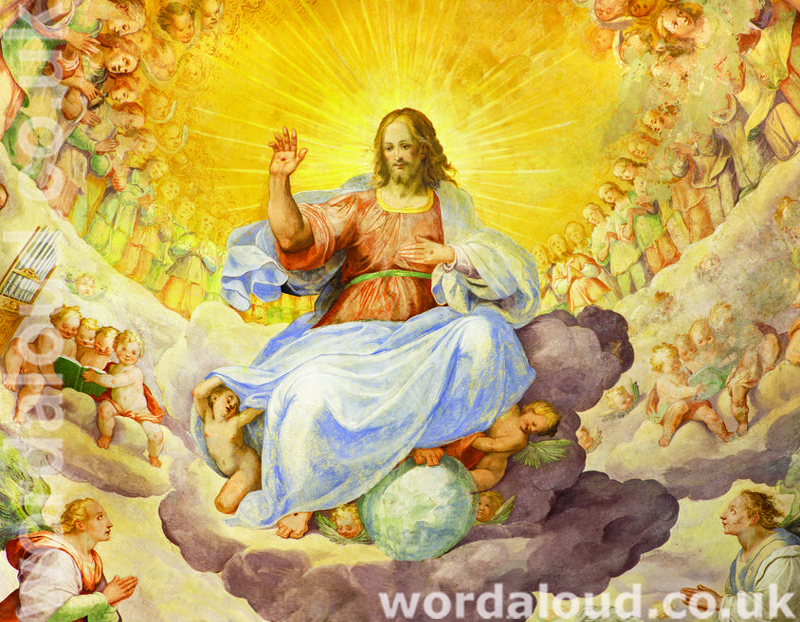
Saint Thomas Aquinas reflects on the final words of the Creed—life everlasting—and treats them not as an abstract topic but as the culmination of Christian desire. His account begins by situating eternal life within the relationship between God and the human person. God is not merely the giver of a reward; God is the reward. The end of human striving is not a state, nor even a place, but union with the living God. Aquinas therefore frames eternal life as a participation in God’s own life, achieved through a direct vision that surpasses all earthly knowing [ … ]

In this reading from Against the Heresies, Saint Irenaeus sets out a central conviction of early Christian theology: knowledge of God the Father is possible only through the Son, the Word of God. This is not a matter of intellectual effort or philosophical ascent, but of divine self-disclosure [ … ]
