
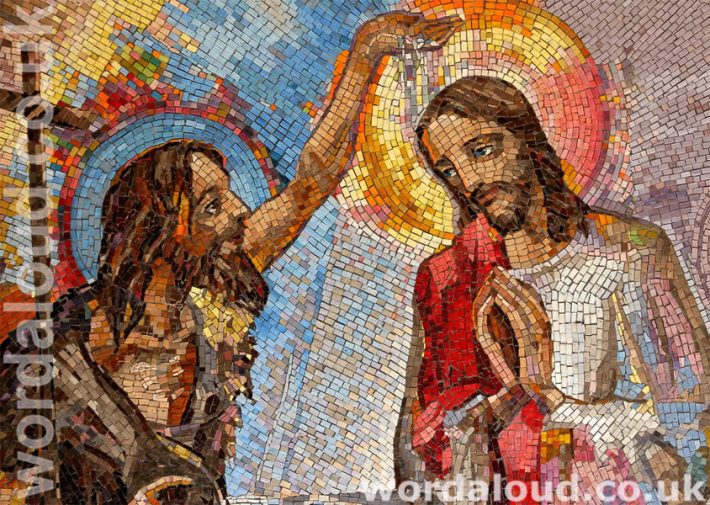
Christian Art | John The Baptist With Jesus | Baptism Of The Lord
Office Of Readings | Advent Sunday Week 2 | A Reading From The Commentary On Isaiah By Eusebius Of Caesarea | A Voice Of One Crying In The Wilderness
‘A voice of one crying in the wilderness.’
Eusebius reads Isaiah as a map of the gospel: a prophecy pointing ahead to John the Baptist, to Christ’s appearance, and to the mission of those who would later preach Christ to the world. He pays close attention to the detail that the voice cries not in the city but in the wilderness. For him this matters, because the wilderness symbolises the place where God is not expected, where the ground is rough, where paths have never been cleared. Eusebius sees this as an image of the world before the gospel, a world without the knowledge of God.
John the Baptist therefore becomes the first sign that God is entering this unprepared land. His message—prepare the way, make straight the paths—marks the beginning of a new approach from God. The wilderness is no longer a place of absence but the place where God chooses to appear. Eusebius recalls Christ’s baptism as the moment when this becomes visible: the heavens open, the Spirit descends, and the Father’s voice reveals the Son. All of this, he says, is the fulfilment of Isaiah’s promise that the glory of the Lord would appear where no one expected it.
Eusebius then turns to the command to prepare a way. For Eusebius, this ‘way’ is the preaching of the gospel. The gospel opens a road across previously impassable ground, allowing people who once knew nothing of God to recognise God’s presence. Isaiah’s prophecy of a straight path becomes the simple, direct proclamation of Christ: a message meant for all people, not just a few.
Eusebius next speaks of the ‘high mountain’ from which good news is to be proclaimed. He identifies this mountain with Zion, which for him symbolises the apostolic community. The apostles, raised up not by privilege but by being chosen and taught by Christ, become the ones who will stand high and announce God’s salvation. The evangelists, too, stand in this line: bearers of good news who speak first to Israel but ultimately to all nations.
Eusebius presents a quiet, unfolding movement: from prophet, to forerunner, to Christ, to apostle, to evangelist, and then outward to the whole world. Everything begins in a barren, neglected place, and from there the gospel spreads. The wilderness becomes the doorway through which God enters human history. What seemed empty becomes the place where God speaks most clearly.
A Reading From The Commentary On Isaiah By Eusebius Of Caesarea | A Voice Of One Crying In The Wilderness
The voice of one crying in the wilderness: Prepare the way of the Lord, make straight the paths of our God. The prophecy makes clear that it is to be fulfilled, not in Jerusalem but in the wilderness: it is there that the glory of the Lord is to appear, and God’s salvation is to be made known to all mankind.
It was in the wilderness that God’s saving presence was proclaimed by John the Baptist, and there that God’s salvation was seen. The words of this prophecy were fulfilled when Christ and his glory were made manifest to all: after his baptism the heavens opened, and the Holy Spirit in the form of a dove rested on him, and the Father’s voice was heard, bearing witness to the Son: This is my beloved Son, listen to him.
The prophecy meant that God was to come to a deserted place, inaccessible from the beginning. None of the pagans had any knowledge of God, since his holy servants and prophets were kept from approaching them. The voice commands that a way be prepared for the Word of God: the rough and trackless ground is to be made level, so that our God may find a highway when he comes. Prepare the way of the Lord: the way is the preaching of the Gospel, the new message of consolation, ready to bring to all mankind the knowledge of God’s saving power.
Climb on a high mountain, bearer of good news to Zion. Lift up your voice in strength, bearer of good news to Jerusalem. These words harmonise very well with the meaning of what has gone before. They refer opportunely to the evangelists and proclaim the coming of God to men, after speaking of the voice crying in the wilderness. Mention of the evangelists suitably follows the prophecy on John the Baptist.
What does Zion mean if not the city previously called Jerusalem? This is the mountain referred to in that passage from Scripture: Here is mount Zion, where you dwelt. The Apostle says: You have come to mount Zion. Does not this refer to the company of the apostles, chosen from the former people of the circumcision?
This is the Zion, the Jerusalem, that received God’s salvation. It stands aloft on the mountain of God, that is, it is raised high on the only-begotten Word of God. It is commanded to climb the high mountain and announce the word of salvation. Who is the bearer of the good news but the company of the evangelists? What does it mean to bear the good news but to preach to all nations, but first of all to the cities of Judah, the coming of Christ on earth?
Christian Prayer With Jesus
Lord, prepare in us a clear path for your coming.
Open our hearts where the ground is rough,
and make straight in us whatever has grown crooked.
Give us the courage to bear your good news,
and to recognise your presence where we least expect it.
Amen.
Glossary Of Christian Terms
Wilderness – A place without the knowledge or worship of God; also an image for the inner places that feel empty or unprepared.
Prepare the way – To open the heart to God’s approach, and to clear obstacles to the gospel.
Zion – A biblical name for Jerusalem; here used to symbolise the apostolic community.
Evangelists – Those who proclaim the good news of Christ, especially the authors of the four gospels.
Glory of the Lord – God’s presence made visible or recognisable.



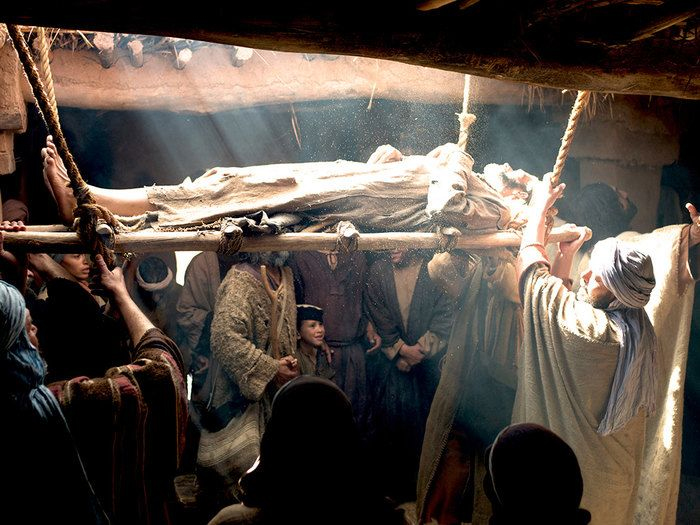
The words of Jesus to the paralytic man on his bed might have seemed strange and even, at first, insensitive: the paralytic has been brought to Jesus seeking to be healed, and Jesus says to him: ‘Son, thy sins be forgiven thee.’ This could hardly be what the paralysed man might have been expecting [ … ]

Saint Pacian continues his reflection on baptism by contrasting two forms of human existence: that of the earthly Adam and that of the heavenly Christ. Humanity inherits from Adam mortality and corruption, but through Christ, the ‘second man’ who came from heaven, believers are promised life that death cannot extinguish. Pacian echoes the words of Jesus in John 11:25: ‘Whoever believes in me, even if he die, shall live.’ Death, therefore, becomes not an end but a sleep from which the faithful are awakened in Christ [ … ]
Jesus taught us that family is not only about blood relationships but also about treating others with love and respect. He said that anyone who does the will of God is like family to him. So, as followers of Jesus, we should honour our parents and all those who have cared for us, showing them love, gratitude, and forgiveness [ … ]
