
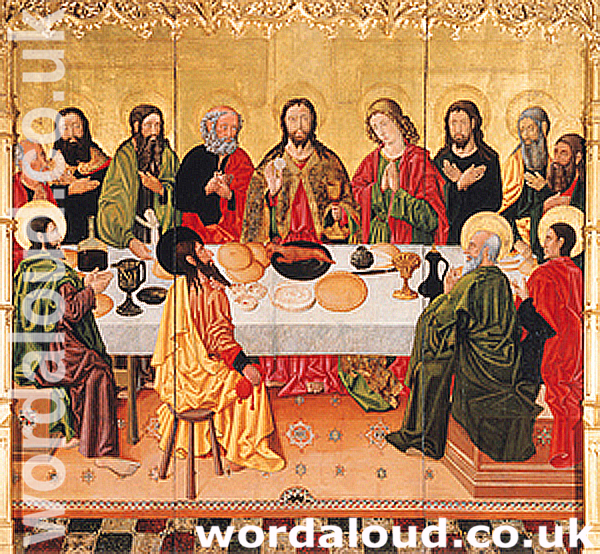
Christian Art | Christian Life In Community | The Last Supper
Office Of Readings | Week 14, Monday, Ordinary Time | A Reading From The Letter Of Pope Saint Clement I To The Corinthians | The Communal Good
‘Let each fix his eyes on the good of the whole community.’
In his letter to the Corinthians, Pope Saint Clement I issues a passionate appeal for unity, humility, and fidelity within the Church. Writing towards the end of the first century, likely around 96 AD, Clement addresses a community torn by internal conflict, where certain members had unjustly deposed presbyters appointed through apostolic succession. His letter, widely considered the earliest Christian writing outside the New Testament, is both a plea and a theological meditation rooted in Scripture and the tradition of the apostles.
The first striking element of the letter is Clement’s theological conviction that the Church is one body, mystically united in Christ. Drawing on Paul’s imagery in 1 Corinthians 12, he asks: ‘Why do we tear apart and divide the body of Christ? Why do we revolt against our own body?’ This is not merely rhetorical; it reflects the apostolic understanding of the Church as the very continuation of Christ’s presence on earth. To damage the Church through division is, by Clement’s reckoning, to wound Christ himself. This sense of profound communion places emphasis not only on belief but on shared life and obedience.
Clement is also deeply concerned with the moral and spiritual implications of schism. He references Christ’s own words: ‘Woe to that man; it would be better for him if he had not been born rather than scandalise one of my chosen ones.’ This language underscores the gravity of division, which, for Clement, is not a mere administrative error but a spiritual wound that leads others into doubt and despair. The scandal of division, especially in a nascent Christian community still facing Roman persecution, threatens the very fabric of witness.
Throughout the letter, Clement offers not condemnation but a path to reconciliation. ‘Let us fall down before our master and implore his mercy with our tears,’ he exhorts. This is a profound moment of pastoral theology. Repentance is not punitive, but restorative. The call to humility and shared penance is framed as the gateway to justice: ‘Open to me the gates of justice… This is the gate of the Lord; the just shall enter through it.’ This metaphor not only reflects Psalm 118 but also points forward to the Church as the locus of salvation, where mercy and obedience meet.
Saint Clement’s insistence on humility is particularly striking. Even those with spiritual gifts or theological wisdom are called to be the most humble and zealous for the common good. Here, Clement anticipates themes later developed by Church Fathers such as St Augustine and by Aquinas in his treatment of the virtues. Holiness, he implies, is never a personal possession but a gift meant for the building up of the community.
Finally, Clement’s letter stands as an early testimony to the role of the Bishop of Rome. Though the papacy as an institution would evolve significantly over the coming centuries, Clement’s intervention shows that even at this early date, the Roman church exercised a form of moral oversight on behalf of unity and apostolic fidelity. His tone is fraternal, not authoritarian, yet it carries authority derived from apostolic tradition.

A Reading From The Letter Of Pope Saint Clement I To The Corinthians | The Communal Good
The command has been written: Cling to the saints, for those who cling to them will be sanctified. There is a passage in Scripture as well which states: With the innocent man you will be innocent, and with the chosen one you will be chosen also; likewise with the perverse you will deal perversely. Devote yourselves, then, to the innocent and the just; they are God’s chosen ones. Why are there strife and passion, schisms and even war among you? Do we not possess the same Spirit of grace which was given to us and the same calling in Christ? Why do we tear apart and divide the body of Christ? Why do we revolt against our own body? Why do we reach such a degree of insanity that we forget that we are members of one another? Do not forget the words of Jesus our Lord: Woe to that man; it would be better for him if he had not been born rather than scandalise one of my chosen ones. Indeed it would be better for him to have a great millstone round his neck and to be drowned in the sea than that he lead astray one of my chosen ones. Your division has led many astray, has made many doubt, has made many despair, and has brought grief upon us all. And still your rebellion continues.
Pick up the letter of blessed Paul the apostle. What did he write to you at the beginning of his ministry? Even then you had developed factions. So Paul, inspired by the Holy Spirit, wrote to you concerning himself and Cephas and Apollos. But that division involved you in less sin because you were supporting apostles of high reputation and a person approved by them.
We should put an end to this division immediately. Let us fall down before our master and implore his mercy with our tears. Then he will be reconciled to us and restore us to the practice of brotherly love that befits us. For this is the gate of justice that leads to life, as it is written: Open to me the gates of justice. When I have entered there, I shall praise the Lord. This is the gate of the Lord; the just shall enter through it. There are many gates which stand open, but the gate of justice is the gateway of Christ. All who enter through this gate are blessed, pursuing their way in holiness and justice, performing all their tasks without discord. A person may be faithful; he may have the power to utter hidden mysteries; he may be discriminating in the evaluation of what is said and pure in his actions. But the greater he seems to be, the more humbly he ought to act, and the more zealous he should be for the common good rather than his own interest.
Prayer With Jesus
Lord of unity and peace,
You have made us members of one body in Christ.
Forgive us when pride or selfishness divides us,
when our words or actions sow discord among Your people.
Grant us the grace to seek reconciliation with humility,
to pursue the good of others before our own advantage,
and to cling to those whose lives reflect Your holiness.
Teach us again to be faithful stewards of the gift of community,
to value every sister and brother in Christ,
and to walk together through the gate of justice,
into the peace and joy of Your Kingdom.
Through Jesus Christ, our Lord. Amen.
Glossary Of Christian Terms
Sanctified – Made holy; set apart for God’s purposes.
Perverse – Wilfully deviating from what is right or good.
Schism – A split or division within the Church or a religious community, often caused by disagreement over doctrine or leadership.
Spirit of grace – A biblical expression referring to the Holy Spirit, who brings God’s grace (favour, help, and blessing) to believers.
Scandalise – In biblical usage, to lead another into sin or spiritual ruin.
Millstone – A large stone used for grinding grain; symbolically used by Jesus to warn against causing others to sin.
Factions – Small, dissenting groups within a larger community, especially when such groups threaten unity.
Apostles – The early followers of Jesus sent out to preach the gospel; particularly refers to the Twelve, including Paul.
Rebellion – In this context, wilful opposition to Church leadership or teaching.
Gate of justice – A poetic image from Psalm 118, referring to the way that leads to righteousness and God’s presence.
Hidden mysteries – Spiritual truths or insights, especially those not immediately obvious or widely understood.
Zealous – Passionately devoted to a cause or task; in this case, to the good of the Christian community.



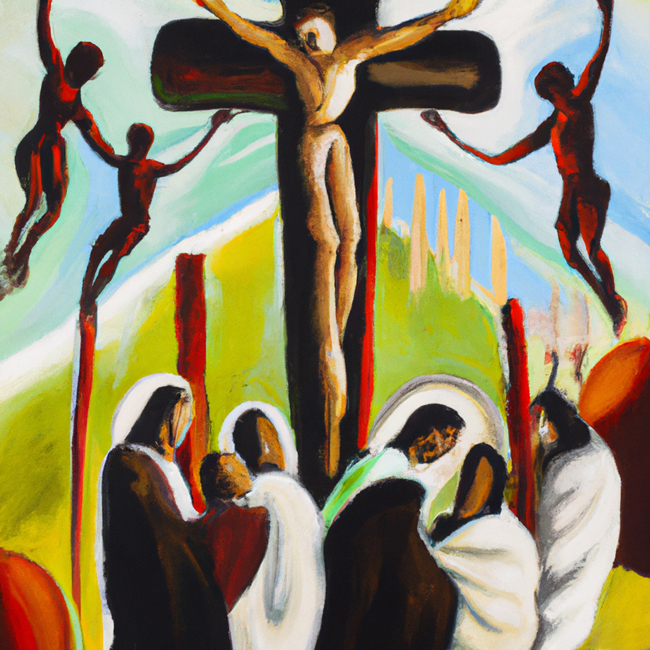
The cry of Jesus on the cross, ‘My God, my God, why hast thou forsaken me?’ is a haunting expression of Jesus’ suffering and abandonment. The psalm has a very special value because we are able to see that it prefigured Christ’s feelings, and provides insight as to how we might articulate meaning in the crucifixion [ … ]

In this poem, Herbert reflects on the limits of human strength and importance of divine assistance. The poem begins with the modest admission that ‘to write a verse or two is all the praise, / That I can raise’, indicating that any expression of gratitude or devotion Herbert offers to God is inherently limited. This acknowledgment of inadequacy runs throughout the poem, shaping a tone of humility and dependence on divine strength [ … ]

The second reading for the Office of Readings on Ash Wednesday is from the letter by Pope Saint Clement I to the Corinthians. In this passage, Saint Clement urges believers to focus on peace and unity, encouraging them to fix their eyes on God and embrace His gifts. He emphasizes the importance of humility and harmony within the Christian community, reminding the faithful to adhere to the teachings and commandments of the Lord. This reading serves as a call to self-examination and renewal, aligning with the penitential nature of the Lenten season [ … ]