

Christian Art | The Mystery Of Baptism | Newly Baptized
Office Of Readings | Week 15, Thursday, Ordinary Time | A Reading From The Treatise Of Saint Ambrose On The Mysteries | Instruction On Ceremonies After Baptism
‘Instruction on ceremonies after baptism.’
Saint Ambrose of Milan offers a mystagogical catechesis—a reflection on the meaning of the rites that follow Christian baptism. Delivered during the Easter Octave, these instructions were addressed to the newly baptized, known as neophytes, and aimed to deepen their understanding of the sacramental mysteries they had just experienced. Ambrose’s theology is sacramental, scriptural, and symbolic, drawing deeply from the liturgical tradition and the imagery of Scripture to reveal the hidden grace of the sacraments.
Historical Context Of Ambrose’s Baptismal Catechesis
Saint Ambrose (c. 340–397), Bishop of Milan, was a towering figure in the Latin Church. His catecheses were delivered in the context of a Church that had recently emerged from persecution into imperial favour under Constantine and his successors. With more adult baptisms taking place during the Easter Vigil, the Church developed a robust catechumenate process, culminating in the celebration of baptism, confirmation (anointing), and the Eucharist. The period immediately following was used for mystagogical teaching—instruction offered only after initiation, so as not prematurely to expose the uninitiated to the mysteries of the faith.
Ambrose follows this model by unveiling the meaning of the post-baptismal anointing and clothing in white garments. He builds upon Old Testament images and typologies while bringing them into the new light of Christ.
Biblical And Liturgical Symbolism | Anointing With Oil
Saint Ambrose refers to Psalm 133: ‘Like oil on the head, running down on the beard, the beard of Aaron,’ a poetic image of priestly consecration. This oil signifies the Holy Spirit, whose anointing consecrates the baptized as members of the royal priesthood (1 Peter 2:9). Ambrose connects this to Solomon’s phrase, ‘Your name is oil poured out,’ (Song of Songs 1:3) underlining the attractive power of Christ, the Anointed One (Messiah), whose very name brings healing and transformation.
The flow of oil down Aaron’s beard symbolises the transmission of grace from Christ, the head, to his body, the Church. The beard is traditionally seen as a symbol of maturity, strength, and dignity; its mention reinforces the fullness of spiritual maturity given through baptism.
White Garments
The white garment, still used in many Christian traditions today, signifies the putting on of Christ and the restoration of innocence. Ambrose draws from Psalm 51, ‘You will wash me and I shall be whiter than snow,’ and Isaiah 1:18, ‘Though your sins are scarlet, they shall be white as snow.’ This garment is a visible sign of the soul cleansed by grace. Ambrose likens the baptized Church to the bride in the Song of Songs: ‘I am black but beautiful,’ acknowledging human frailty while exalting the beauty bestowed by God’s mercy.
This symbolic language reinforces the dignity of the neophyte and instils awe at the transformation effected by baptism: from death to life, from sin to sanctity, from the old self to a new creation.
Doctrinal Insights | Anointing And The Royal Priesthood
Saint Ambrose explicitly teaches that the anointing with oil marks the baptized as a ‘chosen race, a race of priests’. This reflects the New Testament idea that all Christians share in Christ’s priesthood through their union with him. While distinct from the ordained ministerial priesthood, this common priesthood confers a vocation to holiness, worship, and witness.
In early Christian understanding, the post-baptismal anointing, which would later be separated into the sacrament of confirmation, was understood to complete baptism, sealing the soul with the Holy Spirit. This finds support in 2 Corinthians 1:21-22: ‘It is God who establishes us… and has anointed us, by putting his seal on us and giving us his Spirit in our hearts as a first instalment.’
Patristic Parallels
Saint Ambrose’s mystagogical catechesis can be fruitfully compared with that of other early Fathers:
- Saint Cyril of Jerusalem (4th century) similarly speaks of the post-baptismal anointing as a sharing in the priesthood of Christ and a preparation for spiritual combat.
- Saint John Chrysostom, in Antioch and later Constantinople, also emphasised the new dignity and spiritual rebirth of the baptized.
- The Apostolic Tradition, attributed to Hippolytus, contains early liturgical rubrics for anointing, white garments, and Eucharistic communion immediately after baptism.
These sources confirm that Ambrose stands within a rich and unified early Christian tradition of interpreting baptism as incorporation into the mystery of Christ, and of using typological exegesis, Old Testament foreshadowings, to unveil the depth of the sacraments.
Saint Ambrose concludes by reminding the neophytes that they have received the ‘seal of the Spirit’: the spirit of wisdom, understanding, knowledge, reverence, and holy fear—the traditional seven gifts of the Holy Spirit drawn from Isaiah 11. These are not abstract attributes but graces enabling the Christian to live in union with God. Sealed, strengthened, and illumined, the baptized are now fully equipped to live out their new life in Christ and bear witness to the kingdom of God.
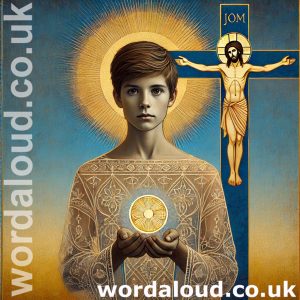
A Reading From The Treatise Of Saint Ambrose On The Mysteries | Instruction On Ceremonies After Baptism
After this, you went up to the priest. Consider what followed. Was it not what David spoke of when he said: Like oil on the head, running down on the beard, the beard of Aaron? This is the oil spoken of also by Solomon: Your name is oil poured out, so that the maidens loved you and attracted you. How many souls, reborn today, have loved you, Lord Jesus, and have said: Draw us after you; we shall make haste to follow you, in the fragrance of your garments, to breathe the fragrance of resurrection.
Understand why this is done: Because the eyes of the wise man are in his head. The oil flows down on the beard, that is, on the grace of youth; it flows on Aaron’s beard, in order to make you a chosen race, a race of priests, bought at a great price. We are all anointed with spiritual grace to share in God’s kingdom and in priesthood.
Then you received white garments as a sign that you had cast off the clothing of sin and put on the chaste covering of innocence, as the psalmist prophesied: You will sprinkle me with hyssop and I shall be cleansed, you will wash me and I shall be made whiter than snow. One who is baptized is seen to be made clean in terms of the law and of the Gospel. In terms of the law, because Moses used a bunch of hyssop to sprinkle the blood of the lamb; in terms of the Gospel, because Christ’s garments were white as snow when in the Gospel he revealed the glory of his resurrection. The sinner who is forgiven is made whiter than snow. The Lord promised the same through Isaiah: If your sins are as scarlet, I will make them white as snow.
Wearing the garments given her in the rebirth by water, the Church says, in the words of the Song of Songs: I am black but beautiful, daughters of Jerusalem. Black because of the frailty of humanity, beautiful through grace; black because she is made up of sinners, beautiful through the sacrament of faith. When they see these garments the daughters of Jerusalem cry out in wonder: Who is this who comes up, all in white? She was black, how is she suddenly made white?
When Christ sees his Church clothed in white – for her sake he himself had put on filthy clothing, as you may read in the prophecy of Zechariah – when he sees the soul washed clean by the waters of rebirth, he cries out: How beautiful you are, my beloved, how beautiful you are; your eyes are like the eyes of a dove, for it was in the likeness of a dove that the Holy Spirit came down from heaven.
Remember, then, that you received a spiritual seal, the spirit of wisdom and understanding, the spirit of knowledge and reverence, the spirit of holy fear. Keep safe what you received. God the Father sealed you, Christ the Lord strengthened you and sent the Spirit into your hearts as the pledge of what is to come, as you learned in the reading from the Apostle.
Prayer With Jesus
Heavenly Father,
You have called us out of darkness into the marvellous light of your Son, clothing us in the white garments of rebirth and anointing us with the oil of gladness.
As we meditate on the mysteries passed down through your servant Ambrose, deepen in us the grace we have received.
Let the fragrance of Christ’s resurrection cling to our lives, drawing others to you through the beauty of holiness.
Strengthen us with your Spirit:
– wisdom to discern your will,
– understanding to receive your truth,
– knowledge to cherish the faith,
– reverence in your presence,
– and holy fear to walk humbly with you.
May our lives reflect the dignity of our baptismal calling,
And may we remain faithful until we see you face to face,
Through Jesus Christ our Lord. Amen.
Glossary Of Christian Terms
Post-baptismal rites – Ceremonies that follow the act of baptism, such as anointing with oil, vesting in white garments, and the giving of a spiritual seal.
Chrism – A consecrated oil used in the sacrament of baptism, confirmation, and ordination; symbolising the Holy Spirit and divine commissioning.
Aaron’s beard – A biblical image from Psalm 133:2, used by Ambrose to symbolise the descending grace of God in consecration.
White garments – Symbolic of purity, the forgiveness of sins, and new life in Christ, given to the newly baptized.
Hyssop – A plant used in ritual purification in the Old Testament, symbolising cleansing from sin.
Song of Songs – A poetic book of the Bible interpreted by many Church Fathers as an allegory of Christ’s love for the Church.
Zechariah’s prophecy – A reference to Zechariah 3, where the high priest Joshua is clothed in filthy garments, representing sin, which are replaced by clean ones—prefiguring Christ’s assumption of human sin.
Seal of the Spirit – A term denoting the sacramental marking of the soul by the Holy Spirit in confirmation or baptism, affirming the believer’s identity and mission in Christ.
Dove – A symbol of the Holy Spirit, seen at Jesus’s baptism and echoed in the spiritual imagery used by the early Church.



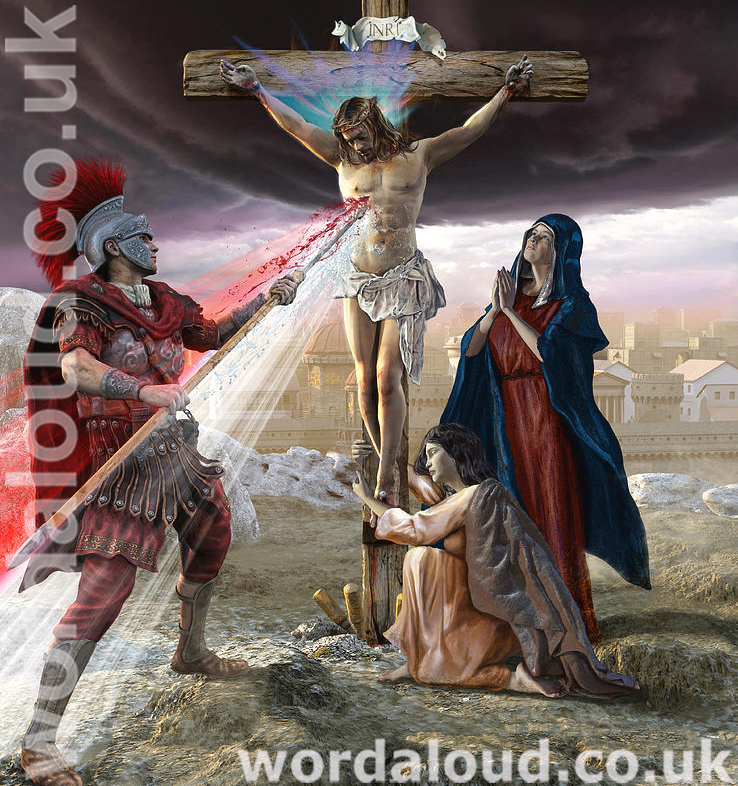
Saint Polycarp’s letter to the Philippians addresses the Christian community with encouragement and exhortation. Saint Polycarp begins by commending their faith, describing it as deeply rooted and fruitful in the service of Christ. The mention of those who bore chains for the gospel situates his words in the context of persecution: suffering for Christ is presented as both a mark of honour and a participation in the Lord’s own passion [ … ]

One of the leading Pharisees has invited Jesus to his house to share a meal. There are several occasions in the Gospels when Jesus is invited by Pharisees to share a meal. Perhaps they are curious, as now we are told, ‘they watched him,’ perhaps through malice. We are not told how a man with dropsy could enter the house of a leader of the Pharisees. Here he is, though, waiting to be cured. Once more, the question of healing on the Sabbath is raised, and with it the issue of the Pharisees’ hypocrisy and the absolutely critical fact of the divinity of Jesus, granting him authority to reinterpret the Sabbath and so drawing him ever closer to the cross [ .. ]
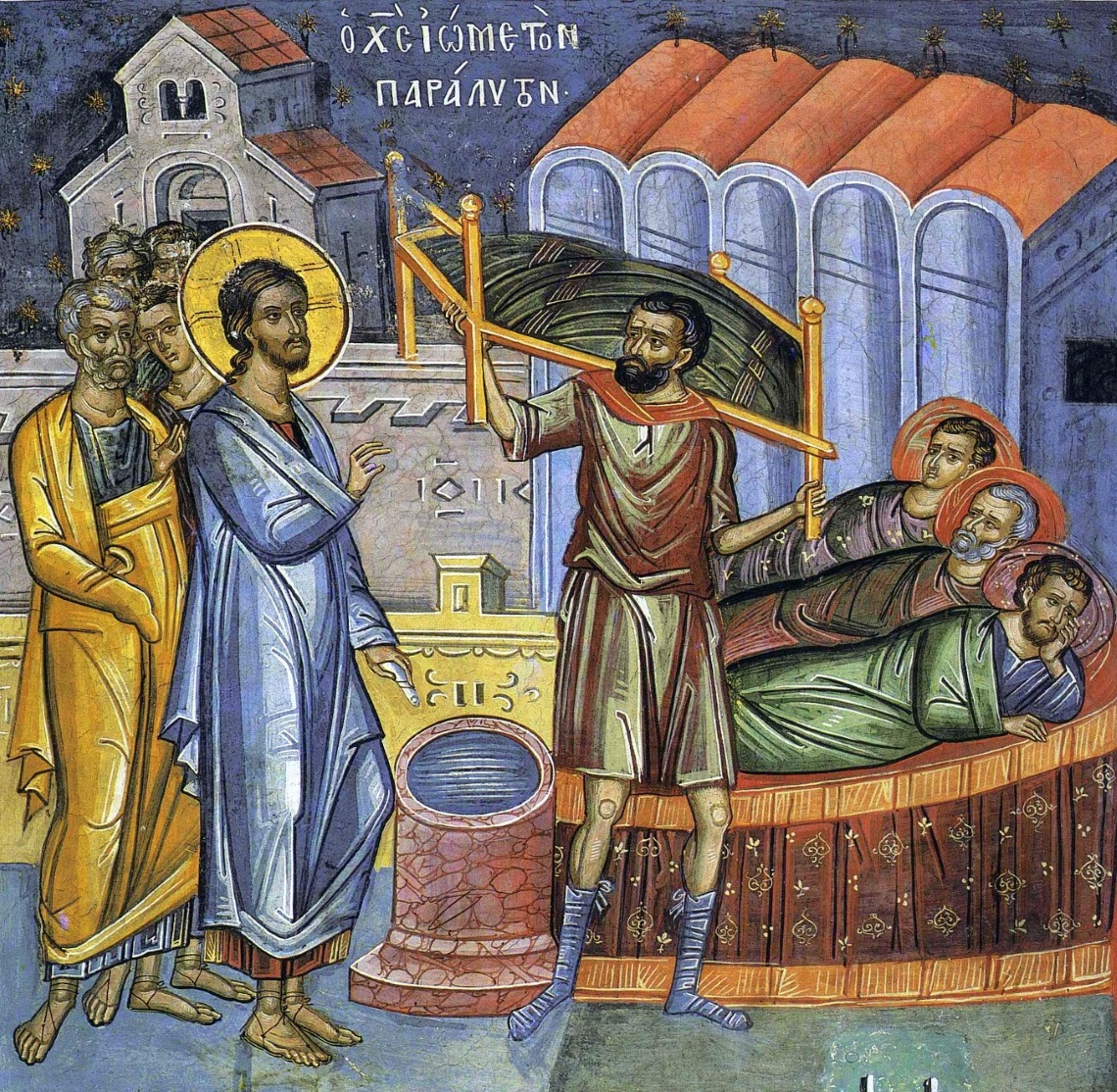
The paralyzed man would not have been able to come to Jesus without the help of his friends. It is his friends’ faith, and their initiative and bravery, as well as his own that work together to find a way to come to Jesus. Jesus is touched by their faith and their friendship. We may think now as well about the help we give others and the help which we receive from others, in matters of faith and as we confess our sins and seek spiritual healing. Our sins can be like a form of spiritual paralysis, in which condition we may rely a great deal on our friends to bring us back to Jesus [ … ]
