
Christian Art | Jesus Christ Is Crucified | Stabat Mater
Office Of Readings | Week 26, Saturday, Ordinary Time | A Reading From The Book Of Sain Gregory Of Nyssa On The Christian Life | Fight The Good Fight Of Faith
‘Fight the good fight of faith.’
Saint Gregory of Nyssa’s reflection on Christian formation explores the transformation of the believer through the grace of the Holy Spirit. His theme ‘Fight the good fight of faith’ is taken from Saint Paul’s exhortation in the First Letter to Timothy (1 Tim 6:12). Gregory interprets this not as a call to conflict with others, but as a lifelong struggle against sin and the disorder of self-will.
The passage begins with Paul’s declaration that ‘whoever is in Christ is a new creation’. Gregory understands this newness as the renewal of human nature through the indwelling of the Holy Spirit. The soul, once marked by sin, becomes ‘pure and blameless’ when it turns from vice and opens itself to divine grace. This renewal is not a mere moral improvement; it is a genuine re-creation — a participation in God’s transforming life. Gregory links this process with Paul’s image of cleansing the ‘old leaven’, suggesting that the Christian life involves a continual purgation of what is corrupt so that sincerity and truth may flourish.
Human weakness, however, remains a central concern. Gregory acknowledges that the soul is too frail to overcome temptation by its own power. Therefore, believers must ‘arm themselves with heavenly weapons’, a clear reference to Paul’s metaphor of the armour of God in Ephesians 6. Each element of that armour — truth, righteousness, peace — represents a specific spiritual discipline. To ‘have the truth around your waist as a belt’, for example, means to let integrity hold one’s life together; the ‘breastplate of righteousness’ defends the heart from moral corruption. The Christian’s struggle, for Gregory, is thus both inward and practical: a continuous exercise of vigilance and discipline shaped by divine aid.
The second half of the passage turns to the theme of service and self-denial, expanding on the moral implications of spiritual renewal. The one who has been renewed in Christ must no longer seek personal advancement or self-will, but God’s will alone. Gregory applies this particularly to those in positions of authority, describing leadership as a form of servanthood. The superior, he writes, must work ‘harder than the others’ and ‘conduct themselves with greater submission’, remembering that their authority is a trust from God. The Christian leader’s example should therefore make visible the humility of Christ, who came ‘not to be served but to serve’.
Gregory’s vision of the Christian community is strikingly cooperative. The relationship between those who lead and those who follow is not adversarial but mutual: superiors guide with care, and subjects obey with willingness. Each contributes to the perfection of the other. This reciprocal respect, grounded in love, mirrors the order of heaven. Gregory concludes that when such humility governs human relationships, ‘your life on earth will be like that of the angels’.
In this way, the reading unites several central themes of early Christian spirituality:
- Transformation through grace – the believer becomes a ‘new creation’ by the Spirit’s action.
- Moral struggle and vigilance – symbolised by the ‘armour of righteousness’.
- Self-denial and obedience to God’s will – expressed in humility and service.
- Communal harmony – the imitation of angelic concord through mutual respect and shared purpose.
The ‘good fight’ of faith, then, is not a battle of violence or domination, but a sustained effort to live in truth, purity, and love.

A Reading From The Book Of Sain Gregory Of Nyssa On The Christian Life | Fight The Good Fight Of Faith
Whoever is in Christ is a new creation; the old has passed away. Now by the ‘new creation’ Paul means the indwelling of the Holy Spirit in a heart that is pure and blameless, free of all malice, wickedness or shamefulness. For when a soul has come to hate sin and had delivered itself as far as it can to the power of virtue, it undergoes a transformation by receiving the grace of the Spirit. Then is it healed, restored and made wholly new. Indeed the two texts: Purge out the old leaven that you may be a new one, and: Let us celebrate the festival, not with the old leaven but with the unleavened bread of sincerity and truth, support those passages which speak about the new creation.
Yet the tempter spreads many a snare to trap the soul, and of itself human nature is too weak to defeat him. This is why the Apostle bids us to arm ourselves with heavenly weapons, when he says: Put on the breastplate of righteousness and have your feet shod with the gospel of peace and have the truth around your waist as a belt. Can you not see how many forms of salvation the Apostle indicates, all leading to the same path and the same goal? Following them to the heights of God’s commandments, we easily complete the race of life. For elsewhere the Apostle says: Let us run with fidelity the race that has been set before us, with our eyes on Jesus, the origin and the goal of our faith.
So a man who openly despises the accolades of this world and rejects all earthly glory must also practice self-denial. Such self-denial means that you never seek your own will but God’s, using God’s will as a sure guide; it also means possessing nothing apart from what is held in common. In this way it will be easier for you to carry out your superior’s commands promptly, in joy and in hope; this is required of Christ’s servants who are redeemed for service to the brethren. For this is what the Lord wants when he says: Whoever wishes to be first and great among you must be the last of all and a servant to all.
Our service of mankind must be given freely. One who is in such a position must be subject to everyone and serve his brothers as if he were paying off a debt. Moreover, those who are in charge should work harder than the others and conduct themselves with greater submission that their own subjects. Their lives should serve as a visible example of what service means, and they should remember that those who are committed to their trust are held in trust from God.
Those, then, who are in a position of authority must look after their brothers as conscientious teachers look after the young children who have been handed over to them by their parents. If both disciples and masters have this loving relationship, then subjects will be happy to obey whatever is commanded, while superiors will be delighted to lead their brothers to perfection. If you try to outdo one another in showing respect, your life on earth will be like that of the angels.
Christian Prayer With Jesus Christ
Lord God,
you renew creation through your Spirit
and call us to live in holiness and truth.
Strengthen us in the struggle against sin;
clothe us with the armour of righteousness
and guide our hearts to seek your will alone.
May those who lead do so in humility,
and those who follow serve in love,
so that your Church may live in unity and peace,
a reflection of your kingdom on earth.
Through Christ our Lord.
Amen.
Glossary Of Christian Terms
Saint Gregory of Nyssa (c. 335–c. 395) – Bishop, theologian, and one of the three Cappadocian Fathers. His writings explore the nature of God, spiritual growth, and the transformation of the soul.
‘Fight the good fight of faith’ (1 Tim 6:12) – A biblical phrase meaning to persevere in faith amid trials, resisting sin and remaining steadfast in virtue.
New creation – The renewal of human nature through the indwelling of the Holy Spirit; a key Pauline concept expressing salvation as transformation.
Leaven – A metaphor for moral or spiritual influence. The ‘old leaven’ symbolises sin or corruption; its removal signifies purification and sincerity.
Armour of God – An image from Ephesians 6 describing the spiritual virtues that protect believers: truth, righteousness, peace, faith, salvation, and the word of God.
Self-denial – The act of subordinating one’s own will to God’s; in monastic and ascetic traditions, a central element of discipleship.
Service – The imitation of Christ’s humility, expressed in care for others and obedience to God’s commands.
Angel-like life – A common image in early Christian literature referring to a community ordered by peace, love, and obedience to God, resembling the harmony of the angels.



Psalm 61 expresses need for divine assistance and refuge during tumultuous times [ … ]

The meditation on the love of Jesus Christ on Palm Sunday is struck by the imagery of Jesus’ triumphal entry into Jerusalem, though on a donkey. Crowds of people gathered around Jesus, laying down their cloaks and palm branches before Jesus, shouting ‘Hosanna to the Son of David! Blessed is he who comes in the name of the Lord! Hosanna in the highest!’ (Matthew 21:9, KJV) [ … ]
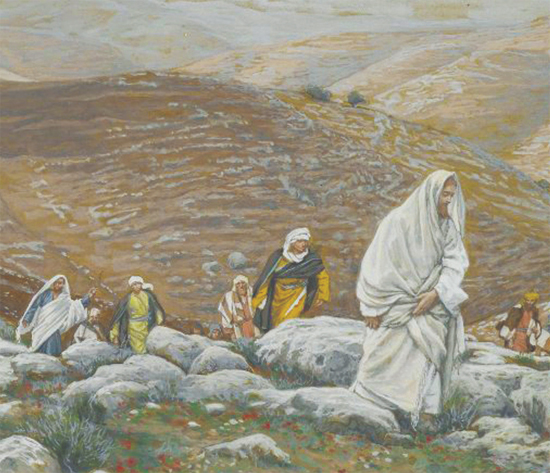
When Jesus returns to Nazareth, to his own country, he attends synagogue on the Saturday and teaches there, not as a leader of the synagogue but as a participant in the faith community. Nonetheless, Jesus’ teaching is different from other people’s. Jesus, we have been told, teaches with authority, and not as the scribes (Matthew 7: 29). Jesus does not merely interpret Scripture, according to scholarly tradition; rather, Jesus reworks Scripture, providing for the people a new Torah, which centres upon himself and which we may understand as Jesus himself. In this way, Jesus’ authority matches and exceeds that of Moses. Jesus is a new Moses, and then infinitely more [ … ]