
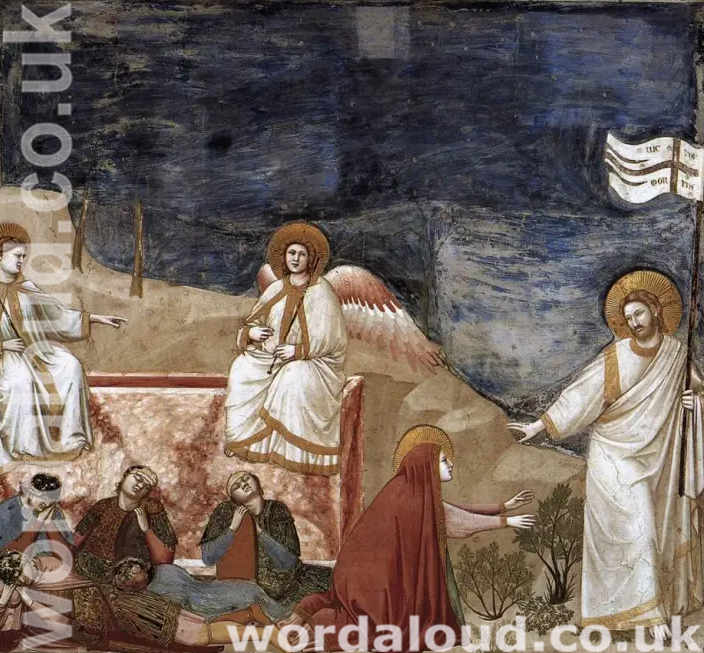
Christian Art | Jesus Christ Is Risen From The Dead | Noli Me Tangere
Office Of Readings | Week 27, Saturday, Ordinary Time | A Reading From The Homilies Of Pope Saint Gregory The Great On The Gospels | Our Ministry Is Action
‘Our ministry is action.’
Pope Saint Gregory the Great reflects on the moment in the Gospels when Jesus looks out upon the crowds and says: ‘The harvest is great, but the labourers are few.’ The image is simple but searching. It describes a field full of life and possibility, waiting for workers to gather its fruit. For Gregory, this scene becomes a picture of the Church itself — abundant in potential, yet in need of those who will tend, teach and draw others toward faith.
Gregory writes as a bishop who knows the weight of such labour. His tone is not abstract. The ‘harvest’ is the community he serves; the ‘labourers’ are those who preach and care for souls. He recognises the irony that there are many who hold the office of priest or bishop, yet few who truly fulfil its demands. The contrast is not statistical but spiritual: there is activity in abundance, yet the core task of preaching, guiding and nurturing often remains unattended.
From this point Gregory turns the saying of Jesus into a shared responsibility. The people are not passive listeners but participants in the work. When Christ says, ‘Pray the Lord of the harvest to send labourers,’ Gregory hears a summons to intercession. The community is asked to pray for its preachers, so that their voices do not fall silent or their strength fail. Preaching, in this view, is sustained by prayer. The vitality of one depends upon the other.
Silence becomes a central theme. Gregory distinguishes between the silence that comes from a preacher’s own failings and the silence that arises when a community turns away from the word of God. In both cases, speech falters. When the preacher’s life is disordered, the tongue loses freedom; when the people close their hearts, the word finds no place to dwell. Gregory draws on the Psalms and the prophet Ezekiel to show how divine speech may be withheld, not as abandonment but as a moment of truth. When the word ceases, its absence itself becomes a form of teaching.
The relationship between shepherd and flock is presented as reciprocal. The preacher depends on the people’s readiness to listen; the people depend on the preacher’s integrity and courage. Ministry is not a solitary undertaking but a shared rhythm of speaking and hearing, of prayer given and prayer received.
Gregory’s reflections widen into the conditions of his own time. Writing in the late sixth century, he lived through political upheaval and the collapse of older civic structures. Bishops had become administrators, judges, and organisers of relief. Gregory knew this world from the inside. His remark that ‘we are absorbed in external affairs’ is not theoretical; it is a plain recognition of the demands placed upon Church leaders in a time of disorder. The priest or bishop, he observes, may find himself drawn outward into a thousand necessary tasks, while the inward work of spiritual care is neglected.
The image of the vineyard from the Song of Songs brings this tension to life: ‘They made me keeper of the vineyards, but my own vineyard I have not kept.’ The keeper is busy, even diligent, but the soil of his own heart lies untilled. The line captures the quiet weariness of pastoral life — the sense of being responsible for many, yet at risk of inner depletion.
Gregory’s language is drawn entirely from Scripture. He does not construct a theory of ministry so much as read the Gospel scene into his own experience. The parable of the harvest, the silence of the prophet, the neglected vineyard — each becomes a window into the daily reality of leadership in the Church. His homily is not a lament but an invitation to return to the essentials of the calling: to listen, to speak, to tend.
Gregory’s meditation presents a vision of the Church as a living field, always growing, always in need of cultivation. Its fruit depends on many forms of labour — word, prayer, service, and mutual care. When he asks his listeners to ‘pray the Lord of the harvest’, Gregory places himself among them: a labourer who also needs prayer, a teacher still learning to listen.
A Reading From The Homilies Of Pope Saint Gregory The Great On The Gospels | Our Ministry Is Action
Let us listen to what the Lord says as he sends the preachers forth: The harvest is great but the laborers are few. Pray therefore the Lord of the harvest to send laborers into his harvest. We can speak only with a heavy heart of so few laborers for such a great harvest, for although there are many to hear the good news there are only a few to preach it. Look about you and see how full the world is of priests, yet in God’s harvest a laborer is rarely to be found; for although we have accepted the priestly office, we do not fulfill its demands.
Beloved brothers, consider what has been said: Pray the Lord of the harvest to send laborers into his harvest. Pray for us so that we may have the strength to work on your behalf; that our tongue may not grow weary of exhortation, and that after we have accepted the office of preaching, our silence may not condemn us before the just judge. For frequently the preacher’s tongue is bound fast on account of his own wickedness; while on the other hand it sometimes happens that because of the people’s sins, the word of preaching is withdrawn from those who preside over the assembly.
With reference to the former situation, the psalmist says: But God asks the sinner: Why do you recite my commandments? And with reference to the latter, the Lord tells Ezekiel: I will make your tongue cleave to the roof of you mouth, so that you shall be dumb and unable to reprove them, for they are a rebellious house.
He clearly means this: the word of preaching will be taken away from you because as long as this people irritates me by their deeds, they are unworthy to hear the exhortation of truth. It is not easy to know for whose sinfulness the preacher’s word is withheld, but it is indisputable that the shepherd’s silence while often injurious to himself will always harm his flock.
There is something else about the life of the shepherds, dearest brothers, which discourages me greatly. But lest what I claim should seem unjust to anyone, I accuse myself of the very same thing, although I fall into it unwillingly – compelled by the urgency of these barbarous times. I speak of our absorption in external affairs; we accept the duties of office, but by our actions we show that we are attentive to other things. We abandon the ministry of preaching and, in my opinion, are called bishops to our detriment, for we retain the honorable office but fail to practice the virtues proper to it. Those who have been entrusted to us abandon God, and we are silent. They fall into sin, and we do not extend a hand of rebuke.
But how can we who neglect ourselves be able to correct someone else? We are wrapped up in worldly concerns, and the more we devote ourselves to external things, the more insensitive we become in spirit.
For this reason the Church rightfully says about her own feeble members: They made me keeper of the vineyards, but my own vineyard I have not kept. We are set to guard the vineyards but do not guard our own, for we get involved in irrelevant pursuits and neglect the performance of our ministry.
Christian Prayer With Jesus
Lord of the harvest,
you call your servants to labour in your field
and to speak your word with patience and truth.
Grant that those who preach may be faithful in their task,
and that those who hear may be open to your voice.
Guard all who are burdened by many duties,
that the care of souls may not be lost amid the cares of the world.
Renew your Church in the work of prayer and service,
that the word once sown may bear fruit in due season.
Through Christ our Lord.
Amen.
Glossary of Christian Terms
Harvest – The image used by Christ to describe the gathering of souls into God’s kingdom; for Gregory it symbolises the Church’s mission and the work of preaching.
Labourers – Those sent to tend the harvest; the preachers and ministers of the Church who proclaim the Gospel.
Preaching – The act of teaching and exhortation by which the truths of faith are made known; for Gregory, both a duty and a sign of spiritual health.
Silence – In this context, not the virtue of stillness but the failure or withholding of the word, whether through personal fault or collective hardness of heart.
Shepherd – The traditional scriptural image for one who has care of souls, especially bishops and priests, following Christ the Good Shepherd.
Vineyard – A biblical symbol of God’s people, taken here from the Song of Songs; it represents both the community entrusted to a pastor and the inner life that he must also tend.
External affairs – The civic and administrative responsibilities that surrounded the Church’s leaders in Gregory’s time, which could distract from the spiritual duties of ministry.
Ministry – The service or office undertaken for the building up of the Church, especially through teaching, prayer, and pastoral care.



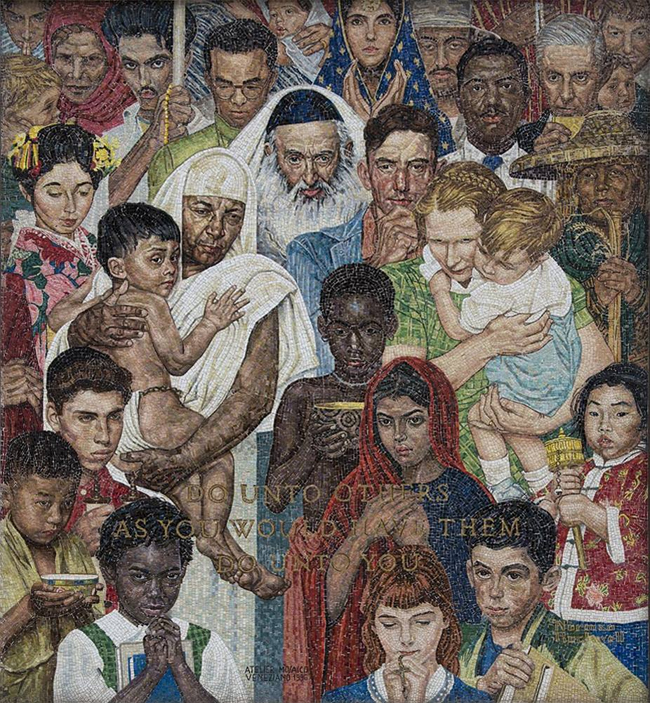
Jesus has discussed the resurrection of the dead with those who question him. He has spoken truly and in accordance with the Old Testament teachings of the Bible. The scribe who now asks Jesus his question is clearly a just man; he is not seeking to test Jesus but rather to learn from him and discover the truth. Jesus sees this and makes time to speak to the scribe quite plainly. The scribe accepts what Jesus has to say and we hear of Jesus’ message sinking into his heart [ … ]
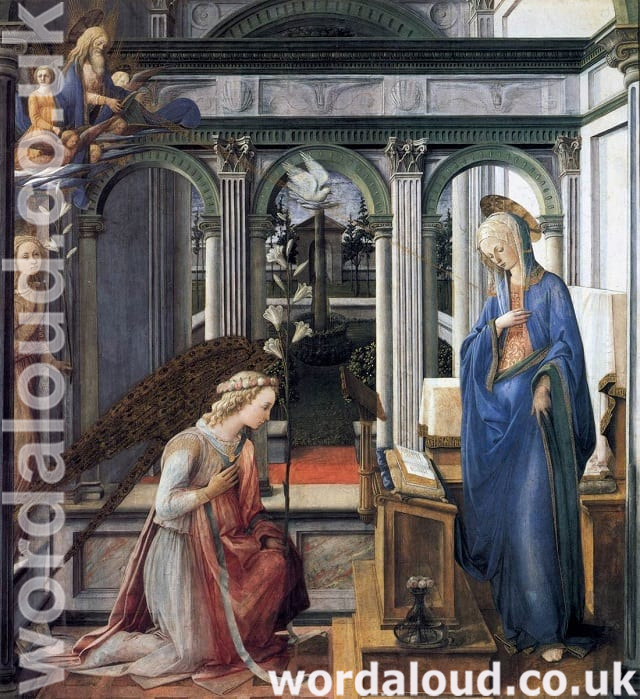
In this Sunday’s Gospel reading we are reminded particularly of the devotion we offer to Mary and of the saving grace the Mother of God brings to our relationship with Jesus. We are reminded once again to think of Mary as the greatest intercessor to whom we may pray. We think as well of how through our relationship with Mary we help enable our knowledge of God within our hearts: it is as if through our love of the Mother of God, Christ may be continually born within us; we seek to become akin to Mary, to emulate her example, so that through the Mother we may the better know the Son [ … ]

Psalm 116 is deeply personal and an emotive psalm, expressing gratitude for deliverance from near-death experiences. It is a heartfelt acknowledgment of God’s mercy and a commitment to lifelong service and praise. This psalm, often recited in times of distress and thanksgiving, carries an intimate tone and reflective nature [ … ]