
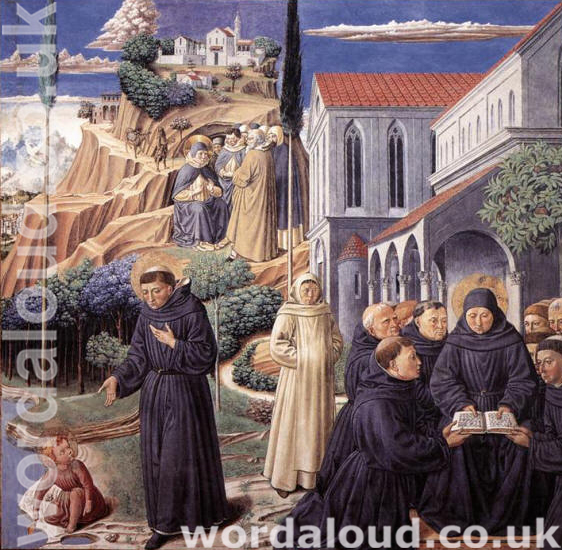
Christian Art | City Of God | Let Us Go Together To The City Of The Lord
Office Of Readings | Week 33, Friday, Ordinary Time | A Reading From The Treatise Of Saint John Eudes On The Kingdom Of Jesus | The Mystery Of Christ In Us And In The Church
‘The mystery of Christ in us and in the Church.’
Saint John Eudes reminds us that Christ’s mysteries are not only past events but living realities meant to take shape within us. Everything that Jesus lived on earth—his birth, his hidden life, his suffering, his rising, his glory—he desires to live again in his members. The Christian life, then, is not merely imitation from a distance; it is Jesus Christ quietly forming his own life in us, day by day.
We often think of Christ’s work as complete—and in himself it is. Yet in us it is still unfolding. Jesus’ grace works patiently, slowly drawing our hearts into the pattern of his own. When we allow Jesus to shape us, his mysteries become the story of our lives: he is born in our hearts when faith awakens; he suffers in us whenever we offer our trials in union with him; he rises in us each time grace overcomes sin; he lives gloriously in us when charity triumphs.
Saint John Eudes also reminds us that this happens not only in individuals but in the whole Church. Across history, Jesus Christ is gathering his members into the fullness of his own life. Nothing Jesus lived is meant to remain outside our reach. Everything is gift; everything is meant to be shared.
So today we are invited to open ourselves once again to the work Christ desires to accomplish in us. Our part is simple: to welcome Jesus, to consent to grace, and to trust that Jesus will finish what he has begun. In this way, his mysteries continue to grow quietly in the world—through us, and in us—until all is complete in him.
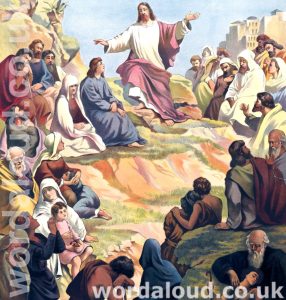
A Reading From The Treatise Of Saint John Eudes On The Kingdom Of Jesus | The Mystery Of Christ In Us And In The Church
We must strive to follow and fulfil in ourselves the various stages of Christ’s plan as well as his mysteries, and frequently beg him to bring them to completion in us and in the whole Church. For the mysteries of Jesus are not yet completely perfected and fulfilled.
They are complete, indeed, in the person of Jesus, but not in us, who are his members, nor in the Church, which is his mystical body. The Son of God wills to give us a share in his mysteries and somehow to extend them to us. He wills to continue them in us and in his universal Church.
This is brought about first through the graces he has resolved to impart to us and then through the works he wishes to accomplish in us through these mysteries. This is his plan for fulfilling his mysteries in us.
For this reason Saint Paul says that Christ is being brought to fulfilment in his Church and that all of us contribute to this fulfilment, and thus he achieves the fullness of life, that is, the mystical stature that he has in his mystical body, which will reach completion only on judgement day. In another place Paul says: I complete in my own flesh what is lacking in the sufferings of Christ.
This is the plan by which the Son of God completes and fulfils in us all the various stages and mysteries. He desires us to perfect the mystery of his incarnation and birth by forming himself in us and being reborn in our souls through the blessed sacraments of baptism and the eucharist. He fulfils his interior life in us, hidden with him in God.
He intends to perfect the mysteries of his passion, death and resurrection, by causing us to suffer, die and rise again with him and in him. Finally, he wishes to fulfil in us the state of his glorious and immortal life, when he will cause us to live a glorious, eternal life with him and in him in heaven.
In the same way he would complete and fulfil in us and in his Church his other stages and mysteries. He wants to give us a share in them and to accomplish and continue them in us.
So it is that the mysteries of Christ will not be completed until the end of time, because he has arranged that the completion of his mysteries in us and in the Church will only be achieved at the end of time.
Christian Prayer With Jesus
Lord Jesus Christ,
You who desire to complete in us the mysteries of your life,
open our hearts to the work of your grace.
Be born anew within us,
strengthen us in trials,
raise us up from our sins,
and draw us toward the glory you have prepared for your saints.
Make our lives a dwelling place for your presence
and bring to perfection in your Church
all that you once lived for our salvation.
You live and reign forever and ever.
Amen.
Glossary Of Christian Terms
Mystical Body – A biblical term for the Church, whose members are united to Christ as the body is to its head.
Mystery (of Christ) – Not a puzzle to be solved, but a divine reality revealed in Christ’s life that continues to act in the Church and in believers.
Grace – God’s free and loving gift of his own life, enabling us to believe, hope, love, and live in communion with him.
Incarnation – The mystery of the Son of God taking our human nature, becoming truly man while remaining truly God.
Passion – Christ’s suffering and death for the salvation of the world.
Resurrection – Christ’s rising from the dead, the triumph of divine life over sin and death.
Glory – The splendour of God’s presence and life, shared with the saints in heaven and anticipated in the life of grace on earth.



This passage from Maximus the Confessor presents a rigorous and integrated account of charity as the decisive principle of the Christian life. Its argument is both ascetical and theological, insisting that love of God cannot coexist with disordered attachment to created things, and that authentic faith is inseparable from active love [ … ]
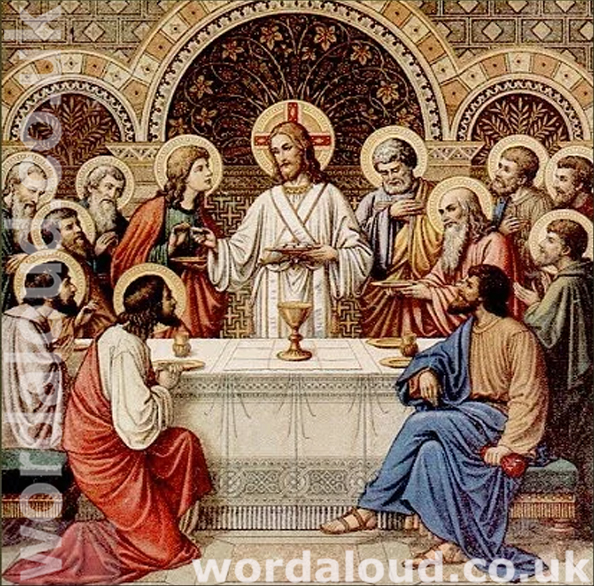
Saint Augustine’s sermon explores the relationship between divine grace and human works. He begins by stressing the importance of living according to what is heard and sung in worship: the word of God should not only be received but should bear fruit in deeds. Hearing is like planting a seed, but only action demonstrates that the seed has grown [ … ]

Saint Ambrose is addressing new Christians during the Easter season, shortly after they have received baptism. These ‘neophytes’ have just emerged from the waters of rebirth, wearing white robes to signify purity and new life. Now, he prepares them to receive the Eucharist — not just as a symbol or ritual, but as the real Body and Blood of Jesus Christ [ … ]
