

Christian Art | Saint Elizabeth | A Child Is Given In Old Age | Miracles Of God
Gospel Of Saint Luke | Chapter 1, Verses 39-80 | Saint Elizabeth | Birth Of Saint John The Baptist | KJV | King James Version | Audio Bible
Elizabeth is introduced in Luke 1:5 as a woman ‘of the daughters of Aaron,’ indicating her priestly lineage, which complements her husband Zachariah’s role as a priest ‘of the course of Abia’ (Luke 1:5). Both Elizabeth and Zachariah are described as ‘righteous before God, walking in all the commandments and ordinances of the Lord blameless’ (Luke 1:6). This emphasizes their piety and faithfulness to God’s law. Despite their righteousness, the couple is childless because Elizabeth is barren, and both are advanced in age (Luke 1:7).
Angelic Announcement
While Zachariah is serving in the temple, an angel of the Lord, identified as Gabriel, appears to him and announces that Elizabeth will bear a son. This child is to be named John, and the angel foretells that he ‘shall be great in the sight of the Lord’ and will be filled with the Holy Spirit from his mother’s womb (Luke 1:13-15). The angel further explains that John will ‘turn many of the children of Israel to the Lord their God’ and will go before the Lord ‘in the spirit and power of Elias’ (Elijah), to prepare the people for the coming of the Lord (Luke 1:16-17).
Zachariah, doubting the angel’s message due to the couple’s old age, asks for a sign. In response, Gabriel strikes him mute until the prophecy is fulfilled (Luke 1:18-20). After Zachariah completes his temple duties, he returns home, and Elizabeth conceives, just as the angel had foretold (Luke 1:23-24).
Elizabeth’s Reaction To Her Pregnancy
Elizabeth’s pregnancy is viewed as a direct intervention by God. She expresses her gratitude and relief in Luke 1:25, saying, ‘Thus hath the Lord dealt with me in the days wherein he looked on me, to take away my reproach among men.’ This reference to her ‘reproach’ highlights the cultural significance of childlessness, which in her time was often seen as a cause for shame. Elizabeth recognizes her pregnancy as a blessing from God, who has taken away this stigma.
Visitation By Mary
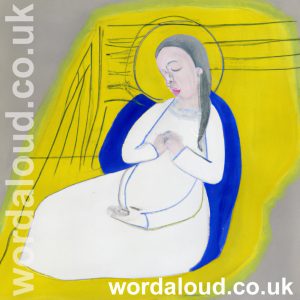
In the sixth month of Elizabeth’s pregnancy, her cousin Mary, who has also received a miraculous message from the angel Gabriel regarding her own pregnancy, visits her (Luke 1:36, 39). When Mary greets Elizabeth, the baby in Elizabeth’s womb ‘leaped’ with joy (Luke 1:41). At that moment, Elizabeth is filled with the Holy Spirit and speaks a blessing over Mary, saying, ‘Blessed art thou among women, and blessed is the fruit of thy womb’ (Luke 1:42). She acknowledges Mary’s unique role in God’s plan, calling her ‘the mother of my Lord’ (Luke 1:43). Elizabeth further praises Mary for her faith, saying, ‘Blessed is she that believed: for there shall be a performance of those things which were told her from the Lord’ (Luke 1:45).
This encounter between Elizabeth and Mary, known as the Visitation, is notable for its mutual recognition of the divine workings in their lives. Elizabeth, through the Holy Spirit, recognizes the significance of Mary’s child, while Mary responds with the hymn known as the Magnificat, exalting God for His mercy and faithfulness (Luke 1:46-55).
Birth Of Saint John The Baptist
When the time comes for Elizabeth to give birth, she bears a son, as the angel had foretold (Luke 1:57). Her neighbors and relatives share in her joy, recognizing that the Lord has shown her great mercy (Luke 1:58). On the eighth day, when the child is to be circumcised and named, the relatives expect the boy to be named after his father, Zachariah. However, Elizabeth insists that he be named John, following the angel’s command (Luke 1:59-60). When questioned, Zachariah confirms the name by writing, ‘His name is John,’ and immediately his speech is restored (Luke 1:63-64). At this, fear comes upon all their neighbors, and the news spreads throughout the region, leading the people to wonder about the future of the child (Luke 1:65-66).
Prayer To Saint Elizabeth
O Glorious Saint Elizabeth,
Righteous and faithful servant of God, you who walked blamelessly in His commandments,
We turn to you in humble prayer.
You bore the reproach of childlessness with grace and trust in the Lord’s will,
And through His mercy, you were granted the gift of life in your old age,
Becoming the mother of the great prophet, John the Baptist.
Intercede for us, that we too may trust in God’s plan for our lives,
Even when the way seems unclear,
Teach us to remain patient and faithful,
Just as you waited in hope and humility for God’s promises to be fulfilled.
You recognized the presence of the Lord in the womb of Mary,
And your heart leapt with joy.
Help us to recognize Christ’s presence in our own lives,
And to be open to the Holy Spirit’s promptings,
That we may follow His will with courage and peace.
Pray for all those who long for hope,
For those who struggle with doubt or fear,
And for those who carry burdens in silence.
May your example of grace and trust inspire us to persevere
In faith and love, knowing that God is faithful to His promises.
Saint Elizabeth, pray for us,
That we may grow in holiness and trust,
And be open to the miracles God is working in our lives.
Amen.



Psalm 50 is a profound exploration of God’s authority, the meaning of true worship, and the imperative of righteous living. The psalm condemns empty rituals and hypocrisy while calling for genuine, heart-centred relationship with God. The psalm balances warnings of judgment with the promise of deliverance and salvation for those who seek God with sincerity and integrity [ … ]

This is an extraordinary scene. Many, many people are gathered with Jesus to hear his teaching, which is the Sermon on the Mount. The people will not all be friends; there will be different, sectarian groups, and rivalries between them. Some of those gathered to listen to Jesus will be suspicious of others. Nor can the people yet understand what is happening here, just who and what Jesus is. The people have flocked to – see someone, hear someone, someone new and extraordinary, someone perhaps who can answer their needs. Their coming to Jesus is an expression of hope and longing. Who knows what thoughts there must have been as people looked around to see all those others gathered. This is a vast company of strangers [ … ]
YouTube: Ash Wednesday | T.S. Eliot | Audio Christian Poetry | Word Aloud Ash Wednesday, one of T.S. Eliot’s most profound and enigmatic poems, marks a significant transition in his life and work. Written in 1930, it is the first long poem Eliot composed after his conversion to Anglicanism in 1927. The poem, often considered one of Eliot’s masterpieces, delves into themes of faith, redemption, and spiritual struggle. It reflects the poet’s personal journey towards spiritual enlightenment and serves as a testament to his newfound religious beliefs. A reading of Ash Wednesday is an exploration of the poem’s religious, literary, and personal contexts, as of the poem’s complex structure and themes. Religious Context And Symbolism Ash Wednesday is deeply embedded in Christian symbolism and tradition. The title refers to the first day of Lent in the Christian liturgical calendar, a day marked by penance, fasting, and prayer. Ash Wednesday is a time for reflection on mortality and repentance, themes that are intricately woven throughout the poem. Eliot’s conversion to Anglicanism profoundly influenced his writing; ‘Ash Wednesday’ is an expression of spiritual awakening and quest for redemption. The poem is replete with religious imagery and references, drawing on Christian doctrine and scripture. The use of liturgical language, biblical allusions, and references to saints and spiritual figures creates a tapestry of faith that invites readers to contemplate deep spiritual truths with which Eliot is grappling. The repetitive and prayer-like quality of the verses echoes meditative practices of the faithful, in part enabling the contemplative nature of the poem. Literary Influences And Techniques T.S. Eliot was a master of literary allusion and technique, and Ash Wednesday expresses Eliot’s ability to blend various influences into a cohesive whole. The poem reflects the influence of Dante, particularly The Divine Comedy, which Eliot admired for its exploration of spiritual ascent and redemption. Dante’s journey through Hell, Purgatory and Heaven parallels Eliot’s own spiritual journey, and the structure of Ash Wednesday can be seen as a reflection of this pilgrimage. Eliot’s use of fragmented narrative, a hallmark of his earlier work such as The Waste Land, is also present in Ash Wednesday. However, in this poem, the fragmentation serves a different purpose. Instead of depicting the disintegration of modern society, it mirrors the fragmented and often painful process of spiritual rebirth. The disjointed structure reflects the internal struggle of the speaker, who is torn between the pull of worldly desires and the aspiration for divine grace. The poem’s language is rich and varied, combining the lyrical and the obscure, the personal and the universal. Eliot employs a range of poetic forms and devices, including free verse, rhyme and meter, to convey the tumultuous journey of faith. The shifting tone and style reflect the complexities and contradictions inherent in the spiritual quest, capturing moments of doubt, despair, hope, and transcendence. Personal Significance Ash Wednesday is a deeply personal work. Eliot’s conversion to Anglicanism marked a profound shift in his life, providing a sense of purpose and direction that had been missing. The poem can be read as a reflection of Eliot’s own struggles with faith and his efforts to reconcile his intellectual skepticism with his desire for spiritual certainty. Eliot’s personal experiences, including his troubled marriage and professional pressures, also inform the poem. Themes of renunciation and acceptance, sin and redemption, are not merely abstract concepts but lived realities for the poet. This personal dimension adds a layer of intimacy and urgency to the poem, which thereby resonates with readers who have faced their own spiritual crises. Thematic Exploration At its core, Ash Wednesday is a meditation on the possibility of spiritual renewal in a world that often seems devoid of meaning. The poem grapples with the tension between faith and doubt, reflecting the existential struggles of modernity. The poem acknowledges the difficulties of maintaining belief in an age of skepticism but ultimately affirms the possibility of redemption and grace. The central theme of renunciation is explored through imagery of ascension and purification. The speaker’s journey is marked by a series of renunciations, symbolizing the shedding of earthly attachments in pursuit of spiritual truth. This process is neither straightforward nor easy; it involves moments of intense struggle and introspection. Yet, through this arduous journey, the speaker moves closer to a state of spiritual clarity and acceptance. Ash Wednesday | T. S. Eliot Because I do not hope to turn again Because I do not hope Because I do not hope to turn Desiring this man’s gift and that man’s scope I no longer strive to strive towards such things (Why should the agèd eagle stretch its wings?) Why should I mourn The vanished power of the usual reign? Because I do not hope to know The infirm glory of the positive hour Because I do not think Because I know I shall not know The one veritable transitory power Because I cannot drink There, where trees flower, and springs flow, for there is nothing again Because I know that time is always time And place is always and only place And what is actual is actual only for one time And only for one place I rejoice that things are as they are and I renounce the blessèd face And renounce the voice Because I cannot hope to turn again Consequently I rejoice, having to construct something Upon which to rejoice And pray to God to have mercy upon us And pray that I may forget These matters that with myself I too much discuss Too much explain Because I do not hope to turn again Let these words answer For what is done, not to be done again May the judgement not be too heavy upon us Because these wings are no longer wings to fly But merely vans to beat the air The air which is now thoroughly small and dry Smaller and dryer than the will Teach us to care and not to care Teach us to sit still. Pray for us sinners now […]