

Christian Art | Saint Elizabeth | A Child Is Given In Old Age | Miracles Of God
Gospel Of Saint Luke | Chapter 1, Verses 39-80 | Saint Elizabeth | Birth Of Saint John The Baptist | KJV | King James Version | Audio Bible
Elizabeth is introduced in Luke 1:5 as a woman ‘of the daughters of Aaron,’ indicating her priestly lineage, which complements her husband Zachariah’s role as a priest ‘of the course of Abia’ (Luke 1:5). Both Elizabeth and Zachariah are described as ‘righteous before God, walking in all the commandments and ordinances of the Lord blameless’ (Luke 1:6). This emphasizes their piety and faithfulness to God’s law. Despite their righteousness, the couple is childless because Elizabeth is barren, and both are advanced in age (Luke 1:7).
Angelic Announcement
While Zachariah is serving in the temple, an angel of the Lord, identified as Gabriel, appears to him and announces that Elizabeth will bear a son. This child is to be named John, and the angel foretells that he ‘shall be great in the sight of the Lord’ and will be filled with the Holy Spirit from his mother’s womb (Luke 1:13-15). The angel further explains that John will ‘turn many of the children of Israel to the Lord their God’ and will go before the Lord ‘in the spirit and power of Elias’ (Elijah), to prepare the people for the coming of the Lord (Luke 1:16-17).
Zachariah, doubting the angel’s message due to the couple’s old age, asks for a sign. In response, Gabriel strikes him mute until the prophecy is fulfilled (Luke 1:18-20). After Zachariah completes his temple duties, he returns home, and Elizabeth conceives, just as the angel had foretold (Luke 1:23-24).
Elizabeth’s Reaction To Her Pregnancy
Elizabeth’s pregnancy is viewed as a direct intervention by God. She expresses her gratitude and relief in Luke 1:25, saying, ‘Thus hath the Lord dealt with me in the days wherein he looked on me, to take away my reproach among men.’ This reference to her ‘reproach’ highlights the cultural significance of childlessness, which in her time was often seen as a cause for shame. Elizabeth recognizes her pregnancy as a blessing from God, who has taken away this stigma.
Visitation By Mary
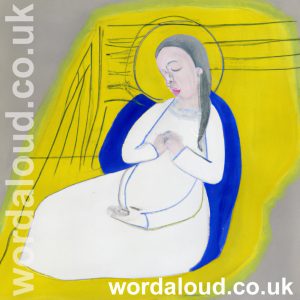
In the sixth month of Elizabeth’s pregnancy, her cousin Mary, who has also received a miraculous message from the angel Gabriel regarding her own pregnancy, visits her (Luke 1:36, 39). When Mary greets Elizabeth, the baby in Elizabeth’s womb ‘leaped’ with joy (Luke 1:41). At that moment, Elizabeth is filled with the Holy Spirit and speaks a blessing over Mary, saying, ‘Blessed art thou among women, and blessed is the fruit of thy womb’ (Luke 1:42). She acknowledges Mary’s unique role in God’s plan, calling her ‘the mother of my Lord’ (Luke 1:43). Elizabeth further praises Mary for her faith, saying, ‘Blessed is she that believed: for there shall be a performance of those things which were told her from the Lord’ (Luke 1:45).
This encounter between Elizabeth and Mary, known as the Visitation, is notable for its mutual recognition of the divine workings in their lives. Elizabeth, through the Holy Spirit, recognizes the significance of Mary’s child, while Mary responds with the hymn known as the Magnificat, exalting God for His mercy and faithfulness (Luke 1:46-55).
Birth Of Saint John The Baptist
When the time comes for Elizabeth to give birth, she bears a son, as the angel had foretold (Luke 1:57). Her neighbors and relatives share in her joy, recognizing that the Lord has shown her great mercy (Luke 1:58). On the eighth day, when the child is to be circumcised and named, the relatives expect the boy to be named after his father, Zachariah. However, Elizabeth insists that he be named John, following the angel’s command (Luke 1:59-60). When questioned, Zachariah confirms the name by writing, ‘His name is John,’ and immediately his speech is restored (Luke 1:63-64). At this, fear comes upon all their neighbors, and the news spreads throughout the region, leading the people to wonder about the future of the child (Luke 1:65-66).
Prayer To Saint Elizabeth
O Glorious Saint Elizabeth,
Righteous and faithful servant of God, you who walked blamelessly in His commandments,
We turn to you in humble prayer.
You bore the reproach of childlessness with grace and trust in the Lord’s will,
And through His mercy, you were granted the gift of life in your old age,
Becoming the mother of the great prophet, John the Baptist.
Intercede for us, that we too may trust in God’s plan for our lives,
Even when the way seems unclear,
Teach us to remain patient and faithful,
Just as you waited in hope and humility for God’s promises to be fulfilled.
You recognized the presence of the Lord in the womb of Mary,
And your heart leapt with joy.
Help us to recognize Christ’s presence in our own lives,
And to be open to the Holy Spirit’s promptings,
That we may follow His will with courage and peace.
Pray for all those who long for hope,
For those who struggle with doubt or fear,
And for those who carry burdens in silence.
May your example of grace and trust inspire us to persevere
In faith and love, knowing that God is faithful to His promises.
Saint Elizabeth, pray for us,
That we may grow in holiness and trust,
And be open to the miracles God is working in our lives.
Amen.



The psalmist highlights upright behaviour and righteous deeds as signs of integrity. Truthful speech rooted in the heart is emphasized. Harmful words and actions are avoided. Backbiting and tale-bearing are rejected [ … ]

In this poem, Herbert reflects on humanity’s misplaced admiration and affection, which is directed at transient, earthly beauty rather than at God, the ‘Immortal Love’ and creator of all things. The poem begins by acknowledging God as the creator of the world’s beauty—a beauty that ‘can never fade’—and contrasts this with humanity’s inclination to direct love toward earthly, perishable objects. Humanity’s focus on ‘mortal love’ instead of divine love results in a separation from God, as people are captivated by temporary creations rather than the Creator [ … ]

Genesis 28:10-22, the account of ‘Jacob’s Ladder’, tells the story of Jacob as he embarks on both a physical and spiritual journey. Through a visionary dream that unveils a ladder stretching from earth to heaven, with angels ascending and descending upon it, Jacob encounters the divine in a manner that profoundly impacts his life and leaves an enduring imprint on theological narratives of Abrahamic faith [ … ]
