
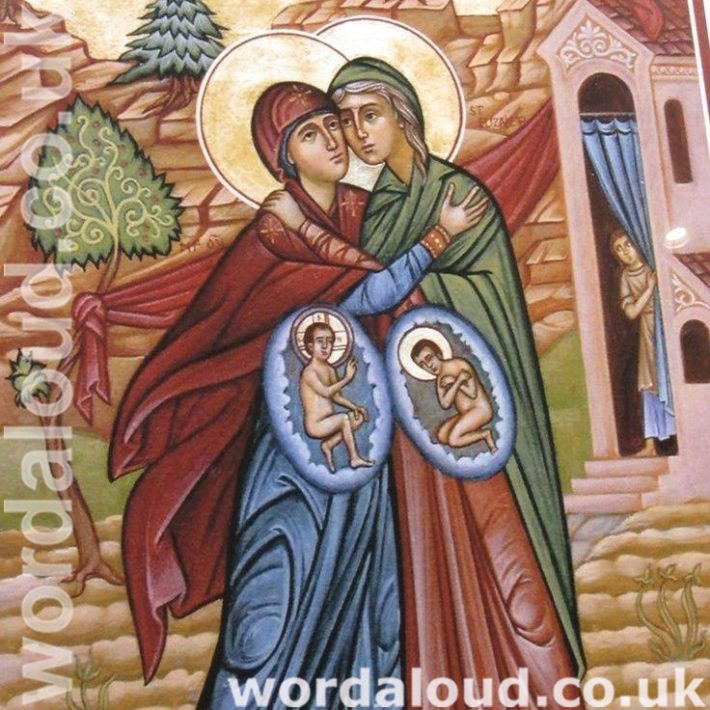
Christian Art | Mary And Elizabeth | The Visitation | Magnificat
Office Of Readings | Advent December 22nd | A Reading From The Commentary Of Saint Bede On Saint Luke’s Gospel | Visitation Of The Blessed Virgin Mary | Magnificat
‘The Magnificat.’
Saint Bede’s commentary follows the structure of Mary’s song the Magnificat in Luke 1:46–55 and explains the song with close attention to Scripture. Bede treats the Magnificat both as Mary’s personal thanksgiving and as a proclamation that concerns Israel and the fulfilment of God’s promises.
Bede begins with Mary’s opening words: ‘My soul proclaims the greatness of the Lord.’ He understands this as a response to what God has done for her. Mary does not claim greatness for herself; rather, she recognises God’s action and responds with praise. For Bede, true praise arises only where God’s work is acknowledged. The soul that has received God’s gift is the soul that can speak rightly of his greatness.
When Mary says that her spirit rejoices in God her Saviour, Bede notes the unity of humility and joy. Mary rejoices not in herself, but in God, and she names him as her Saviour. This affirms that Mary herself stands in need of salvation and receives it from God, even as she bears the Saviour in her womb.
Bede then turns to the words, ‘The Almighty has done great things for me, and holy is his name.’ He explains that God’s holiness lies in his complete otherness from creation. God’s name is holy not because it is praised by creatures, but because God surpasses all that he has made. Mary’s praise, therefore, does not add to God’s holiness but rightly acknowledges it.
In Mary’s words, ‘He has come to the help of his servant Israel,’ Bede interprets ‘Israel’ as the people who serve God in humility and obedience. He draws on the prophetic tradition to show that God’s help is given to those who accept their dependence upon God. Salvation, in this account, is inseparable from humility.
When Mary refers to God’s promise to Abraham and his descendants, Bede is careful to clarify that this promise is not limited to physical descent. Abraham’s true descendants are those who share his faith. Bede aligns this reading with the teaching of Saint Paul, who speaks of believers in Christ as heirs of the promise made to Abraham.
Finally, Bede notes the significance of women speaking prophetically at this point in salvation history. Just as the fall is associated in Genesis with the disobedience of a woman, so the announcement of redemption is associated with the faithful speech of women. In Luke’s Gospel, the voices of Mary and Elizabeth mark the beginning of the fulfilment of God’s saving plan.

A Reading From The Commentary Of Saint Bede On Saint Luke’s Gospel | The Magnificat
And Mary said: My soul proclaims the greatness of the Lord, my spirit rejoices in God my Saviour.
The Lord has exalted me by a gift so great, so unheard of, that language is useless to describe it; and the depths of love in my heart can scarcely grasp it. I offer then all the powers of my soul in praise and thanksgiving. As I contemplate his greatness, which knows no limits, I joyfully surrender my whole life, my senses, my judgement, for my spirit rejoices in the eternal Godhead of that Jesus, that Saviour, whom I have conceived in this world of time.
The Almighty has done great things for me, and holy is his name.
Mary looks back to the beginning of her song, where she said: My soul proclaims the greatness of the Lord. Only that soul for whom the Lord in his love does great things can proclaim his greatness with fitting praise and encourage those who share her desire and purpose, saying: Join with me in proclaiming the greatness of the Lord; let us extol his name together.
Those who know the Lord, yet refuse to proclaim his greatness and sanctify his name to the limit of their power, will be considered the least in the kingdom of heaven. His name is called holy because in the sublimity of his unique power he surpasses every creature and is far removed from all that he has made.
He has come to the help of his servant Israel for he has remembered his promise of mercy.
In a beautiful phrase Mary calls Israel the servant of the Lord. The Lord came to his aid to save him. Israel is an obedient and humble servant, in the words of Hosea: Israel was a servant, and I loved him.
Those who refuse to be humble cannot be saved. They cannot say with the prophet: See, God comes to my aid; the Lord is the helper of my soul. But anyone who makes himself humble like a little child is greater in the kingdom of heaven.
The promise he made to our fathers, to Abraham and his children for ever.
This does not refer to the physical descendants of Abraham, but to his spiritual children. These are his descendants, sprung not from the flesh only, but who, whether circumcised or not, have followed him in faith. Circumcised as he was, Abraham believed, and this was credited to him as an act of righteousness.
The coming of the Saviour was promised to Abraham and to his descendants for ever. These are the children of promise, to whom it is said: If you belong to Christ, then you are descendants of Abraham, heirs in accordance with the promise.
But it is right that before the birth of the Lord or of John, their mothers should utter prophecies; for just as sin began with a woman, so too does redemption. Through the deceit of one woman, grace perished; the prophecies of two women announce its return to life.
Christian Prayer With Jesus
Lord God,
you fulfilled your promises through the coming of your Son
and placed words of praise upon the lips of the humble.
Grant that we may recognise your work in our lives
and proclaim your greatness with faith and obedience.
Through Jesus Christ our Lord.
Amen.
Glossary Of Christian Terms
Magnificat — Mary’s song of praise in Luke 1:46–55, named from its opening word in Latin.
Saviour — One who brings deliverance; in Christian belief, Jesus Christ, through whom God brings salvation.
Holiness — God’s complete otherness and perfection, surpassing all created things.
Israel — In this context, not only the historical people, but those who serve God in faith and obedience.
Promise to Abraham — God’s covenant in Genesis, understood by the New Testament as fulfilled in Christ and extended to all believers.
Humility — Recognition of dependence upon God; a key disposition for receiving salvation in Scripture.



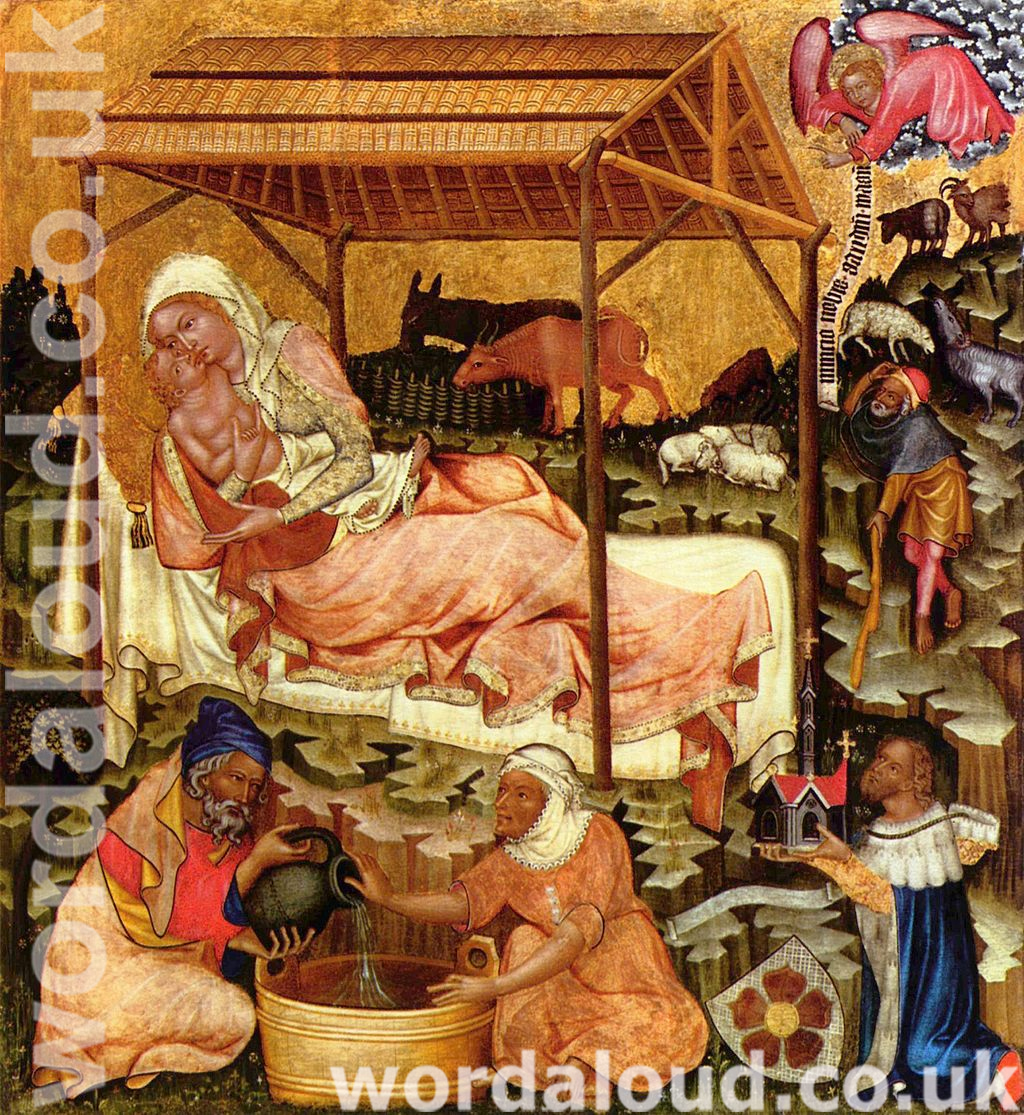
Saint Jerome’s reflection on Joel 2:12–18 draws attention to the biblical theme of repentance, particularly the inward transformation of the heart. Joel’s summons, ‘Return to me with all your heart,’ is not merely a call to external practices such as fasting, mourning, or tearing garments, but to a conversion of the interior self. Jerome insists that the rending of garments, a traditional sign of grief in the ancient world, must be replaced by the rending of the heart. This aligns with prophetic teaching elsewhere in the Old Testament, where God prefers inward change over ritualistic displays (cf. Hosea 6:6; Amos 5:21–24) [ … ]
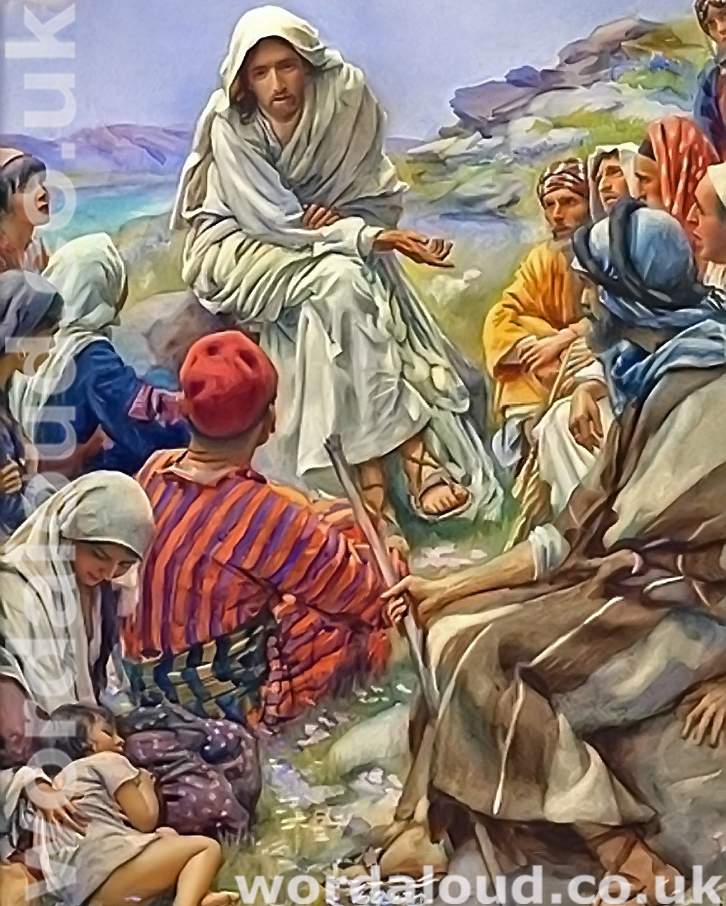
Pope Saint Leo the Great situates the Sermon on the Mount within the wider pattern of salvation history. Christ’s ministry begins with acts of physical healing that attract crowds, but these serve as a preparation for his deeper teaching. The miracles are signs intended to draw attention to the doctrine that heals the soul. Thus, Leo highlights the shift from outward cures to inward remedies, presenting Christ as both healer of the body and physician of the heart [ … ]

This poem centres on themes of spiritual nourishment and intimate connection between the divine and the individual soul. The poem begins by contrasting superficial wealth, symbolized by ‘rich furniture’ and ‘a wedge of gold’, with the poet’s experience of spiritual fulfilment. Here, material objects hold no power to convey the divine presence. Instead, the poet emphasizes a more personal and humble approach: sustenance provided by Christ in the Eucharist, which enters into the poet ‘by the way of nourishment and strength’. This nourishment implies a steady, almost unseen influence that fills the body and soul, offering rest and inner strength while combating the forces of sin [ … ]