
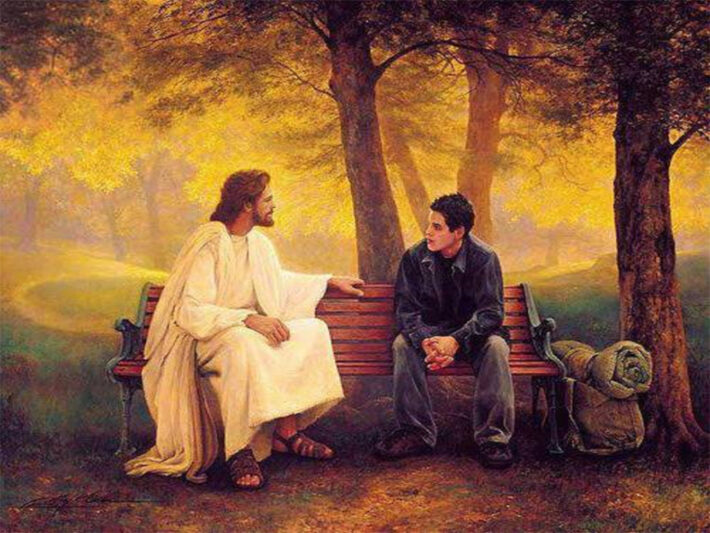
Christian Art | Kingdom Of God | King James Audio Bible | KJV
Luke 9: 57-62 – Week 26 Ordinary Time, Wednesday (King James Audio Bible Verses KJV, Spoken Word | Love Revealed By Jesus Christ)
57 ¶ And it came to pass, that, as they went in the way, a certain man said unto him, Lord, I will follow thee whithersoever thou goest.
58 And Jesus said unto him, Foxes have holes, and birds of the air have nests; but the Son of man hath not where to lay his head.
59 And he said unto another, Follow me. But he said, Lord, suffer me first to go and bury my father.
60 Jesus said unto him, Let the dead bury their dead: but go thou and preach the kingdom of God.
61 And another also said, Lord, I will follow thee; but let me first go bid them farewell, which are at home at my house.
62 And Jesus said unto him, No man, having put his hand to the plough, and looking back, is fit for the kingdom of God.
It is not for us to adapt Jesus to our lives; it is for us to conform our lives to Jesus. This is a lesson of these Gospel verses. Once we have heard the call of God through Jesus, there must be no umming and ahhing, no by now secondary considerations interfering in our new relationship with Jesus. Our life should now be his. As and when it is proper, all else will follow. If it isn’t appropriate, then it won’t.
We can probably imagine ourselves now holding things back from Jesus, for example during the Mass, as we walk as penitents to receive the Eucharist. How much is left behind? How much is un-given, un-confessed? How much are we really and absolutely offering ourselves to Christ? On a scale of zero to ten, how much are we even asking for the way of perfection?
Let me go first and bury my father. Let me go and say good bye to my family. Of course, Jesus would have us perform these loving acts, but this is not what is being pointed toward here. Here we have people making excuses for not being Christian right now. I must do this, I must do the other. I must consume my fill of life, and then when I am sated and half dead with life, I promise, I promise, I promise – please believe me! – I’ll follow you then, Lord.
We know what God asks of us. We have heard the message of Jesus, the perfection of all God says to teach us. We are called to be Christians. No excuses. Now is the time.
Concluding Prayer | Love Revealed By Jesus Christ
Shed your clear light on our hearts, Lord,
so that walking continually in the way of your commandments,
we may never be deceived or misled.
We make our prayer through our Lord.

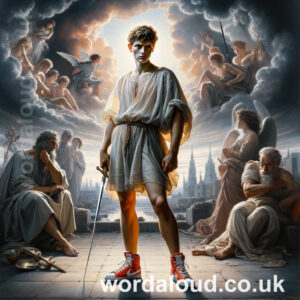
Christian Art | Church Militant | A Young King David Reimagined | Christianity Now | Jesus 2024
King James Audio Bible | Endnotes
Kingdom Of God
The Kingdom of God is a central belief in Christianity. In part, in this present age, the Kingdom of God as a concept refers to the reign of God in the hearts and lives of believers. In Luke 9:57-62, Jesus encounters three people who express interest in following him, but who also have other priorities and concerns. Through these encounters, Jesus highlights the cost of discipleship and the importance of wholeheartedly committing to the Kingdom of God.
To understand the Kingdom of God, we must look to the Old Testament. In Psalm 103:19, we read: ‘The Lord hath prepared his throne in the heavens; and his kingdom ruleth over all.’ This verse emphasizes God’s sovereignty and his universal reign over all creation. In Daniel 2:44, we read that ‘the God of heaven will set up a kingdom that shall never be destroyed, nor shall the kingdom be left to another people. It shall crush all these kingdoms and bring them to an end, and it shall stand forever’. This verse speaks of a future kingdom that will be established by God and will endure forever.
In the New Testament, Jesus speaks extensively about the Kingdom of God, using parables and teachings to illustrate its nature and significance. In Matthew 4:17, we read: ‘From that time Jesus began to preach, and to say, Repent: for the kingdom of heaven is at hand.’ This verse emphasizes the imminence of the Kingdom and the need for repentance in order to enter it.
In Luke 17:20-21, we read: ‘And when he was demanded of the Pharisees, when the kingdom of God should come, he answered them and said, The kingdom of God cometh not with observation: Neither shall they say, Lo here! or, lo there! for, behold, the kingdom of God is within you.’ This passage highlights the spiritual nature of the Kingdom and the fact that it is not a physical, observable entity.
Kingdom Of God In The Old Testament
Here are six Old Testament Bible verses about the Kingdom of God:
- Isaiah 9:6-7: ‘For unto us a child is born, unto us a son is given: and the government shall be upon his shoulder: and his name shall be called Wonderful, Counsellor, The mighty God, The everlasting Father, The Prince of Peace. Of the increase of his government and peace there shall be no end, upon the throne of David, and upon his kingdom, to order it, and to establish it with judgment and with justice from henceforth even for ever. The zeal of the Lord of hosts will perform this.’ This passage speaks of a future ruler who will bring peace and justice to the world and whose reign will endure forever. Christians have traditionally seen this prophecy as referring to Jesus and his establishment of the Kingdom of God.
- Psalm 145:11-13: ‘They shall speak of the glory of thy kingdom, and talk of thy power; To make known to the sons of men his mighty acts, and the glorious majesty of his kingdom. Thy kingdom is an everlasting kingdom, and thy dominion endureth throughout all generations.’ This passage emphasizes the enduring nature of God’s Kingdom and the importance of proclaiming its glory and power to others.
- Daniel 7:13-14: ‘I saw in the night visions, and, behold, one like the Son of man came with the clouds of heaven, and came to the Ancient of days, and they brought him near before him. And there was given him dominion, and glory, and a kingdom, that all people, nations, and languages, should serve him: his dominion is an everlasting dominion, which shall not pass away, and his kingdom that which shall not be destroyed.’ This vision of a future ruler who is given dominion and a kingdom by God has traditionally been seen as referring to Jesus and his establishment of the Kingdom of God.
- Zechariah 14:9: ‘And the Lord shall be king over all the earth: in that day shall there be one Lord, and his name one.’ This verse speaks of a future time when God will be recognized as king over all the earth, underscoring the universal nature of the Kingdom of God.
- Psalm 2:6-8: ‘Yet have I set my king upon my holy hill of Zion. I will declare the decree: the Lord hath said unto me, Thou art my Son; this day have I begotten thee. Ask of me, and I shall give thee the heathen for thine inheritance, and the uttermost parts of the earth for thy possession.’ This psalm emphasizes God’s appointment of a king and the universal scope of his reign, which extends to all nations and peoples.
- Isaiah 52:7: ‘How beautiful upon the mountains are the feet of him that bringeth good tidings, that publisheth peace; that bringeth good tidings of good, that publisheth salvation; that saith unto Zion, Thy God reigneth!’ This verse speaks of the joy that comes from the proclamation of God’s reign and the establishment of his Kingdom.
Together, these passages highlight the universal, enduring, and transformative nature of the Kingdom of God as it is described in the Old Testament. They also emphasize the central role that God’s appointed ruler plays in the establishment and maintenance of the Kingdom, pointing towards Jesus as the ultimate fulfillment of these prophecies.
Kingdom Of God In Revelation / Apocalypse
The book of Revelation, also known as the Apocalypse, meaning in Greek ‘uncovered’ or ‘revealed’ – literally, ‘from cover’, is a complex and highly symbolic work that has been the subject of much interpretation and debate throughout Christian history. While there are many possible ways to understand the book, several themes in Revelation relate directly to the concept of the Kingdom of God.
- The Lamb as King: One of the central images in Revelation is that of the Lamb of God, who is seen as both a sacrifice and a victorious ruler. In Revelation 5:6-14, the Lamb is described as worthy to receive power and honor, and his reign is praised by all creatures in heaven and on earth. This image of the Lamb as a king highlights the idea that the Kingdom of God is founded on sacrifice and humility, rather than on worldly power and domination.
- The New Jerusalem: In Revelation 21-22, John sees a vision of the New Jerusalem, which is described as a glorious and perfect city that is the dwelling place of God and his people. This image of the New Jerusalem as a symbol of the Kingdom of God emphasizes the idea that God’s reign will bring about a new and better reality, in which all things are made right and all people are united in love and worship.
- The Triumph of Good over Evil: Throughout Revelation, there are numerous images of cosmic battles and triumphs, as God and his people overcome the forces of evil and darkness. This theme underscores the idea that the Kingdom of God is not only a spiritual reality, but also a concrete force that brings about justice and liberation in the world.
- The Ultimate Victory: Finally, Revelation emphasizes the idea that God’s Kingdom will ultimately triumph over all other powers and principalities. This victory is seen as both a present reality, in which believers are already part of God’s Kingdom, and a future hope, in which God will bring about a final judgment and establish his reign once and for all.
The book of Revelation / Apocalypse offers a powerful and complex vision of the Kingdom of God, one that emphasizes both its spiritual and concrete dimensions, as well as its triumph over all opposing forces.
Christian Interpretations Of The Kingdom Of God
Throughout Christian history, theologians and religious leaders have grappled with the meaning and significance of the Kingdom of God. In the early Church, writers such as Augustine and Origen emphasized the eschatological nature of the Kingdom, seeing it as a future reality that would be established at the end of time. Later theologians, such as Martin Luther and John Calvin, focused more on the present reality of the Kingdom, seeing it as something that was already at work in the hearts and lives of believers.
In more recent times, Catholic theologians such as Hans Urs von Balthasar and Karl Rahner have emphasized the social and political dimensions of the Kingdom, seeing it as a call to work for justice and peace in the world. Protestant theologians such as Jürgen Moltmann and N.T. Wright have also emphasized the present reality of the Kingdom, but have focused on its transformative power to bring about personal and social renewal.


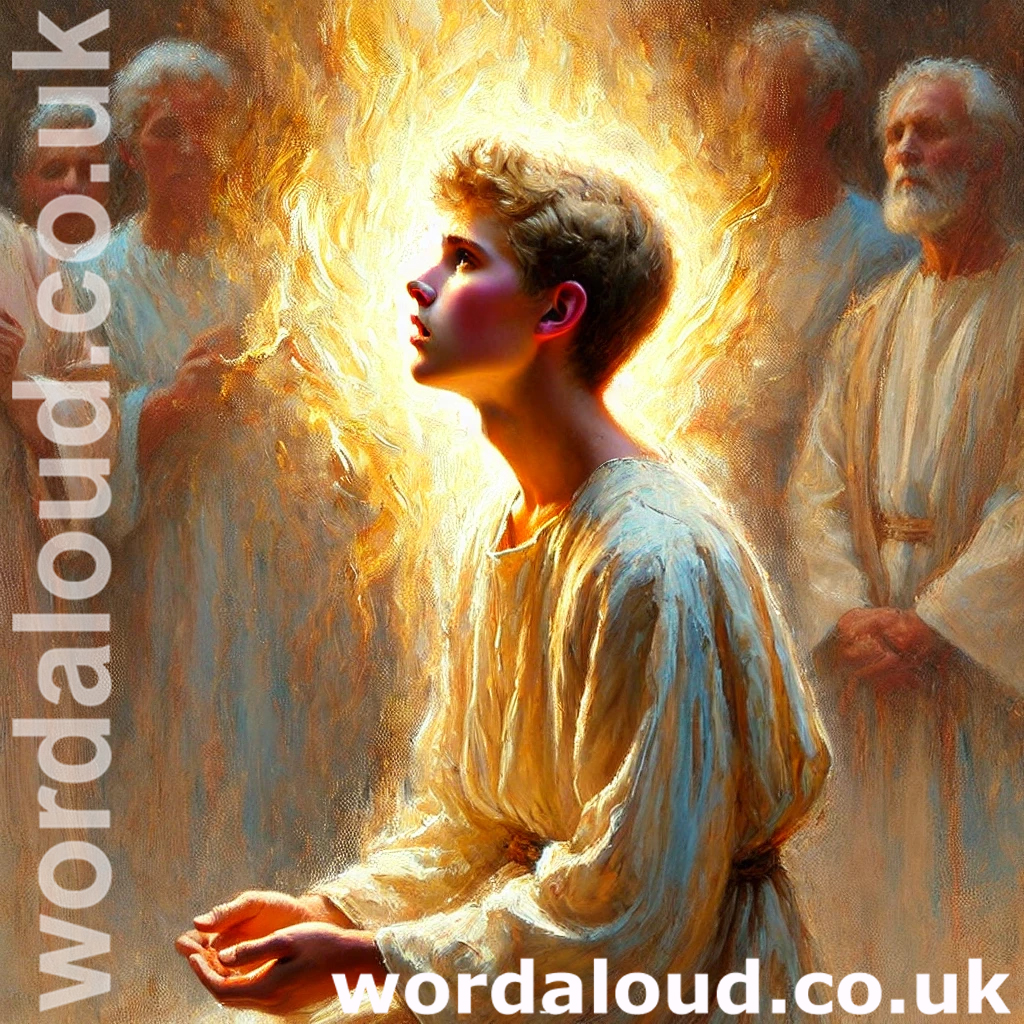
Leo begins by asserting that the forty days following the Resurrection were not idle or incidental. Rather, they were filled with ‘great mysteries’ and ‘deep truths’ revealed by Christ. This aligns with Luke’s account (Acts 1:3), where Jesus ‘presented himself alive… by many convincing proofs, appearing to them during forty days and speaking about the kingdom of God’. The period is thus both transitional and transformational: it bridges the historical mission of Christ with the future mission of the Church, mediated by the Apostles [ … ]
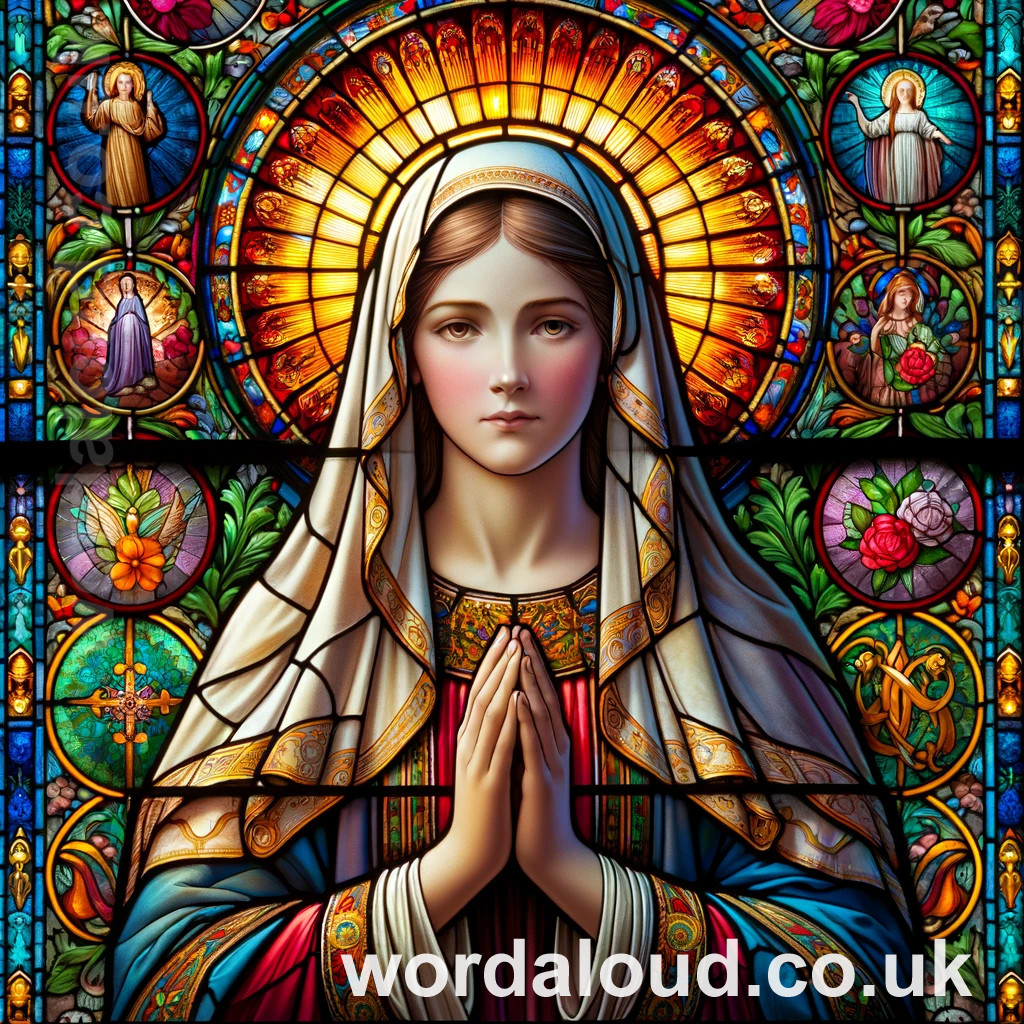
Saint Winifred, also known as Saint Winefride, was born in the 7th century in Wales. She was the daughter of a chieftain named Tyfid ap Eiludd. From a young age, Winifred was devoted to her faith, choosing a life of piety and religious dedication. She was greatly influenced by her uncle, Saint Beuno, a renowned Welsh saint and abbot, who played a significant role in her spiritual education [ … ]
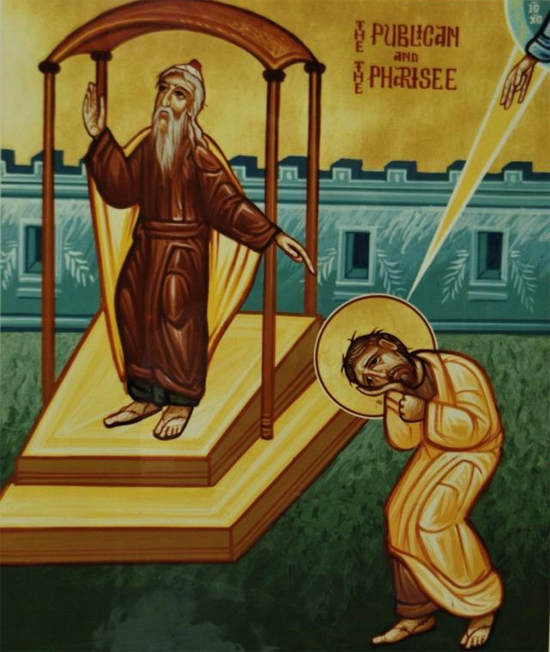
Jesus’ critique of the scribes and the Pharisees continues in today’s Gospel verses. The accusation is constant: they are hypocrites. The imagery in part remains constant: these hypocrites put on outward shows of purity, and yet their hearts are corrupt and their behaviour is corrupt. This imagery now develops. Woe unto you! For you are as painted tombs, all white and purportedly pure and true on the outside, while within the dead flesh rots. In their souls, the scribes and the Pharisees are unclean. Ironically, they are in themselves a violation of the laws of purity. In their hearts, the scribes and the Pharisees carry spiritual death [ … ]
