

Christian Art | The First Disciples | Fishers Of Men | The Kingdom Of God Is At Hand
Mark 1: 14-20 – Week 1 Ordinary Time, Monday (Audio Bible KJV, Spoken Word)
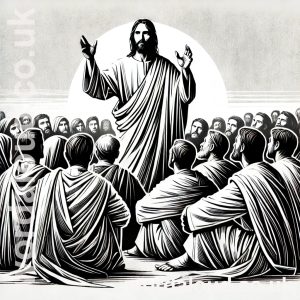
14 Now after that John was put in prison, Jesus came into Galilee, preaching the gospel of the kingdom of God,
15 And saying, The time is fulfilled, and the kingdom of God is at hand: repent ye, and believe the gospel.
16 Now as he walked by the sea of Galilee, he saw Simon and Andrew his brother casting a net into the sea: for they were fishers.
17 And Jesus said unto them, Come ye after me, and I will make you to become fishers of men.
18 And straightway they forsook their nets, and followed him.
19 And when he had gone a little further thence, he saw James the son of Zebedee, and John his brother, who also were in the ship mending their nets.
20 And straightway he called them: and they left their father Zebedee in the ship with the hired servants, and went after him.
John the Baptist was sent to prepare the way of Jesus, to call the people to repentance of their sins, such that their souls could be readied to receive the grace of our Lord. He was the precursor, the last of a long line of prophets awaiting Christ. As he baptized, he told the people that one greater than he was to come.
John has been arrested by Herod for speaking out about Herod’s immoral behaviour. Jesus is not made afraid by this. He has spent time alone in the wilderness, preparing himself for his public ministry, and now his ministry begins. As he comes into Galilee to preach, we sense a beginning that is joyful, fresh and purposeful. Mark’s Gospel has a brisk, punchy pace. It is packed with incident and we leap very quickly between events and from place to place – the words ‘immediately’ and ‘straightway’ recur again and again. There is tremendous energy in the outpouring of the Spirit here.
This great sense of purpose is true to Jesus’ message in these verses: the time is fulfilled, and the Kingdom of God is at hand. Christ is with us now. He is ready. All that the world has been waiting for, these hundreds of years – it is at this point in history that God and man are to forge a renewed and beautiful relationship, a new covenant. We are called to repent of our sins, to reorient our lives, to open our lives once more to God’s love and mercy.
In Mark’s account, it seems to be love at first sight as Jesus calls Simon and Andrew and James and John to follow him and be his disciples. This reflects a great truth of how we should respond to Jesus, with total giving, generous and free self surrender, holding nothing back. Jesus holds a light to our hearts which ignites us. We are called while we work within the everyday fabric of society to respond unconditionally to Christ’s invitation to share our lives with him.
‘Authentic knowledge of the God of mercy, the God of tender love, is a constant and inexhaustible source of conversion, not only as a momentary interior act but also as a permanent attitude, as a state of mind. Those who come to know God in this way, who “see” him in this way, can live only in a state of being continually converted to him. They live, therefore, in statu conversionis, and it is this state of conversion which marks out the most profound element of the pilgrimage of every man and woman on earth in statu viatoris.’ John Paul II
Concluding Prayer
Lord, be the beginning and end
of all that we do and say.
Prompt our actions with your grace,
and complete them with your all-powerful help.
We make our prayer through our Lord.

Audio Bible KJV | Endnotes
The Kingdom Of God Is At Hand
Jesus proclaims that the Kingdom of God is at hand. This message is one of hope, promise, and transformation, and has resonated with believers throughout the ages.
In this Gospel passage, Jesus begins his public ministry by declaring the good news of the Kingdom of God. Jesus says: ‘The time is fulfilled, and the kingdom of God is at hand: repent ye, and believe the Gospel.’ (Mark 1:15) This statement is both a proclamation and a call to action. Jesus is announcing the arrival of the long-awaited Kingdom of God and urging people to turn away from their sins and embrace the Good News.
The Kingdom of God is a central theme throughout the Bible, both in the Old and New Testaments. In the Old Testament, the prophets spoke of a coming Kingdom that would be ruled by a Messiah. In the New Testament, Jesus is that Messiah, and Jesus message is one of salvation and redemption. The Kingdom of God is not in this world a physical place, but a spiritual reality that can be experienced by those who follow Jesus.
Christians have offered their interpretations of the Kingdom of God. Saint Augustine wrote in his City of God that the Kingdom of God is both present and future: ‘The kingdom of heaven is at hand, inasmuch as Christ is always present; but it is also future, inasmuch as it has not yet been fully revealed.’
In the Catholic tradition, the Catechism Of The Catholic Church explains that the Kingdom of God is the reign of God in the hearts of people. It states: ‘The Kingdom of God is at hand for those who accept it. Enter it and receive the Holy Spirit who makes you sons and daughters of God.’ (CCC 541)
In the Protestant tradition, theologians such as Martin Luther and John Calvin have emphasized the idea of justification by faith, which means that salvation comes through faith in Jesus Christ rather than through good works. This idea is closely tied to the message of the Kingdom of God, as it emphasizes the importance of repentance and faith in Jesus as the path to salvation.
Pope Benedict XVI: Jesus Of Nazareth
In Jesus Of Nazareth, Pope Benedict XVI argues that the Kingdom of God is not simply a future hope, but a present reality that can be experienced through encounter with Jesus. Pope Benedict writes: ‘The Kingdom of God is a person, a person who acts, who brings and builds. He is present wherever he is loved and wherever his love reaches us.’ This understanding of the Kingdom of God is rooted in the person of Jesus Christ, who is the embodiment of the Kingdom.
Pope Benedict also emphasizes the importance of personal encounter with Jesus as the path to entering the Kingdom of God. He writes: ‘Encounter with Christ leads to a new way of seeing, a new way of living.’ He encourages believers to deepen their relationship with Jesus through prayer, reading Scripture, and participating in the sacraments of the Church.
Furthermore, Pope Benedict XVI links the message of the Kingdom of God to the mission of the Church. He writes, ‘The Church is the sacrament of the Kingdom, the means by which the Kingdom becomes present in the world.’ This means that the Church exists to proclaim the Kingdom of God and to make it present in the world through the witness of its members.
Pope Benedict also provides a deeper understanding of the Kingdom’s nature and how it relates to human life. He argues that the Kingdom of God is not a utopian vision or a political program, but a new dimension of human existence inaugurated by Jesus Christ. Pope Benedict writes: ‘Jesus himself is the Kingdom. In his person, the new dimension of human existence has made its appearance.’
Pope Benedict also explores the radical nature of the Kingdom of God and how it challenges the status quo. He writes: ‘The Kingdom of God does not fit into the existing structures of the world. It is a new structure, a new way of being human.’ This means that the Kingdom of God calls believers to live in a way that is counter-cultural, rejecting the values of the world and embracing the values of the Gospel.
Furthermore, Pope Benedict XVI’s insights into the Kingdom of God offer hope and consolation in the face of suffering and hardship. He writes: ‘The Kingdom of God is the light in the darkness, the answer to the question of suffering.’ This means that even in the midst of hardship and pain, believers can find comfort and hope in the promise of the Kingdom of God.


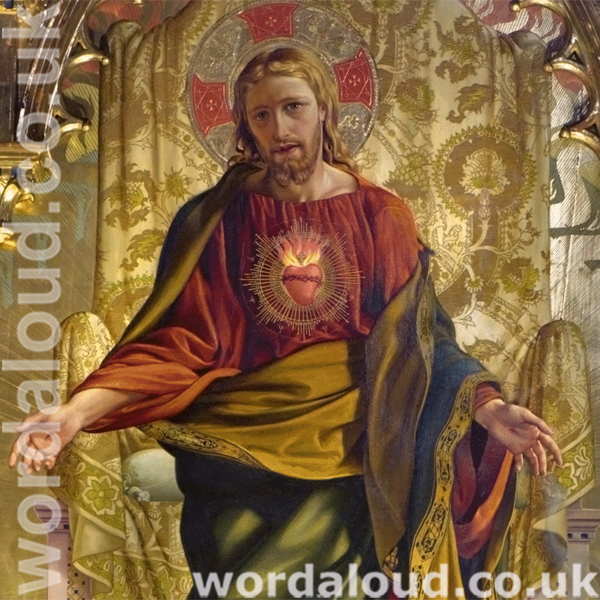
The reading attributed to Saint Macarius is built on a series of striking and sobering images that diagnose the condition of the soul without Christ. The preacher’s language is vivid, even severe, yet always in service of a pastoral aim: to awaken desire for the indwelling Lord who alone restores the soul to beauty [ … ]

This poem centres on themes of spiritual nourishment and intimate connection between the divine and the individual soul. The poem begins by contrasting superficial wealth, symbolized by ‘rich furniture’ and ‘a wedge of gold’, with the poet’s experience of spiritual fulfilment. Here, material objects hold no power to convey the divine presence. Instead, the poet emphasizes a more personal and humble approach: sustenance provided by Christ in the Eucharist, which enters into the poet ‘by the way of nourishment and strength’. This nourishment implies a steady, almost unseen influence that fills the body and soul, offering rest and inner strength while combating the forces of sin [ … ]
Psalm 84 expresses human yearning for divine presence. The psalm begins with an exclamation of admiration: ‘How amiable are thy tabernacles, O Lord of hosts!’ The term ‘tabernacles’ here refers to the sacred dwelling places of God. The psalmist’s words convey awe and reverence for the sanctuaries where God is believed to reside. This opening sets the tone for a poetic exploration of the soul’s yearning for proximity to the sacred [ … ]
