

Christian Art | Easter To Pentecost
Office Of Readings | Eastertide Week 7, Sunday | A Reading From The Homilies Of Saint Gregory Of Nyssa On The Song Of Songs
‘The glory which you have given me, I have given to them.’
Unity In The Spirit | The Goal Of Christian Life
Gregory centres his reflection on Jesus’ High Priestly Prayer: ‘That they may all be one, as you, Father, are in me and I am in you.’ (John 17:21) For Gregory, this unity is not merely institutional but ontological and mystical—rooted in the shared life of the Trinity and mediated to believers through the Holy Spirit.
Gregory’s insight finds resonance in Ephesians 4:3–6, where Paul urges Christians to maintain ‘the unity of the Spirit in the bond of peace… one body and one Spirit… one hope… one Lord, one faith, one baptism’. Unity is the work of the Spirit, not merely human consensus. Gregory emphasizes that this union is forged not by external conformity but by a deep interior participation in the ‘one supreme Good’, which is God Himself.
Glory As The Holy Spirit
A striking and original feature of Gregory’s interpretation is his identification of ‘glory’ in John 17 with the Holy Spirit:
‘Now the bond that creates this unity is glory. That the Holy Spirit is called glory no one can deny…’
This theological move reflects the Cappadocian Fathers’ ongoing development of Trinitarian language in the 4th century. While the Holy Spirit had not yet been fully defined in Nicene theology (until the Council of Constantinople in 381), Gregory affirms the divinity and personal action of the Spirit by calling Him ‘glory’—that which unites the Father and the Son, and binds believers into that same unity.
This reading is supported by the context of John 17:22–23 and John 20:22 (‘Receive the Holy Spirit’). The glory Christ gives to His disciples is not simply honour or reputation, but participation in divine life through the indwelling Spirit, who glorifies human nature by transforming it.
Ecclesiology | The Church As Unified Bride
Drawing from the Song of Songs (‘One alone is my dove, my perfect one’), Gregory envisions the Church as the beloved of Christ, now made ‘one’ through union with the one Bridegroom. His image recalls earlier mystics such as Origen, who interpreted the Song allegorically as the soul’s ascent to God through love.
Gregory extends this to the Church as a whole: ‘no longer divided in their judgment of what was right and good’, the faithful are joined in one purpose and one Spirit. Here we see an ecclesiology not of hierarchy alone, but of mystical unity, grounded in the transformation wrought by the Spirit. In this way, the Church becomes the true ‘dove’, the single, pure, Spirit-filled community, set apart for divine communion.
Spiritual Maturity And The Purified Soul
Gregory concludes with a reflection on spiritual growth: the glory of the Spirit is given to those ‘who have grown from infancy to manhood’, mastering their passions and attaining purity of heart. This is a hallmark of Gregory’s spiritual theology—especially his idea of epektasis, or the soul’s continual striving toward God.
In The Life of Moses, Gregory teaches that spiritual progress has no limit, because God is infinite. The purified soul becomes increasingly open to receiving divine glory, not all at once, but in ever-deepening participation. In the dove imagery, we hear echoes of the beatitude: ‘Blessed are the pure in heart, for they shall see God.’ (Matthew 5:8)
Christianity Today | 21st Century Jesus
Gregory’s vision of unity has profound relevance today. In an age marked by fragmentation—between denominations, cultures, and ideologies—his teaching that true unity arises only through the indwelling Spirit is both hopeful and challenging. The Church’s mission is not merely doctrinal agreement, but to become one in the Spirit, manifesting the glory of God in a divided world.
Likewise, his insistence on spiritual maturity calls modern Christians beyond passive religiosity toward active growth in holiness, purity, and love. The ‘glory’ we seek is not earthly triumph, but transformation into the likeness of God—a process begun through baptism and fulfilled in eternal communion.

A Reading From The Homilies Of Saint Gregory Of Nyssa On The Song Of Songs
When love has entirely cast out fear, and fear has been transformed into love, then the unity brought us by our saviour will be fully realised, for all men will be united with one another through their union with the one supreme Good. They will possess the perfection ascribed to the dove, according to our interpretation of the text: One alone is my dove, my perfect one. She is the only child of her mother, her chosen one.
Our Lord’s words in the gospel bring out the meaning of this text more clearly. After having conferred all power on his disciples by his blessing, he obtained many other gifts for them by his prayer to the Father. Among these was included the greatest gift of all, which was that they were no longer to be divided in their judgement of what was right and good, for they were all to be united to the one supreme Good. As the Apostle says, they were to be bound together with the bonds of peace in the unity that comes from the Holy Spirit. They were to be made one body and one spirit by the one hope to which they were all called. We shall do better, however, to quote the sacred words of the gospel itself. I pray, the Lord says, that they all may be one; that as you, Father, are in me and I am in you, so they also may be one in us.
Now the bond that creates this unity is glory. That the Holy Spirit is called glory no one can deny if he thinks carefully about the Lord’s words: The glory you gave to me, I have given to them. In fact, he gave this glory to his disciples when he said to them: Receive the Holy Spirit. Although he had always possessed it, even before the world existed, he himself received this glory when he put on human nature. Then, when his human nature had been glorified by the Spirit, the glory of the Spirit was passed on to all his kin, beginning with his disciples. This is why he said: The glory you gave to me, I have given to them, so that they may be one as we are one. With me in them and you in me, I want them to be perfectly one.
Whoever has grown from infancy to manhood and attained to spiritual maturity possesses the mastery over his passions and the purity that makes it possible for him to receive the glory of the Spirit. He is that perfect dove upon whom the eyes of the bridegroom rest when he says: One alone is my dove, my perfect one.
Glossary Of Terms
Glory (Doxa – δόξα)
In this context, ‘glory’ refers not to fame or splendor but to the divine presence and majesty—particularly the Holy Spirit, who unites the faithful with God. St. Gregory interprets ‘glory’ in John 17 as the Spirit who brings about unity and sanctification.
Holy Spirit
The third Person of the Trinity, identified by Gregory here as the bond of unity and the ‘glory’ shared between the Father and the Son and extended to believers. The Spirit enables believers to participate in divine life.
Unity
The profound spiritual union of believers with one another and with God, reflecting the unity of the Trinity. This is both the goal and the result of salvation in Gregory’s theology.
Trinity
The Christian doctrine of one God in three persons: Father, Son, and Holy Spirit. Gregory’s interpretation emphasizes the shared glory and love between these persons, into which the Church is drawn.
Ecclesiology
The theological study of the Church. Gregory presents the Church as the ‘one dove,’ unified through the Holy Spirit and symbolized as the Bride of Christ.
Mystical Theology
A branch of theology focused on the direct experience and union of the soul with God. Gregory’s treatment of unity and divine glory has a deeply mystical character.
Epektasis
A term popularized by Gregory meaning ‘continual progress’ or striving toward God. It expresses the soul’s unending ascent into divine life, since God is infinite and inexhaustible.
Contemplation (Theoria)
The spiritual practice of beholding and knowing God through purity of heart and illumination by the Spirit. Associated with the mature ‘life of vision’ in Christian mysticism.
Bride of Christ
A biblical and mystical image of the Church as the beloved of Christ (see Ephesians 5, Revelation 21). Gregory uses this to portray the unity and purity of the Church, symbolized by the dove in the Song of Songs.
The Song of Songs (Canticles)
A poetic book of the Old Testament often interpreted allegorically by the Church Fathers as expressing the love between Christ and the Church or the soul and God. Gregory draws from this to illustrate divine love and unity.
Sanctification
The process of becoming holy—set apart and transformed by God’s grace. Gregory sees sanctification as culminating in unity with God through the Spirit’s glory.
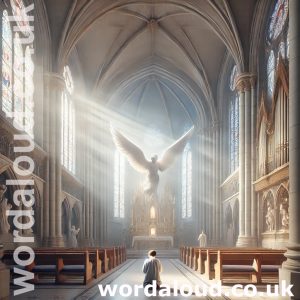
Prayer With Jesus | Prayer For Unity In The Spirit
Heavenly Father,
You who are One in Three,
make us one in you.
You gave your Son to unite what was scattered,
and your Spirit to bind what was broken.
Let your glory descend upon us—
not to exalt us above others,
but to lift all your children into love.
May your Spirit overcome our divisions,
our fears, our selfishness.
May the perfect Dove of your Church
rise in beauty,
whole and holy,
drawn by your gaze of eternal delight.
Grant us to grow into maturity—
to be made worthy vessels of your glory,
to master our passions,
to shine with the brilliance of your Spirit.
As Christ abides in you,
may we abide in him—
and in each other.
Make us one, Lord.
One in heart,
One in faith,
One in your love.
Amen.



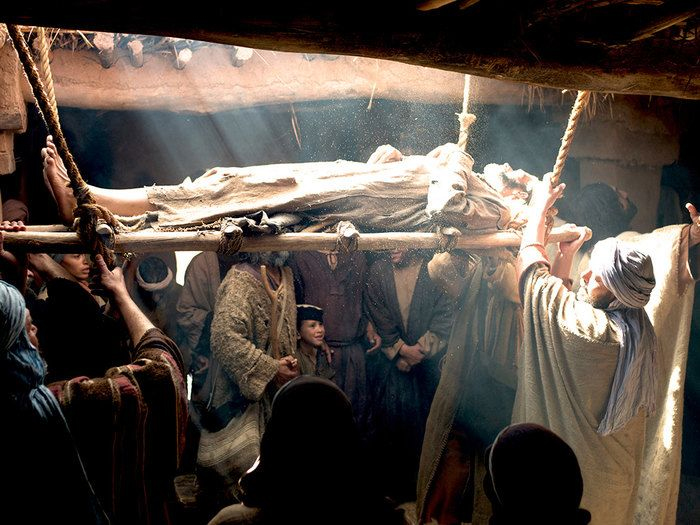
The words of Jesus to the paralytic man on his bed might have seemed strange and even, at first, insensitive: the paralytic has been brought to Jesus seeking to be healed, and Jesus says to him: ‘Son, thy sins be forgiven thee.’ This could hardly be what the paralysed man might have been expecting [ … ]

The psalm encourages us to be like trees planted by a stream. Trees need water to grow strong and healthy, just like we need good influences and teachings to become better people. The stream represents God’s guidance, which gives us strength and wisdom [ … ]

There is a sacramental quality to Jesus’ healing of the deaf man, as he takes him to one side, touches him, lifts his eyes to heaven, and then speaks the healing words of command. In the act of healing, as Jesus lays on his hands, he seems to act as intermediary between the deaf man and heaven, and so it through this that the man is healed [ … ]
