
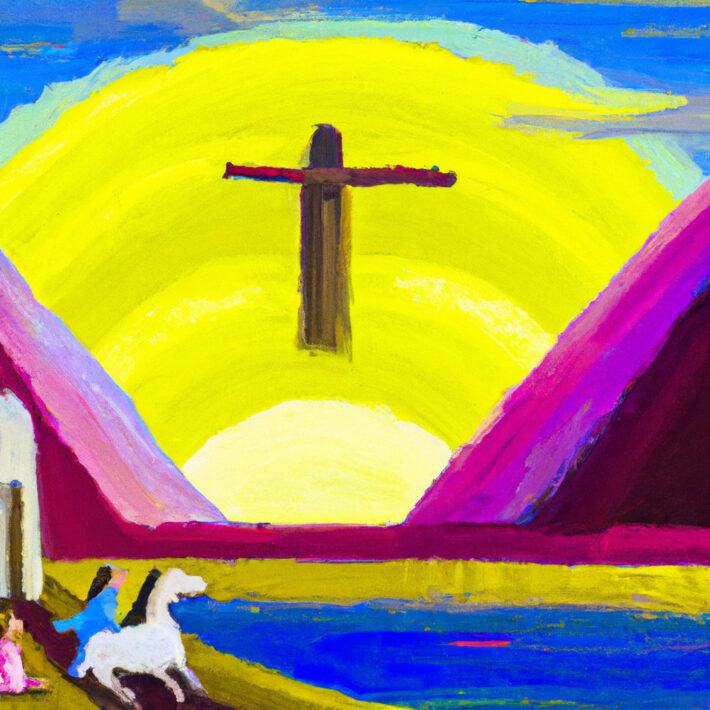
The image depicts Epiphany, while the reading is of Luke 2
King James Audio Bible KJV
When Was Jesus Born? | The Nativity Of Christ | When Were The Gospels Written? | Why The Birth Of Christ The Winter Solstice?
There is conflicting evidence regarding the exact date of Jesus’ birth in the Gospels of Matthew and Luke.
The Gospel of Matthew states that Jesus was born during the reign of King Herod, who died in 4 BC. This would place Jesus’ birth around 4 BC to 6 BC – particularly considering the Biblical account of Herod’s massacre of the innocents. Additionally, Matthew states that Jesus was born in Bethlehem, as prophesied in the Old Testament.
On the other hand, the Gospel of Luke states that Jesus was born during the reign of Caesar Augustus, which is generally considered to have begun in 27 BC and lasted until AD 14.
Luke also states that Jesus was born in Nazareth and that his parents had to travel to Bethlehem for a census, which was conducted when Quirinius was Governor of Syria.
The reference to Quirinius as Governor of Syria is significant because historical records indicate that he held this position twice, first from AD 6-9 and again from AD 11-12 This means that Jesus’ birth would fall around these dates, and at least a decade after the date suggested by Matthew.
These conflicting Gospel accounts have led scholars to debate the exact date of Jesus’ birth.
Of one thing we are certain: there was a birth.
The Catechism states: ‘The Church celebrates the day of Christ’s birth as a solemn feast, not because of the day itself, but because of him whom the day commemorates.’ (CCC, 1166)
In his book Redeemer Of The World Pope John Paul II states: ‘The birth of Jesus is the foundation of the Christian faith, the event that changed the course of history, the beginning of the new world and the dawn of the new life in Christ.’
In Christianity, Jesus’ birth is seen as the fulfilment of Old Testament prophecies, the arrival of the Messiah, and the beginning of God’s plan of salvation for humanity.
The event of Jesus birth is an inspiration to Christians today to love and serve others, as Jesus is believed to have come to Earth to serve humanity, to teach and to heal.
When Were The Gospels Of Luke And Matthew Written?
It is generally thought among scholars that the Gospel of Mark was the first of the four Gospels to have been written, with estimates ranging from the late 60s to early 70s AD.
According to the New Testament scholar, Bart Ehrman, in his book The New Testament: A Historical Introduction to the Early Christian Writings: ‘Most scholars today agree that Mark was the first gospel to be written, probably sometime around the year AD 70.’
The Year AD 70 is significant because in this year Rome, the empire, destroyed Jerusalem – and the Temple.
The dating of the Gospels of Matthew and Luke is more debated among scholars. Some scholars believe that they were written in the 80s-90s AD, after the destruction of the Second Temple in AD 70, while others argue for an earlier dating, before the destruction of the Temple.
R.T. France in his book The Gospel of Matthew states: ‘The Matthean community is best understood as one which looked back to the life and teaching of Jesus and saw in it the fulfilment of Old Testament hopes and expectations, rather than one which was reacting to the fall of Jerusalem or the failure of the Jewish rebellion.’
The authors of the Gospels Matthew and Luke were not eye-witnesses of the events they describe, but rather they were writing based on the oral tradition and testimony of the early Christian communities.
This fact – which is stated within the Gospels – is important to consider when interpreting the texts, as the authors of the gospels may have had a different agenda or perspective than if they were writing at the time of the events. They may have been influenced by the historical and cultural context, theological beliefs, and literary conventions of the time.
The Gospels provide a foundation for Christian theology and practice and are considered to be inspired by God.
The Gospels In Translation
A consideration is that the Gospels were written in Greek, which was not the native language of Jesus or his followers. This may have introduced some cultural and linguistic differences between the original events and the way they were described in the Gospels.
The Gospels are not biographies in the modern sense, but rather they are ancient texts that belong to the genre of ‘gospel’ literature. This genre was characterized by its use of miracles, parables, and apocalyptic language to present Jesus as the Messiah, the Son of God, and the saviour of humanity.
New Testament scholar Richard Bauckham in his book Jesus And The Eyewitnesses states: ‘The Gospels are not biographies in the modern sense but are a new literary genre, which he calls gospel, that is a kind of storytelling in which the main character is also the narrator. The genre of gospel is an ancient one and it is not intended to present a historically accurate account of the life of Jesus, but rather to present him as the Messiah, the Son of God, and the saviour of humanity.’
There is an oral and written tradition behind the Gospels. The Gospels were written decades after the events they describe, and they were based on the oral and written tradition and testimony of the early Christian communities.
New Testament scholar James D.G. Dunn in his book Jesus Remembered states: ‘The early Christian communities, who passed on the oral tradition, were not interested in preserving a neutral and accurate historical record of Jesus’ words and deeds but rather in preserving the teachings and traditions that were believed to have been passed on by Jesus himself.’
When Was Jesus Born? | What Is The Historicity Of The Infancy Narratives?
One view is that the infancy narratives in Matthew and Luke are not based on historical fact, but rather are theological constructs intended to provide a theological background for the person of Jesus.
New Testament Scholar Gerd Theissen in his book The Shadow Of The Galilean states: ‘The infancy narratives are not based on historical facts but are rather theological constructs. They were added to the story of Jesus at a later date in order to provide a theological background for the person of Jesus.’
A very different view is that the infancy narratives in Matthew and Luke are based on historical memories that were later embellished with legendary and mythological elements.
Richard Bauckham in his book Jesus And The Eyewitnesses states: ‘The infancy narratives in Matthew and Luke are based on historical memories that were later embellished with legendary and mythological elements. They are not intended to provide a historically accurate account of the birth of Jesus, but rather to present him as the Messiah, the Son of God, and the saviour of humanity.’
A sceptical view is that the infancy narratives in Matthew and Luke are entirely fictional and were created by the authors to fulfil specific theological or apologetic purposes.
According to Bart Ehrman in his book Misquoting Jesus: ‘The infancy narratives in Matthew and Luke are entirely fictional, created by the authors to fulfil specific theological or apologetic purposes. They contain elements that are historically implausible and are at odds with what we know about the historical context of the time.’
A similar viewpoint is that the infancy narratives are not based on any historical facts; rather they are stories that were created by the authors to serve a specific purpose, such as to provide evidence of Jesus’ divine nature, or to align Jesus’ birth with Old Testament prophecies.
Paula Fredriksen in her book From Jesus to Christ: The Origins of the New Testament Images of Jesus states: ‘The infancy narratives in Matthew and Luke are not based on any historical facts, rather they are stories that were created by the authors to serve a specific purpose, such as to provide evidence of Jesus’ divine nature, or to align Jesus’ birth with Old Testament prophecies.’
When Was Jesus Born? | There Was No Taxation In Nazareth?
Nazareth was not subject to Roman taxation during the time of Jesus. Nazareth was a small Jewish village in the Roman province of Galilee, and it was likely not significant enough to warrant direct Roman taxation. Nor did the area use Roman coinage. Any taxes that would have been collected would have gone to the local Jewish authorities rather than to the Roman authorities.
It’s also worth noting that the Gospel of Luke’s account of the census and the registration in Bethlehem is not supported by any historical evidence and is considered by many scholars as a literary device used by Luke to connect Jesus’ birth to the prophecy of Micah 5:2 which predicts that the messiah will be born in Bethlehem.
When Was Jesus Born | Why Do We Celebrate The Birth Of Jesus At The Time Of The Winter Solstice?
One theory is that December 25th was chosen as the date for Jesus’ birth because it coincided with the Roman festival of Saturnalia, which was a time of feasting, gift-giving, and the temporary reversal of the social order. According to historian Ramsay MacMullen, in his book Christianizing The Roman Empire: ‘One way to win converts would be to attach Christian festivals to the calendar of the empire’
Another theory is that December 25th was chosen as the date for Jesus’ birth because it is the date of the winter solstice, this according to the Julian calendar at the time and not the current date, and the ancient pagans believed that the sun was ‘reborn’ on this day. Historian H.H. Scullard in his book Festivals And Ceremonies Of The Roman Republic writes: ‘The Roman festival of Sol Invictus was celebrated on December 25th and was associated with the ‘rebirth’ of the sun.’
A third and rather fanciful theory is that December 25th was chosen as the date for Jesus’ birth because it is nine months after the feast of the Annunciation, which is celebrated on March 25th and commemorates the angel Gabriel’s announcement to Mary that she would give birth to Jesus.
Theologian Joachim Jeremias in his book The Origins of Infant Baptism writes: ‘It is possible that the early Christian church chose this date to calculate the date of Jesus’ birth based on the date of the Annunciation.’
Theories have been proposed. Here is a small range of further examples:
- According to historian Michael Whitby, in his book Early Christian Literature And The Classical Intellectual Tradition, the early Christians likely chose December 25th as the date for Jesus’ birth in order to counteract the celebration of the birth of the Roman god Mithras, which was also celebrated on December 25th.
- According to historian David R. Dowling in his book Christmas in the Crosshairs: Two Thousand Years of Denouncing and Defending the World’s Most Celebrated Holiday, the early Christians chose December 25th as the date for Jesus’ birth to align with the Roman imperial calendar and to assert the Christian religion as the dominant one in the empire.
- According to historian J.G. Frazer, in his book The Golden Bough: A Study In Magic And Religion, the early Christians chose December 25th as the date for Jesus’ birth in order to Christianize the ancient pagan festival of the Saturnalia, which was celebrated around the same time.
- According to historian Ronald Hutton in his book The Stations of the Sun: A History of the Ritual Year in Britain, December 25th was likely chosen as the date for Jesus’ birth in order to align with the ancient pagan festival of Yule, which celebrated the return of the sun at the time of the winter solstice.
- According to historian Peter Brown, in his book The Rise Of Western Christendom: Triumph And Diversity, A.D. 200-1000, December 25th was likely chosen as the date for Jesus’ birth in order to align with the celebration of the birth of various pagan gods and heroes whose births were celebrated around the same time.
- According to historian Tom Holland, in his book Dominion: The Making Of The Western Mind, December 25th was likely chosen as the date for Jesus’ birth in order to align with the ancient pagan festival of the Saturnalia, which was celebrated around the same time.




In this reading from his letter to the Corinthians, Pope Saint Clement I of Rome reflects on the central place of love in the Christian life. Writing to a divided community, Clement presents love as the force that binds believers together and restores harmony. His words combine practical instruction with meditation on the example of Christ [ … ]

Saint Therese of Lisieux, also known as the ‘Little Flower’, is an inspiration to Christians. Her simple yet profound spirituality, her deep love for God, and her devotion to prayer and sacrifice have made her a beloved saint in the Catholic Church and a source of inspiration for Christians of all denominations [ … ]
In this reading, Saint Fulgentius of Ruspe reflects on the meaning of Christian prayer and its foundation in the priestly work of Christ. His focus is on why the Church consistently prays to the Father through Jesus Christ, and how this practice expresses central truths about the Incarnation and the Trinity [ … ]
