Loading...
Christian Saints | Powerful Prayer With JesusDaily Bible Verses | The Gospel Of Saint MatthewThrough The Year | The Gospels | Bible Verse Of The Day

Daily Bible Verses | Martyrdom Of John The Baptist | Witness Jesus | Christian Faith | Herod’s Lust And Evil | Herodias | Christian Saints | King James Audio Bible

Daily Bible Verses | The Martyrdom Of John The Baptist | Witness Jesus | Christian Faith | Herod's Lust And Evil | Herodias | Christian Saints

Christian Art | Martyrdom Of John The Baptist | Christian Saints And Martyrdom In The Bible

Matthew 14: 1-12 – Week 17 Ordinary Time, Saturday (King James Audio Bible KJV, Spoken Word)

1 AT that time Herod the tetrarch heard of the fame of Jesus,
2 And said unto his servants, This is John the Baptist; he is risen from the dead; and therefore mighty works do shew forth themselves in him.
3 ¶ For Herod had laid hold on John, and bound him, and put him in prison for Herodias’ sake, his brother Philip’s wife.
4 For John said unto him, It is not lawful for thee to have her.
5 And when he would have put him to death, he feared the multitude, because they counted him as a prophet.
6 But when Herod’s birthday was kept, the daughter of Herodias danced before them, and pleased Herod.
7 Whereupon he promised with an oath to give her whatsoever she would ask.
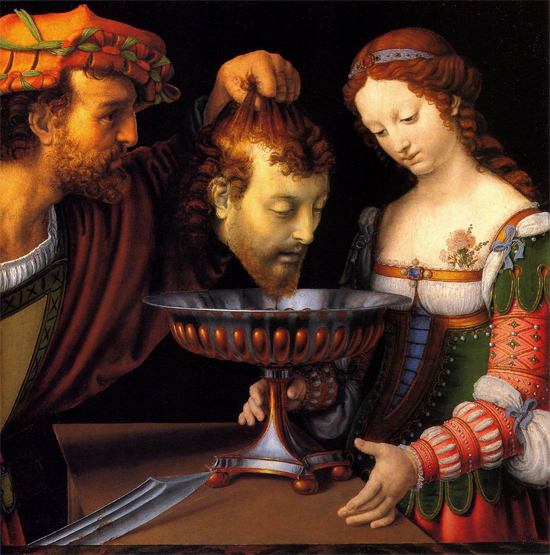
8 And she, being before instructed of her mother, said, Give me here John Baptist’s head in a charger.
9 And the king was sorry: nevertheless for the oath’s sake, and them which sat with him at meat, he commanded it to be given her.
10 And he sent, and beheaded John in the prison.
11 And his head was brought in a charger, and given to the damsel: and she brought it to her mother.
12 And his disciples came, and took up the body, and buried it, and went and told Jesus.

Today’s Gospel verses provide great insight into the political constitution of Jesus’ homeland during the lifetime of Jesus. Herod the tetrarch, Herod Antipas, is in charge, a client of the Roman Empire and son of Herod the Great. He governed Galilee and Perea. He was married, according to the Jewish historian Flavius Josephus, to a daughter of an Arabian king, but lived in concubinage with Herodias, his brother’s wife.

John the Baptist had criticised Herod’s immoral life, which was in conflict with the sexual morality laid down in the Law and was a cause of scandal. Herod’s broader fear concerning John was that he might become the leader of a popular movement and create unrest, which would endanger Herod’s position. Herod’s attitude to John is that of a tyrant, who has imposed his will on the land, and by so doing has caused the people suffering. Taxes imposed on the people would be channelled to Tiberiade, the newly constructed capital, built around the year 20 and named in honour of Tiberius, Emperor of Rome. The city itself was an imposition upon the people of Galilee, the presence of a cemetery, for example, rendering the site ritually unclean for the priestly caste to live in, Herod forcefully resettling many non-Jews there to populate his new city.

We see the lavish and lascivious fruits of such tyranny in the orgy during which Herod makes his vow to the daughter of Herodias, who was called Salome. St Augustine comments: ‘Amid the excess and sensuality of the guests, oaths are rashly made, which then are unjustly kept.’ It is a sin to make an oath to do something unjust; any such oath has no binding force. Indeed, to keep such an oath compounds the sin. Such is the environment Herod has created around himself, that his conscience is lost to him, as he is submerged within evil – within the egotism and false display which are attendant upon tyranny. Herod’s murder of John the Baptist is the result of dehumanizing orgy.

It may seem wonderful to us that these Bible verses end on a tender note. John the Baptist’s disciples come to take care of his body, to express love and give the body a fitting, decent end. Then they go to tell Jesus what has happened. We can imagine what Jesus must have felt and thought at the news of his friend’s death, and the concern with which the disciples must have given Jesus the news, as an act of love.

Jesus Is Lord | Psalms | King James Audio Bible

Concluding Prayer | Love Revealed By Jesus Christ | King James Audio Bible

I cried with my whole heart; hear me, O LORD: I will keep thy statutes.
I cried unto thee; save me, and I shall keep thy testimonies.
I prevented the dawning of the morning, and cried: I hoped in thy word.
Mine eyes prevent the night watches, that I might meditate in thy word.
Hear my voice according unto thy lovingkindness: O LORD, quicken me according to thy judgment.
They draw nigh that follow after mischief: they are far from thy law.
Thou art near, O LORD; and all thy commandments are truth.
Concerning thy testimonies, I have known of old that thou hast founded them for ever. (Psalm 118/119, 145-152, XIX, Koph)

Let the splendour of the resurrection
light up our hearts and minds, Lord,
scattering the shadows of death,
and bringing us to the radiance of eternity.
We make our prayer through our Lord.


Meditations On The Love Of Jesus Christ | Word Aloud | Prayer And Reflection
  • Audio Bible | Parables Of God's Mercy | Oliver Peers

    In these verses of the Bible, Christ expresses the love of God for all people. Christ’s is not an exclusive calling, nor especially a calling to those who most clearly, visibly, seem to adhere to the requirements of the Old Law; he has come to bring home to God those who have wandered, sinners who have fallen far from the Law. When a sinner comes home to God, there is incredible rejoicing in heaven. So we, though we may sin, should never be afraid to return to the Church, to say sorry, confess our sins, and find forgiveness [ … ]

  • Jesus in the Garden of Gethsemane | The Gospel of Saint Mark | Audio Bible KJV

    In the Garden of Gethsemane, Jesus prays and struggles desperately with the weight of his coming Crucifixion. He sweats blood – he is in agony. Jesus enters into his Passion fully cognizant of the horror of it [ … ]

  • Parousia | Second Coming Of Jesus Christ | Apocalypse / Revelation

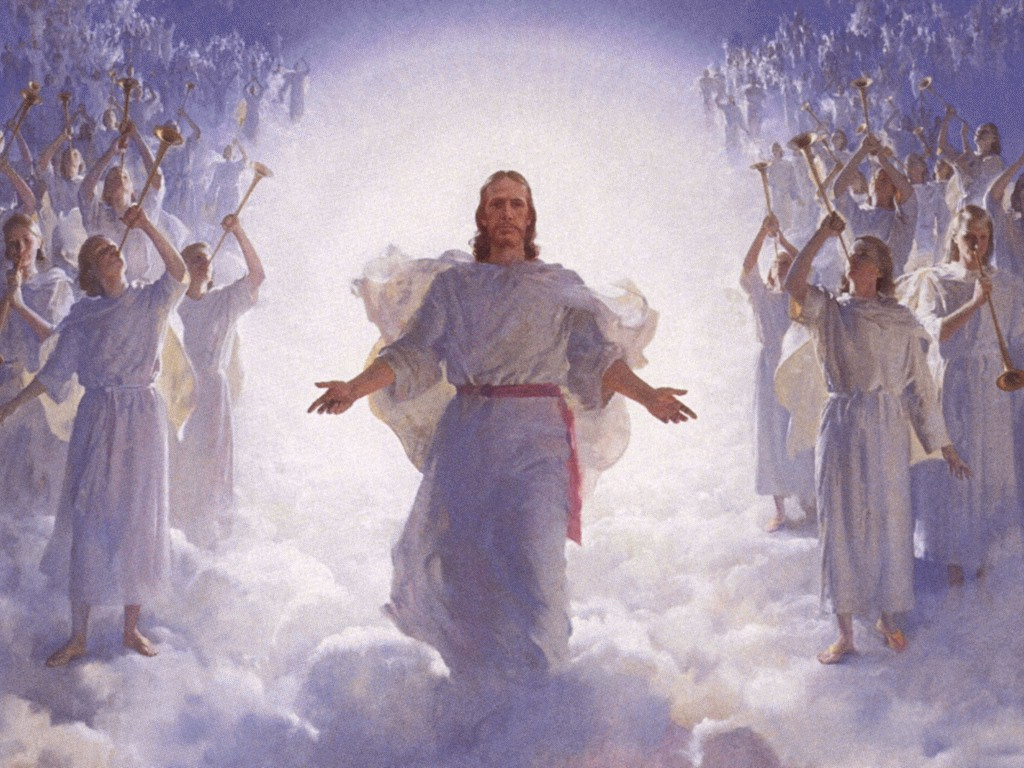
    Christian Art | Parousia | Second Coming | Lamb Of God, You Take Away The Sins Of The World Luke 17: 26-37 (Audio Bible KJV, Spoken Word) Early Christian thought about the Parousia – the second coming – was largely influenced by the teachings of Jesus and the writings of Saint Paul. In the early Christian community, expectation of Christ’s return was strong, and many Christians believed that it would happen in their lifetime. This belief is evident in the New Testament, where the authors express a sense of urgency in their writings and encourage their readers to be prepared for Christ’s imminent return. As Christianity spread throughout the Roman Empire, the idea of the Parousia became more complex and nuanced. Theological debates arose around the nature of Christ’s return and the events that would precede it. Some theologians, such as Origen and Augustine, saw the Parousia as a spiritual event that was already happening in the Church. Others, such as the Montanists and the millenarians, believed in a literal, physical return of Christ and the establishment of a new, earthly Kingdom. In the Middle Ages, the Parousia was often associated with apocalypticism and the idea of a final, cataclysmic battle between good and evil – the last battle. The idea of the Antichrist, who would precede Christ’s return, became a popular theme in Christian literature, and the book of Revelation (Apocalypse – meaning to reveal, to uncover) was interpreted as a prophetic guide to the end of the world. Biblical Basis For The Parousia | The Second Coming The concept of the Parousia, or the Second Coming of Jesus Christ, is central to Christian eschatology and is supported by numerous biblical passages in both the Old and New Testaments. In the Old Testament, there are numerous passages that refer to the coming of a Messiah who will restore Israel and bring about the final judgment. For example, in Daniel 7:13-14, it is written: ‘I saw in the night visions, and, behold, one like the Son of man came with the clouds of heaven, and came to the Ancient of days, and they brought him near before him. And there was given him dominion, and glory, and a kingdom, that all people, nations, and languages, should serve him: his dominion is an everlasting dominion, which shall not pass away, and his kingdom that which shall not be destroyed.’ This passage describes a divine figure who comes in the clouds and is given dominion over all nations. In the New Testament, the Parousia is described in greater detail, particularly in the teachings of Jesus and the writings of Saint Paul. Jesus speaks of his return in many passages, including Matthew 24:30-31, where Jesus says: ‘And then shall appear the sign of the Son of man in heaven: and then shall all the tribes of the earth mourn, and they shall see the Son of man coming in the clouds of heaven with power and great glory. And he shall send his angels with a great sound of a trumpet, and they shall gather together his elect from the four winds, from one end of heaven to the other.’ Here, Jesus describes his return in power and glory, accompanied by angels who gather Jesus’ elect from all over the world. In Saint Paul’s letters, the Parousia is also described in detail. In 1 Thessalonians 4:16-17, Saint Paul writes: ‘For the Lord himself shall descend from heaven with a shout, with the voice of the archangel, and with the trump of God: and the dead in Christ shall rise first: Then we which are alive and remain shall be caught up together with them in the clouds, to meet the Lord in the air: and so shall we ever be with the Lord.’ This passage describes a resurrection of the dead and the gathering of believers to meet the Lord Jesus in the air. The language and imagery used to describe the Parousia are often dramatic and apocalyptic in nature. The Parousia is often described as a time of judgment, when the righteous will be separated from the wicked, and God’s justice will be fully revealed. The imagery of clouds, trumpets, and angels is used to depict the power and glory of Christ’s return. Theological Interpretations Of The Parousia | Jesus’ Second Coming The concept of the Parousia has been interpreted in a variety of ways throughout Christian history. Dispensationalism Dispensationalism is a theological framework that emerged in the 19th  Century and has since become popular among some evangelical and fundamentalist Christians. Dispensationalists believe that history is divided into distinct periods or ‘dispensations’, each of which is marked by a particular mode of divine revelation and a specific plan of salvation. According to dispensationalist theology, the Parousia will be preceded by a period of tribulation, during which the Antichrist will establish a one-world government and the Jews will be restored to their homeland. The Parousia itself will involve a physical, visible return of Christ, who will establish a thousand-year reign on earth before the final judgment. Preterism Preterism is a theological interpretation of the Parousia that holds that many of the prophecies in the New Testament, particularly those in the book of Revelation, were fulfilled in the first century AD. According to this view, the Parousia occurred in a spiritual sense when Christ ascended to heaven and sent the Holy Spirit to empower the Church. Preterists argue that the tribulation and other end-time events predicted in the New Testament were fulfilled in the destruction of the Temple in Jerusalem in AD 70. Postmillennialism Postmillennialism is a theological view that holds that the Parousia will occur after a period of history in which the Church will gradually bring about the kingdom of God on earth. According to this view, the Church will spread the gospel throughout the world, and social, political, and economic conditions will gradually improve. Eventually, Christ will return to a world that has been largely transformed by the Gospel. Amillennialism […]

Search Google Here | A Holy Land Jerusalem Pilgrimage? | A Safari? | An Escape..