
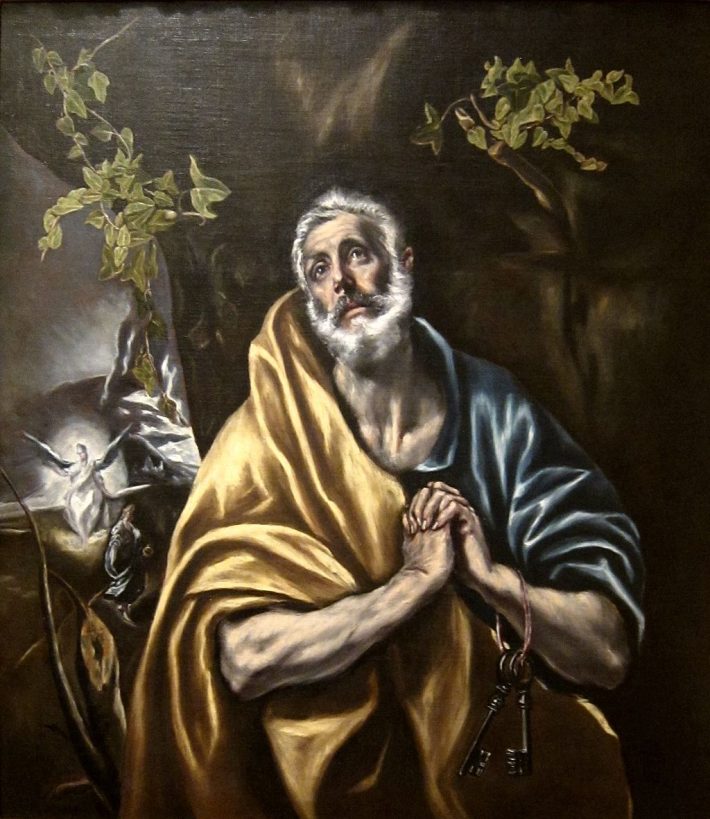
Christian Art | Jesus And His Disciples | Love Revealed By Jesus Christ
Luke 9: 18-22 – Week 25 Ordinary Time, Friday (King James Audio Bible KJV, Spoken Word)
18 ¶ And it came to pass, as he was alone praying, his disciples were with him: and he asked them, saying, Whom say the people that I am?
19 They answering said, John the Baptist; but some say, Elias; and others say, that one of the old prophets is risen again.
20 He said unto them, But whom say ye that I am? Peter answering said, The Christ of God.
21 And he straitly charged them, and commanded them to tell no man that thing;
22 Saying, The Son of man must suffer many things, and be rejected of the elders and chief priests and scribes, and be slain, and be raised the third day.
Today’s Gospel verses invite us once more to consider the true identity of Jesus. This scene is filled both with a sense of preconceptions and expectations, and with the over-riding knowledge of the new, which is the truth of Jesus. Additionally, we are asked by Jesus to declare the truth of our knowledge of who Jesus is. We are invited by Jesus to confess our Christian faith.
Jesus asks his disciples to consider the speculations in the land concerning his true identity. The disciples know that some people are saying that Jesus must be John the Baptist risen again, or Elijah, or another of the prophets. This would be because this would then help to account to the people for the signs and miracles Jesus performed. This would be conventional knowledge, of a sort, even as it would entail a fundamental misrecognition, a falling short of true knowledge.
The disciples, however, have lived with Jesus. Their knowledge is different from that of the crowd. The disciples have intimately learned the truth about Jesus. This is why Peter is able to answer Jesus’ question, by replying that Jesus is the Christ of God, the Anointed One.
This is truth. Jesus, though, tells his disciples to maintain the hiddenness of Jesus’ full purpose. This is because the cross must be fulfilled. It is identical with Jesus’ true identity that he must suffer the Passion and die upon the cross to be reborn. Jesus draws his disciples toward full and complete knowledge of his being on Earth.
Concluding Prayer | Love Revealed By Jesus Christ
Lord God,
you hold out the light of your Word
to those who do not know you.
Strengthen in our hearts the faith you have given us,
so that no trials may quench the fire
your Spirit has kindled within us.
We make our prayer through our Lord.


King James Audio Bible | Audio Bible | Endnotes
Take Nothing For Your Journey | The Story Of Abraham
The story of Abraham is a powerful example of trusting in God’s provision, even when it means leaving behind everything that is familiar and comfortable.
In Genesis 12:1-4, God calls Abram (later renamed Abraham) to leave his country, his people, and his father’s household and go to a land that God would show him. This was a daunting call, as Abram was being asked to leave behind everything he knew and journey to an unknown land. However, Abram responded in faith, trusting that God had a plan and a purpose for his life.
The author of Hebrews reflects on Abraham’s faith in Hebrews 11:8-10, saying: ‘By faith Abraham, when he was called to go out into a place which he should after receive for an inheritance, obeyed; and he went out, not knowing whither he went. By faith he sojourned in the land of promise, as in a strange country, dwelling in tabernacles with Isaac and Jacob, the heirs with him of the same promise: for he looked for a city which hath foundations, whose builder and maker is God.’
Despite not knowing where he was going, Abraham trusted in God’s provision and continued to follow Him. God blessed Abraham’s faithfulness, promising to make him a great nation and to bless all the families of the earth through him (Genesis 12:2-3).
However, Abraham’s journey was not without its challenges. In Genesis 12:10-20, we read about how Abraham and his wife Sarah journeyed to Egypt during a time of famine. Abraham was afraid that the Egyptians would kill him and take Sarah as their own, so he asked her to pretend to be his sister instead of his wife. This deception led to Pharaoh taking Sarah into his household, but God intervened to protect her and eventually returned her to Abraham.
Despite his mistakes and missteps, Abraham’s faith in God remained strong. He continued to trust in God’s provision, even when it meant leaving behind everything he knew and loved. And in the end, God’s faithfulness to Abraham was evident, as He fulfilled His promises and blessed Abraham and his descendants in countless ways.
In our own lives, we may be called to take a journey of faith like Abraham. It may involve leaving behind our comfort zone or taking a step into the unknown. But as we trust in God’s provision and follow Him, we can be confident that He will guide us and bless us, just as He did with Abraham.


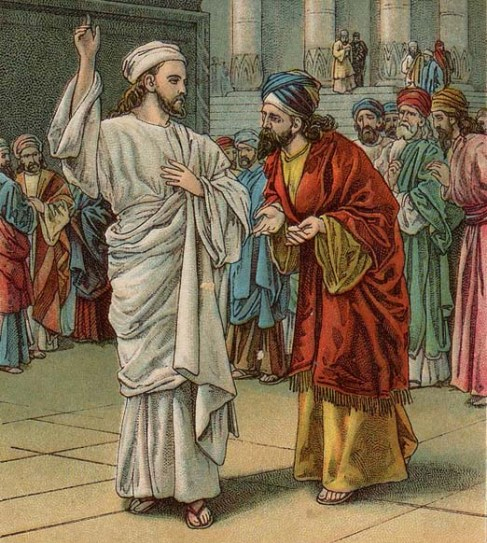
The Sadducees deny the resurrection, because they are rich and so proclaim the false belief that the Messianic Kingdom has already arrived, their riches being their reward for living according to the Law. In order to challenge Jesus, they present him with a fictional case of a widow passed from brother to brother, according to the Levirate Law, hoping to make the resurrection look ridiculous [ … ]
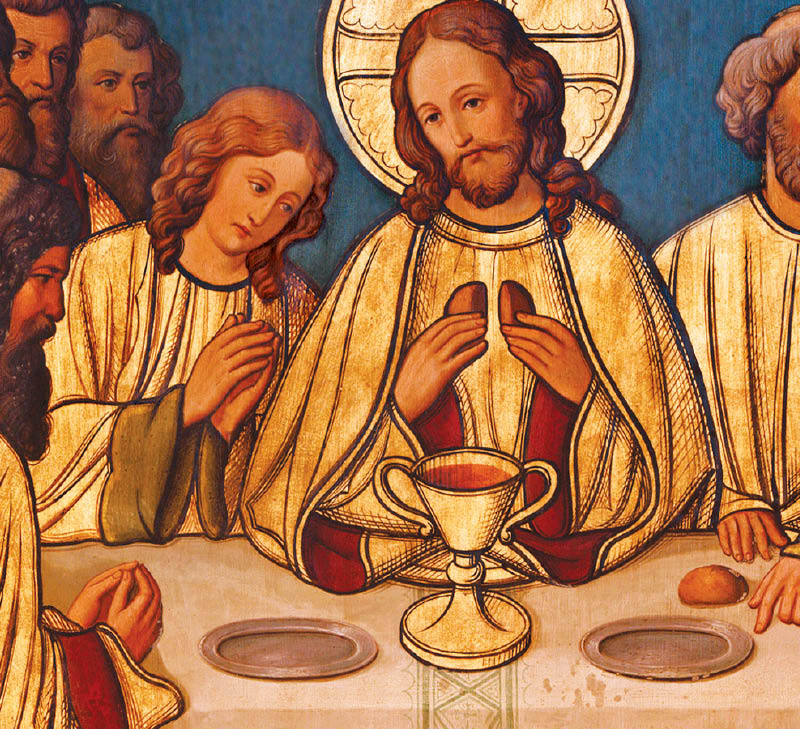
In the Bible, a miracle is an event that is not explicable by natural or scientific laws and is therefore attributed to a divine agency. Miracles are often seen as a sign of the intervention of God in the affairs of human beings. In the Old Testament, the most famous miracles are the Ten Plagues of Egypt, in which God punished the Pharaoh for refusing to release the Israelites from slavery, and the parting of the Red Sea, in which God allowed the Israelites to escape from the pursuing Egyptians by opening a path through the sea. In the New Testament, the miracles of Jesus are a central part of his ministry and are seen as evidence of his divinity. These include healings, such as the restoration of sight to the blind and the raising of the dead, and acts of nature, such as turning water into wine and walking on water. Is There A Theological Significance To Jesus’ Miracles? In the Christian tradition, the miracles performed by Jesus are seen as a manifestation of his divinity and as proof of his authority to teach and heal. Many of these miracles are described in the Gospels of the New Testament, which are the primary source of information about the life and teachings of Jesus. The purpose of the miracles, according to the Gospels, was to demonstrate Jesus’ power over natural forces and to show that he had the authority to forgive sins and offer salvation to those who believed in him. Why Did Jesus Ask To Keep His Miracles Secret? ‘Tell No One Of This.’ In the Gospels, there are a few instances where Jesus tells people not to tell others about what he has done for them. For example, in the Gospel of Matthew, after Jesus healed a man who was possessed by demons, he told the man, ‘See that you tell no one anything, but go, show yourself to the priest and offer the gift that Moses commanded, as a proof to them’ (Matthew 8:4). In this case, it seems that Jesus was concerned that the man’s testimony might not be believed or might be misunderstood, and so he asked him to keep the experience to himself for the time being. It is difficult to say for sure why Jesus might have asked someone to keep quiet about a miracle without knowing the specific context in which the request was made. However, some possible reasons that come to mind include: To avoid drawing unnecessary attention to himself. In the Gospels, Jesus often tries to avoid drawing too much attention to himself, especially from the authorities who are hostile to him. Asking someone to keep quiet about a miracle might be one way of avoiding unwanted attention and allowing Jesus to continue his ministry without interference. To allow the person who was healed to experience the transformation for themselves. In some cases, the person who was healed might have been skeptical or unsure of what had happened to them. Asking them to keep quiet about the miracle might have given them time to reflect on the experience and come to their own understanding of it without being influenced by others. To test the person’s faith. In some cases, Jesus might have asked someone to keep quiet about a miracle as a test of their faith. If they were truly grateful for what Jesus had done for them, they would be willing to follow his instructions and trust that he had a good reason for asking them to keep quiet. These are just a few possible reasons why Jesus might have asked someone to keep quiet about a miracle. It is important to remember that the Gospels are ancient texts and that we must be careful not to impose our own interpretations on them without considering the historical and cultural context in which they were written. To avoid creating conflict or division. In the Gospels, Jesus often encounters people who are skeptical or hostile to his teachings, and he sometimes tries to avoid confrontations with them. Asking someone to keep quiet about a miracle might be one way of avoiding a confrontation or a heated debate that could disrupt his ministry. To avoid being misunderstood or misrepresented. In some cases, the person who was healed might not have understood the full significance of what Jesus had done for them, and they might have tried to explain it in a way that distorted or misrepresented the truth. Asking them to keep quiet might have given Jesus time to explain things to them more fully and help them to understand the true meaning of the miracle. To avoid becoming a spectacle. In the Gospels, there are many instances where people are amazed by the miracles that Jesus performs, and they often try to make him into a kind of celebrity or showman. Asking someone to keep quiet about a miracle might have been one way of avoiding this kind of attention and keeping the focus on the message that Jesus was trying to convey. What Is The Significance Of Miracle Of The Wedding At Cana? In the Christian tradition, the wedding at Cana is significant because it is the first of the miracles performed by Jesus that is recorded in the Gospels of the New Testament. This event is described in the Gospel of John, where it is said that Jesus, along with his mother Mary and his disciples, attended a wedding in the town of Cana. At the wedding, the host ran out of wine, and Mary asked Jesus to help. In response, Jesus turned water into wine, which is seen as a miraculous act that demonstrated his power and authority. In the Gospel of John, after Mary asks Jesus to help with the wine at the wedding in Cana, he replies, “Woman, what does this have to do with me? My hour has not yet come” (John 2:4). This statement is often seen as indicating that Jesus was aware […]

Psalm 135 blends praise with remembrance, theological declaration with historical reflection. The psalm invites the community of faith to recognize and proclaim the greatness of God, to remember God’s acts in history, and to affirm their identity as God’s chosen people. The psalm serves as a bridge between past and present, human and divine, inviting its readers into a space where history, theology and worship intersect [ … ]