

Christian Art | Jesus On The Cross | Holy Week | The Passion Of Christ
Office Of Readings | Thursday Of Holy Week | Maundy Thursday | A Reading From The Homily Of Saint Melito Of Sardis On The Pasch
‘The Lamb that was slain has delivered us from death and given us life.’
On Holy Thursday, the Church gathers to remember the Last Supper—the evening when Jesus, in a quiet upper room, gave his friends the gift of the Eucharist, and with it, a new covenant sealed in his blood. The reading from Saint Melito of Sardis, a bishop from the second century, helps us understand the deeper meaning of what took place that night and how it connects to the cross and the resurrection that followed.
Melito begins with a striking statement: ‘There was much proclaimed by the prophets about the mystery of the Passover: that mystery is Christ.’ From the outset, he makes it clear that the entire story of the Exodus—the liberation of Israel from slavery in Egypt—is not only a historical event but also a foreshadowing of something greater. The lamb whose blood protected the Israelites on the night of their deliverance points us toward Jesus, the true Passover Lamb, who frees all people from the slavery of sin and death.
Melito’s language is rich with echoes of Scripture. He describes Christ as the one who ‘came down from heaven to earth,’ who ‘clothed himself in humanity’ in the womb of the Virgin Mary. Here we see the heart of the Christian faith: God became human not out of curiosity or obligation, but ‘for the sake of suffering humanity.’ Jesus took on our nature so that he could fully enter into our condition—even our pain and death—and then redeem it from the inside out.
Melito emphasizes that Jesus had a body capable of suffering, and he used that body to confront the consequences of the Fall: not only physical illness but the deeper wound of spiritual death. Christ’s death, however, was unlike any other. He ‘dealt man’s destroyer, death, a fatal blow’—not by avoiding suffering, but by enduring it and transforming it. In the words of the early Church, Jesus trampled down death by death.
What follows is a beautiful reflection on the parallels between Christ and the story of the Exodus. Just as the Israelites were saved from Pharaoh, we are saved from the grip of sin. Just as the blood of the lamb marked their doors, the blood of Christ marks the hearts of believers. Just as Israel passed from slavery into freedom, we pass from death into life. Christ is not just like the Passover lamb—he is the Passover, the one true Lamb whose sacrifice brings salvation to the world.
Melito deepens this theme by drawing on the lives of Old Testament figures. He sees Christ prefigured in Abel, who was slain; in Isaac, who was bound; in Joseph, who was sold; in Moses, who was left to die. Each of these moments becomes a lens through which we can see Jesus more clearly—not only as the fulfillment of prophecy but as the center of history. In their suffering, we see a reflection of his. And in his suffering, we find redemption.
Toward the end of the reading, Melito presents us with the stark reality of Christ’s Passion: he was ‘dragged off to be slaughtered, sacrificed in the evening, and buried at night.’ This language intentionally recalls the Passover rituals, where the lamb was sacrificed at twilight and consumed that same night. The detail that ‘no bone of his was broken’ echoes Exodus 12:46 and John 19:36, underscoring Jesus’ identity as the true Paschal Lamb.
Yet this death is not the end. Melito concludes with a note of triumph: ‘He is the one who rose from the dead, and who raised man from the depths of the tomb.’ The one who was silent like a lamb before his shearers now speaks with power. The one who was buried has risen. The one who suffered has brought life.
This is the message of Holy Thursday. The cross looms on the horizon, but already we see its meaning taking shape. The Eucharist, which Jesus instituted at the Last Supper, is not just a ritual meal—it is the living memorial of his sacrifice, the ongoing participation in his death and resurrection. Each time we receive the Body and Blood of Christ, we are brought into the heart of this mystery.
Saint Melito’s words remind us that what happened in Jerusalem nearly two thousand years ago is not simply a past event. It is a reality we are invited to enter into here and now. The Lamb who was slain still gives life. The blood that was poured out still sets us free. And the One who rose from the dead still calls us to share in his victory.
Let us approach Holy Thursday, then, not as observers of a sacred story but as participants in it. Let us receive the Lamb with gratitude, and let us allow his sacrifice to shape our lives, so that we too may pass over—from sin to grace, from death to life, from fear to freedom.

A Reading From The Book Of Saint Basil On The Holy Spirit
There was much proclaimed by the prophets about the mystery of the Passover: that mystery is Christ, and to him be glory for ever and ever. Amen.
For the sake of suffering humanity he came down from heaven to earth, clothed himself in that humanity in the Virgin’s womb, and was born a man. Having then a body capable of suffering, he took the pain of fallen man upon himself; he triumphed over the diseases of soul and body that were its cause, and by his Spirit, which was incapable of dying, he dealt man’s destroyer, death, a fatal blow.
He was led forth like a lamb; he was slaughtered like a sheep. He ransomed us from our servitude to the world, as he had ransomed Israel from the hand of Egypt; he freed us from our slavery to the devil, as he had freed Israel from the hand of Pharaoh. He sealed our souls with his own Spirit, and the members of our body with his own blood.
He is the One who covered death with shame and cast the devil into mourning, as Moses cast Pharaoh into mourning. He is the One who smote sin and robbed iniquity of offspring, as Moses robbed the Egyptians of their offspring. He is the One who brought us out of slavery into freedom, out of darkness into light, out of death into life, out of tyranny into an eternal kingdom; who made us a new priesthood, a people chosen to be his own for ever. He is the Passover that is our salvation.
It is he who endured every kind of suffering in all those who foreshadowed him. In Abel he was slain, in Isaac bound, in Jacob exiled, in Joseph sold, in Moses exposed to die. He was sacrificed in the Passover lamb, persecuted in David, dishonoured in the prophets.
It is he who was made man of the Virgin, he who was hung on the tree; it is he who was buried in the earth, raised from the dead, and taken up to the heights of heaven. He is the mute lamb, the slain lamb, the lamb born of Mary, the fair ewe. He was seized from the flock, dragged off to be slaughtered, sacrificed in the evening, and buried at night. On the tree no bone of his was broken; in the earth his body knew no decay. He is the One who rose from the dead, and who raised man from the depths of the tomb.



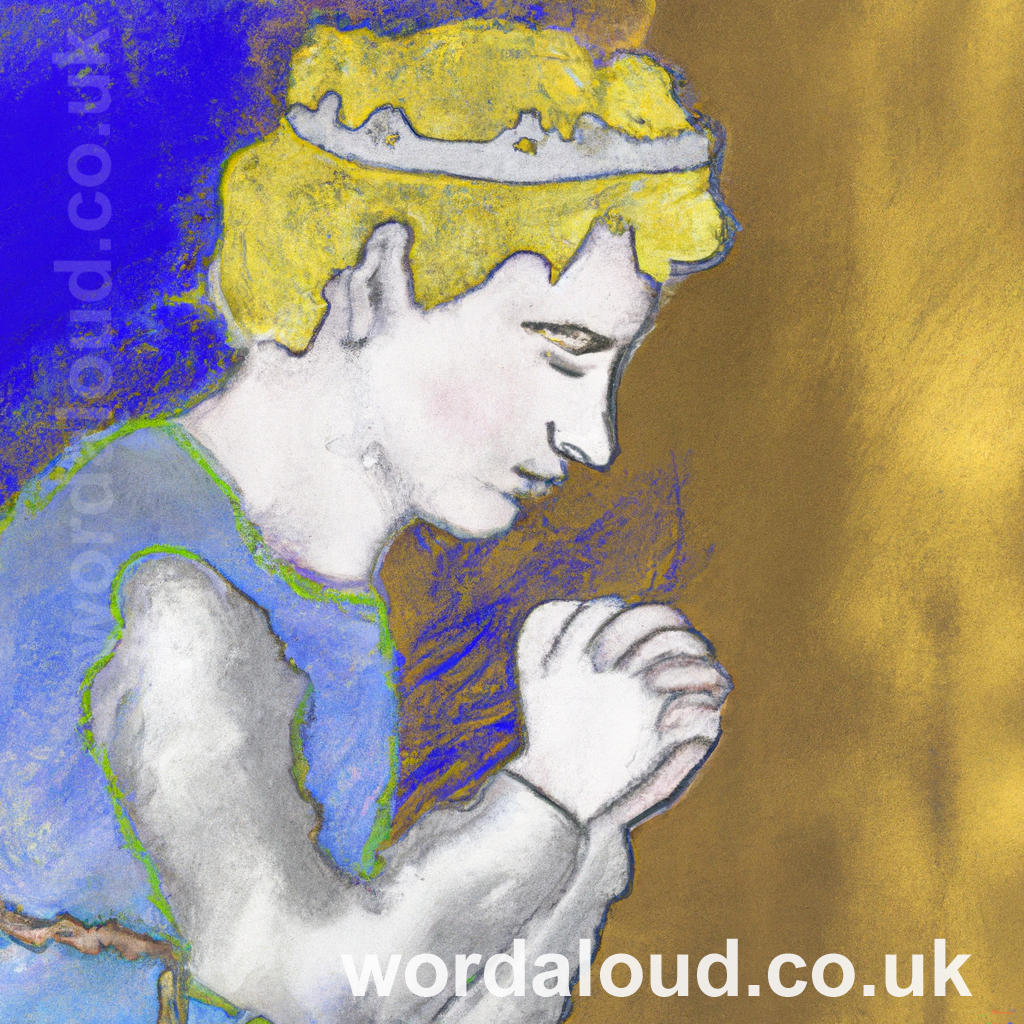
Psalm 97 commences with a declarative burst: ‘The Lord reigneth; let the earth rejoice; let the multitude of isles be glad thereof.’ The proclamation sets the tone for universal celebration, urging the earth and its distant isles to exult in response to the Lord’s sovereign rule. The very essence of the psalm lies in the rejoicing prompted by recognition of the Lord’s reign—a theme that resonates through each verse [ … ]
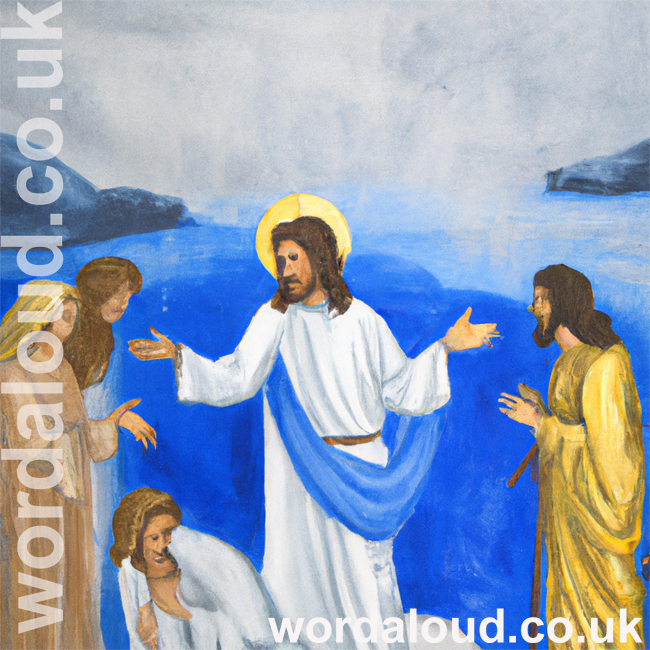
Jesus does not change his message in order to please people, even when that message proves unpalatable. He has not come to be all things to all men, but instead to tell us the truth. It is up to us, through faith, to hear and to understand and to accept Jesus’ teachings, and to know that our salvation is through him [ … ]

Psalm 140 is a prayer for deliverance from evil, invoking God’s protection against the schemes and violence of wicked adversaries. The psalmist appeals to God as shield and saviour, expressing trust in divine intervention to preserve from harm. Central to Psalm 140 is a contrast between the malice of the wicked and the steadfastness of divine justice. The psalm concludes with confidence in the Lord’s ability to uphold the cause of the afflicted and the assurance that righteousness will ultimately dwell in God’s presence [ … ]
