
Office Of Readings | Tuesday, Lent Week 2 | A Commentary Of Saint Augustine On Psalm 140
‘The passion of the whole body of Christ.’
Saint Augustine
Saint Augustine’s commentary on Psalm 141 presents the suffering of Christ as inseparable from the suffering of the Church. Saint Augustine interprets the Psalmist’s plea—“Lord, I have cried to you, hear me”—as the voice of Christ in his human nature, but also as the voice of his body, the Church. This identification between Christ and the Church is fundamental to Saint Augustine’s theology. The trials of the faithful are not isolated events; they are part of the ongoing participation in the passion of Christ. Just as Christ prayed in anguish in Gethsemane, sweating drops of blood, so too does the Church continue to suffer until the end of time. The martyrdom of believers, both literal and spiritual, is an extension of Christ’s own sacrifice.
Saint Augustine’s meditation on the “evening sacrifice” expands this idea further. Christ’s crucifixion, occurring as the day fades, is understood as the ultimate offering—the moment when Christ, in assuming the burden of human sin, allows himself to be “nailed to the cross” on behalf of all. Yet for Saint Augustine, the cross is not the conclusion; it is a passage to something greater. The evening sacrifice becomes a morning sacrifice in the resurrection, transforming suffering into the promise of new life. This movement from death to life defines the Christian experience.
In interpreting Christ’s cry from the cross—“My God, my God, why have you forsaken me?”—Saint Augustine rejects the notion that Christ was abandoned by the Father. Instead, Saint Augustine sees these words as an expression of human frailty that Christ willingly takes upon himself. Christ speaks not only for himself but for humanity, giving voice to the suffering of all who experience alienation and distress. Saint Augustine connects this to Saint Paul’s teaching in Romans 6:6: “Our old nature was crucified with him, so that we should no longer be slaves to sin.” The cross, then, is not merely an event of suffering but an instrument of transformation. Through it, the faithful are drawn into Christ’s victory over sin and death.
Saint Augustine’s reflections are deeply shaped by his own journey. Born in 354 in Thagaste, North Africa, Saint Augustine was raised in a divided household, with a Christian mother, Saint Monica, and a pagan father. He spent much of his early life pursuing philosophy and worldly ambitions, but after a long period of inner turmoil, he experienced a dramatic conversion. Baptized by Saint Ambrose in 387, Saint Augustine became a priest and later the Bishop of Hippo. His theological writings, including Confessions and The City of God, would go on to shape Western Christianity. As bishop, Saint Augustine faced the collapse of Roman order, heretical divisions, and the suffering of his people. His reflections on suffering were not merely intellectual but born out of pastoral experience. He understood that the Christian life was marked by struggle but was ultimately directed toward redemption.
A Commentary Of Saint Augustine On Psalm 140
Lord, I have cried to you, hear me. This is a prayer we can all say. This is not my prayer, but that of the whole Christ. Rather, it is said in the name of his body. When Christ was on earth he prayed in his human nature, and prayed to the Father in the name of his body, and when he prayed drops of blood flowed from his whole body. So it is written in the Gospel: Jesus prayed with earnest prayer, and sweated blood. What is this blood streaming from his whole body but the martyrdom of the whole Church?
Lord, I have cried to you, hear me; listen to the sound of my prayer, when I call upon you. Did you imagine that crying was over when you said: I have cried to you? You have cried out, but do not as yet feel free from care. If anguish is at an end, crying is at an end; but if the Church, the body of Christ, must suffer anguish until the end of time, it must not say only: I have cried to you, hear me; it must also say: Listen to the sound of my prayer, when I call upon you.
Let my prayer rise like incense in your sight; let the raising of my hands be an evening sacrifice.
This is generally understood of Christ, the head, as every Christian acknowledges. When day was fading into evening, the Lord laid down his life on the cross, to take it up again; he did not lose his life against his will. Here, too, we are symbolised. What part of him hung on the cross if not the part he had received from us? How could God the Father ever cast off and abandon his only Son, who is indeed one God with him? Yet Christ, nailing our weakness to the cross (where, as the Apostle says: Our old nature was nailed to the cross with him), cried out with the very voice of humanity: My God, my God, why have you forsaken me?
The evening sacrifice is then the passion of the Lord, the cross of the Lord, the oblation of the victim that brings salvation, the holocaust acceptable to God. In his resurrection he made this evening sacrifice a morning sacrifice. Prayer offered in holiness from a faithful heart rises like incense from a holy altar. Nothing is more fragrant than the fragrance of the Lord. May all who believe share in this fragrance.
Therefore, our old nature in the words of the Apostle, was nailed to the cross with him, in order, as he says, to destroy our sinful body, so that we may be slaves to sin no longer.



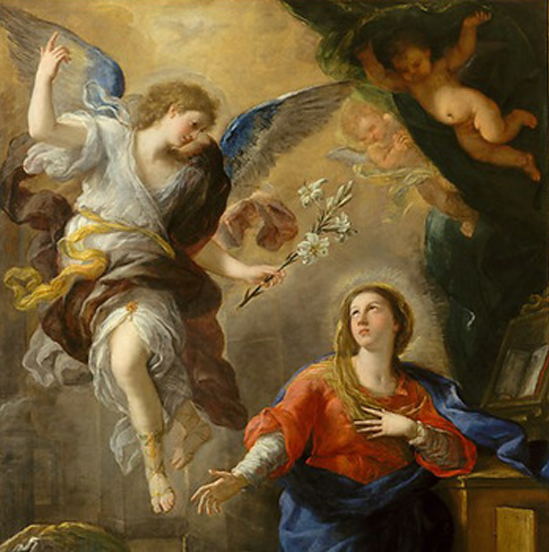
Sometimes, when I read my Bible, I pause in the reading and say to myself: ‘This bit’s real.’ It would be fair to say, I have issues with Mary, because, contrary to what we are taught to say, Mary isn’t my mother. Rather: Mum is. One bit of the Bible-text says this: And when his family heard it, they went out to seize him, for people were saying, “He is beside himself.” … And his mother and his brothers came; and standing outside they sent to him and called him. And a crowd was sitting about him; and they said to him, “Your mother and your brothers are outside, asking for you.” And he replied, “Who are my mother and my brothers?” And looking around on those who sat about him, he said, “Here are my mother and my brothers! Whoever does the will of God is my brother, and sister, and mother.” (Mark 3: 21; 31-35.) Here she comes. She is in considerable distress. I can imagine that. I can relate to that. To save her boy from whatever he’s got himself into this time. And you’re not telling me there isn’t something inside that. Her boy is beside himself. Radical. Radicalized. Radicalizing. A misunderstood word. /ˈradɪk(ə)l/ adjective & noun. 1 Forming the root, basis, or foundation; original, primary. 2a Inherent in the nature of a thing or person; fundamental. b Of action, change, an idea: going to the root or origin; far-reaching, thorough. c Advocating thorough or far-reaching change. d Characterized by departure from tradition; progressive; unorthodox. ‘He has a demon! And he is mad!’ – thus ‘the Jews’. (e.g. John 10: 20.) Come home! It’s all she wants. His family want him back now. But it is an exclusive cult: there is an inside and there is an outside; and on the outside, they are not meant to understand, lest they be converted. He has defined himself as different from anything she was. Only at the end does Jesus say to his Mum – and with savage, bitter irony: ‘Woman, behold your son.’ And then he dies. Hail Mary, full of grace, the Lord is with thee. Blessed art thou among women and blessed is the fruit of thy womb Jesus. Holy Mary, Mother of God, pray for us sinners now and at the hour of our death. We ask that we might find Mary in our hearts as a Yes! place for Jesus. It is also recommended that we pray to Jesus that we may be further in oneness with Mary. It is self-emptying, such that we only exist insofar as we are responsive to God’s Word. * Last term, and put-out to pasture, the old Archbishop Emeritus came over to stay for a few days and did the odd class with us. He spoke of Yes! as the meaning of Mary’s virginity. And we were not very nice about him. One or two took umbrage. One or two got the hump. In a sense, his Grace, the Arch, basically wanted to move anyone he’d ever known from a high-place – a mountain – received theological ‘truth’ – to an imminent, human plane. Earthing the spiritual. Recalibrating metrics of life’s believability toward a spiritual sense of things. He might have asked the impermissible question: what happened? His Grace described it. God’s love as a cloud. This descended upon Mary – and subsumed her. Within the cloud, Mary capitulated utterly. She became only and purely a response to God’s love. As he spoke, the Arch cradled her. He carried her in his lap – in his hands. His Grace was a consecrated bishop. He was faith. He sat squat, a rounded man, hands cupped and ankles crossed, fingers interlocked, with parted thighs. Rumpled, washed, speckled. A lifetime’s skin… There could be no doubt His Grace spoke through long-term personal relationship with Mary. It was Julian went for him: ‘So are you saying Mary was a Virgin? Or are you not saying Mary was a Virgin?’ Nasty. No, it wasn’t pretty. Julian twisting his silver ring. For a moment, what Julian had said to the Arch simply failed to communicate. No, for a moment, that dumped on the air meant nothing. Then His Grace said: ‘There is a range of possible meanings we may understand in the question of Mary’s virginity. For example, there are understandings of the word virginity entailed in the action of giving birth.’ Julian said: ‘Duh! So had she had sex or hadn’t she?’ Trigger words. No, it wasn’t pretty. On that went for a little while. At length, Julian’s point seemed reluctantly conceded. Then the Arch told us a new story, an additionally human event, the more to baffle us. Controversially, he told us that Mary could not have been Joseph’s first wife, for this would not have been the way of things in the society of that time. His belief was that Joseph must have taken Mary into his household through pity. That would be normal, he said, for Joseph to bring a young, vulnerable girl, who is about to have a baby, within his protection, not meaning to enjoy with her marital relations, but through kindness. ‘And this story of the inn and stable,’ the Archbishop said, ‘it can’t have been like that really. Joseph has travelled with Mary to stay with his family, at home in Bethlehem, and they don’t want Mary in their house, for reasons which I am sure we can understand. It must have been there was considerable resistance to Mary. But Mary gives birth, and who can resist a baby? That’s what happened. It must have been. ‘I’m convinced that must have been how it happened really.’ Later that term, toward the beginning of Advent, we met boys who had been here before, in Valladolid, and now were in regular seminary. They had heard and recited verbatim all the Archbishop had said to them. Their spot-on impressions of each of the fathers were scathing. […]

Saint Polycarp continues his reflection on the Christian life and the duties of the Church’s ministers. His words are both pastoral and deeply practical. He insists that presbyters — that is, priests or elders — must mirror the compassion and mercy of Christ himself. They are to care for the sick, the poor, widows, and orphans, the most vulnerable members of the community. Polycarp’s vision of ministry is not one of authority alone but of service, modelled on the Good Shepherd who lays down his life for the sheep [ … ]
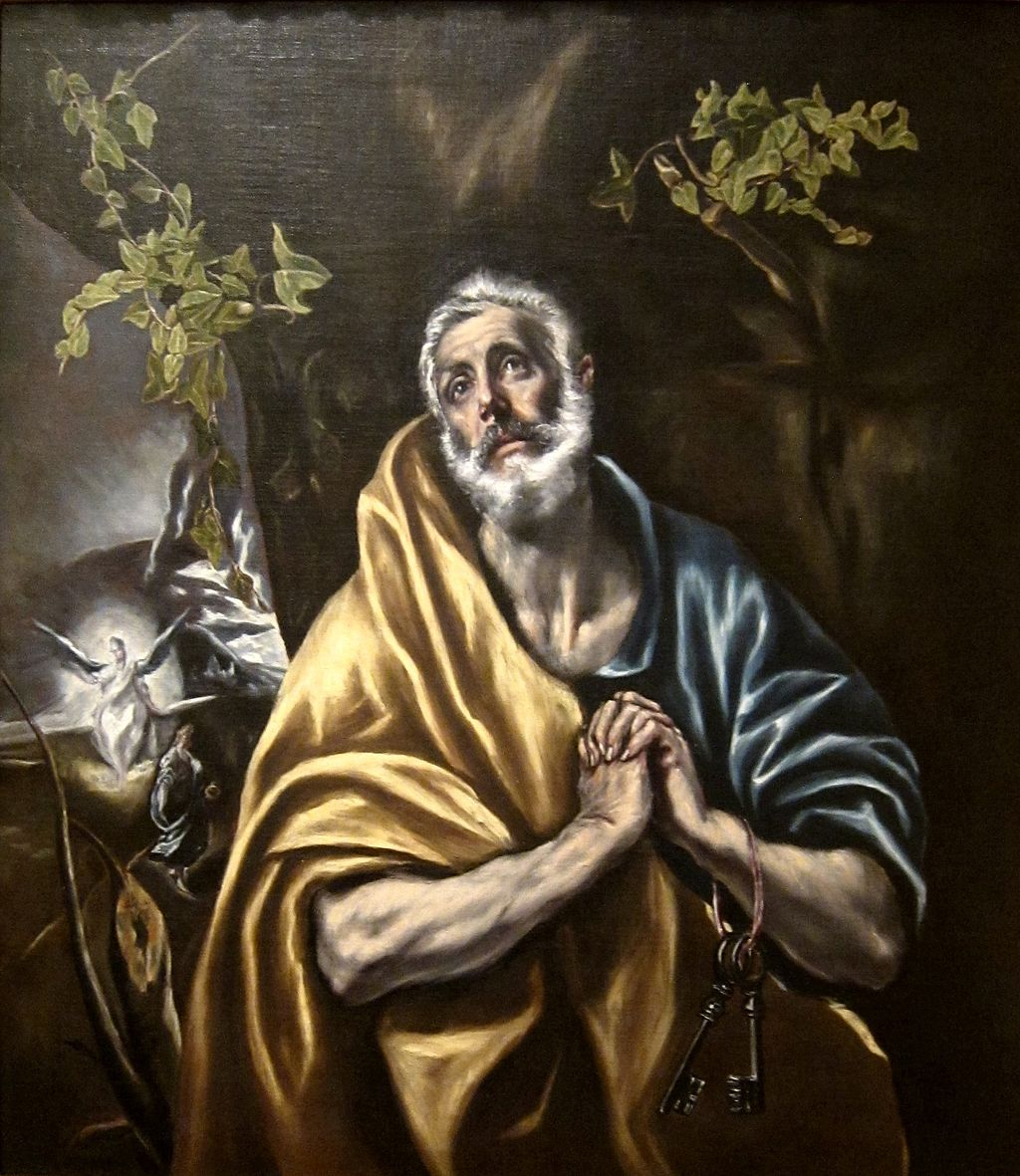
Today’s Gospel verses invite us once more to consider the true identity of Jesus. This scene is filled both with a sense of preconceptions and expectations, and with the over-riding knowledge of the new, which is the truth of Jesus. Additionally, we are asked by Jesus to declare the truth of our knowledge of who Jesus is. We are invited by Jesus to confess our Christian faith [ … ]
