
The poem is a meditation on the nature of prayer. It is a sonnet with no narrative or direct progression, composed of sixteen images, each evoking different dimensions of prayer. There is no main verb in the poem; it flows as a series of phrases that describe prayer without explicitly saying what it does. A list of metaphors feels simultaneously boundless and encompassing, as Herbert seeks to communicate prayer’s role, impact, and place within the human and divine realms [ … ]

Origins And History Of The Devotion To The Sacred Heart Of Jesus | Crucifixion Of The Lord | Christian History | Trust And Faith | John’s Gospel
The devotion to the Sacred Heart of Jesus has its origins in early Christian thought and gradually developed into a formal practice over many centuries. The devotion focuses on the heart of Jesus Christ as a symbol of Jesus’ love, particularly Jesus’ willingness to suffer and die for humanity. This devotion has evolved through biblical interpretation, theological reflection, mystical experiences, and papal endorsements [ … ]

George Herbert | The Temple | The Church | Repentance | Christian Poems | Metaphysical Poetry
The poem explores themes of human frailty, sin, repentance, and divine mercy. The poem reflects on the brevity and vulnerability of life, contrasting human weakness with the power of God’s compassion. The poet, Herbert, begins by confessing the greatness of his sin and acknowledging the fleeting nature of human existence. The image of life as a ‘quick flower’ or ‘momentary bloom’ emphasizes this transience. Life is presented as something that is constantly ‘undressing’ or stripping away, ultimately leading toward death, which is depicted as the inevitable destination [ … ]

George Herbert | The Temple | The Church | Affliction (1) | Christian Poems | Metaphysical Poetry
The poem explores the spiritual journey of the poet, George Herbert, reflecting Herbert’s initial enthusiasm for the religious life and his later struggles with faith, disappointment, and suffering. The poem opens by recalling the poet’s early attraction to divine service, which he finds ‘brave’ and full of joy. He describes an idealized experience of religious devotion, where he expected to receive numerous blessings, both from his natural pleasures and the added benefits of God’s grace. At this stage, the poet sees everything in a positive light, imagining that both heaven and earth will provide him with endless happiness [ … ]

George Herbert | The Temple | The Church | Sinne (1) | Christian Poems | Metaphysical Poetry
The poem reflects on the numerous protective measures placed around individuals to guide them toward moral and spiritual growth, only to suggest that a single powerful sin can undo all these efforts. The poem opens by marvelling at the care with which human life is surrounded by formative influences, beginning with parents who ‘season’ or shape their children. This is followed by teachers, who hand them over to the ‘laws’ and ‘rules of reason’. These influences represent a rational, structured upbringing designed to lead a person towards a virtuous and ordered life [ … ]

George Herbert | The Temple | The Church | Nature | Christian Poems | Metaphysical Poetry | Faith In Jesus
The poem reflects an inner struggle between rebellion and submission to divine authority, expressing the poet’s desire to resist God but also recognition of the futility of doing so. The first stanza presents the poet’s rebellious spirit, where he admits to wanting to die, fight, or deny God’s influence over him. This opposition to God’s control is portrayed as a natural inclination of the poet’s heart, which he acknowledges as a stronghold that resists divine authority. However, the poet also requests that God tame his heart, recognizing that the ultimate skill or ‘highest art’ of God is to bring even the strongest opposition into submission. This sets the poem’s central theme of rebellion versus surrender [ … ]

George Herbert | The Temple | The Church | Holy Baptism (2) | Christian Poems | Metaphysical Poetry
The poem contemplates the nature of spiritual growth and the relationship between the soul and the body in a Christian context. It begins with a recognition of the ‘narrow way and little gate’, referencing a biblical metaphor for the difficult path of righteousness (Matthew 7:13-14). The poet reflects on his early spiritual awakening (‘on my infancy / Thou didst lay hold’) and the idea that God preemptively initiated his faith before he could fully comprehend it (‘antedate my faith in me’). This expresses the belief that faith is a gift from God, implanted at an early stage [ … ]

George Herbert | The Temple | The Church | Holy Baptism (1) | Christian Poems | Metaphysical Poetry
The poem centres on a reflection of sin and redemption, using a natural metaphor to illustrate the poet’s spiritual journey. In the opening lines, the poet likens himself to someone who stands at the edge of a dark, shadowy grove but looks beyond it toward the sky. This image suggests the poet’s desire to move past his sins, as represented by the grove, and seek out the purity and grace symbolized by the open sky above. Rather than remaining fixated on his wrongdoings, he wishes to direct his gaze toward salvation [ … ]

George Herbert | The Temple | The Church | Easter-Wings | Christian Poems | Metaphysical Poetry
The poem reflects a meditation on human suffering and redemption, as well as a call for divine assistance to transcend the human condition. It is structured in two stanzas, each beginning with the poet’s reflection on human limitations, followed by a plea for union with God, and concluding with a hope for spiritual elevation [ … ]

George Herbert | The Temple | The Church | Easter | Christian Poems | Metaphysical Poetry
The poem is an expression of praise and resurrection, where the poet calls upon his ‘heart’ to celebrate the Lord’s resurrection and to rise spiritually with Him. The poem opens with a command to the heart to ‘Rise’ in response to the Lord’s resurrection, suggesting a spiritual ascent that mirrors Christ’s victory over death. The poet then emphasizes that, just as Christ’s death reduced the believer to ‘dust’, Jesus Christ’s new life will refine them, transforming them into something valuable and ‘just’, akin to ‘gold’. This allusion to spiritual purification conveys that through the resurrection, believers attain not only forgiveness but a path to becoming more righteous [ … ]

George Herbert | The Temple | The Church | Sepulchre | Christian Poems | Metaphysical Poetry
This poem addresses the burial and rejection of Christ’s body, using images of coldness, hardness, and stone to explore themes of human indifference, sin, and divine love. The poet begins by questioning where Christ’s body is placed, lamenting that it finds rest on ‘a cold hard stone’. Despite the existence of ‘so many hearts on earth’, none is receptive enough to ‘receive thee’, symbolizing the rejection and abandonment Christ endures even in death. The stone, a literal image of Christ’s tomb, also symbolizes the hardened state of human hearts unwilling to accept or contain him [ … ]

George Herbert | The Temple | The Church | Redemption | Christian Poems | Metaphysical Poetry
The poet describes himself as a ‘tenant’ to a ‘rich Lord’, establishing a relationship with God in terms of landlord and tenant. The poet indicates dissatisfaction with his spiritual ‘tenancy’, explaining that he has not ‘thrived’ in this role. Consequently, he decides to be ‘bold’ and approach God to ask for a ‘new, small-rented lease’, a metaphorical request for a fresh start or new terms in his relationship. The desire to ‘cancel the old’ lease reflects the poet’s wish to move beyond his past shortcomings and seek a more achievable agreement with God [ … ]

George Herbert | The Temple | The Church | Good Friday | Christian Poems | Metaphysical Poetry
This poem explores themes of atonement, humility, and the desire for spiritual purification. The speaker addresses God, expressing a desire to quantify the suffering and sacrifice of Christ’s blood. The speaker’s question, “How shall I measure out thy blood?” suggests an intent to understand the magnitude of Christ’s suffering and to reciprocate in a meaningful way. However, the speaker acknowledges the difficulty in fully grasping or repaying this sacrifice [ … ]

George Herbert | The Temple | The Church | The Sinner | Christian Poems | Metaphysical Poetry
Christian Art | George Herbert | The Temple | The Church | The Sinner George Herbert | The Temple | The Church | The Sinner Lord, how I am all [ … ]

George Herbert | The Temple | The Church | The Reprisall | Christian Poems | Metaphysical Poetry | Audio
The poem contemplates the poet’s relationship to Christ’s sacrifice, focusing on themes of inadequacy, grace, and surrender. It opens with the poet’s realization that human efforts cannot ‘deal with’ or match Christ’s ‘mighty passion’, which represents Christ’s intense suffering and ultimate sacrifice. The poet acknowledges that even if he were to die for Christ, he would still ‘lag behind’, as his own sins are deserving of condemnation. This indicates a sense of spiritual and moral inferiority, highlighting a gap between human and divine capacity for sacrifice and atonement [ … ]

George Herbert | The Temple | The Church | The Thanksgiving | Christian Poems | Metaphysical Poetry
The poem presents a dialogue between the poet and Christ. The poem meditates on themes of suffering, devotion, and humility. The poet addresses Christ as ‘King of grief’ and ‘King of wounds’, acknowledging the paradox of Christ’s suffering in contrast to his divine kingship. The poem opens by framing Christ’s agony as unique among rulers, a grief so profound that it overshadows all others [ … ]

Prayer To Saint Elizabeth, Wife Of Zachariah, Cousin Of Mary, Mother Of Saint John The Baptist | Love Revealed By Jesus Christ | Saint Luke’s Gospel | Infancy Narratives Of Jesus | God Is Love
Elizabeth is introduced in Luke 1:5 as a woman ‘of the daughters of Aaron,’ indicating her priestly lineage, which complements her husband Zachariah’s role as a priest ‘of the course of Abia’ (Luke 1:5). Both Elizabeth and Zachariah are described as ‘righteous before God, walking in all the commandments and ordinances of the Lord blameless’ (Luke 1:6). This emphasizes their piety and faithfulness to God’s law. Despite their righteousness, the couple is childless because Elizabeth is barren, and both are advanced in age (Luke 1:7) [ … ]
Relaxing Prayer And Meditation | Jesus’ Sermon On The Mount | Christianity Explored | Love Revealed By Jesus Christ | Beatitudes
Christian Art | Jesus | Love Revealed By Jesus Christ | Sermon On The Mount | Beatitudes Beatitudes | Matthew’s Gospel | Sermon On The Mount | Matthew 5-7 | [ … ]

Relaxing Prayer And Meditation | Priestly Prayer Of Jesus | Love Revealed By Jesus Christ | King James Version | Audio Bible KJV
The Priestly Prayer of Jesus concludes the discourse of the Last Supper. Immediately afterwards, Jesus will be arrested, betrayed. Jesus prays to his Father in a very moving way. He offers to the Father the imminent sacrifice of himself, praying that his sacrifice may be acceptable to the Father, that his holy human nature may be glorified. Jesus’ prayer is spoken aloud, so that his disciples and we also may receive his last testament, as Jesus intercedes on our behalf with the Father [ … ]

Jesus Wept | Death And Resurrection Of Lazarus | Love Revealed By Jesus Christ | Humanity Of Jesus
The Gospel Of Saint John, Chapter 11 | Jesus Wept | Death And Resurrection Of Lazarus | KJV The account of Lazarus’s death and resurrection in John 11:1-45 is profound [ … ]
Prayer And Meditation | Passion And Death Of Jesus | Love Revealed By Jesus Christ | Audio Bible
In the face of Judas’ betrayal, Jesus openly and honestly acknowledges himself to those who are come to arrest him. ‘I am he.’ Jesus does this three times, even while those who have come to arrest him shrink back from such simplicity of giving. The courage of Jesus at this point is absolutely remarkable. Jesus has reconciled himself through prayer to his Father. His self-composure at this point as he goes to save us is a shining example to us all [ … visit YouTube – like and share and ring that bell 🙂 … ]

Meditations On The Love Of Jesus Christ | Gethsemane | Relaxing Prayer And Meditation With Jesus In Gethsemane | Audio Bible
In these Gospel verses, Jesus goes to the Mount of Olives with his disciples, and at a particular place, Jesus separates himself to pray. Jesus urges his disciples to pray against temptation. In his prayer, Jesus expresses his desire for the cup of suffering to be removed but ultimately submits to God’s will. An angel appears from heaven to strengthen Jesus, and Jesus prays with such intensity that his sweat becomes like drops of blood falling to the ground [ … read more and listen … ]

Relaxing Prayer And Meditation | Parable Of The Prodigal Son | Love Revealed By Jesus | Audio Bible | KJV | King James Version
In the parable of the prodigal son, the story Jesus tells is so homely and familiar to our lives, and to our most basic human and family instincts, that even without the deeper meanings as we interpret the parable, it would be powerfully moving to hear as a tale of estrangement and difficulty followed by forgiveness and reconciliation through love [ … read more … ]
Relaxing Prayer And Meditation | Love Revealed By Jesus Christ | KJV | King James Version | Audio Bible
Christian Art | Love Revealed By Jesus Christ | Prayer And Meditation This relaxing prayer and meditation with Jesus reflects upon three Gospel passages – of Saint Matthew’s Gospel. These [ … ]

Sunday Bible | Jesus Is The Bread Of Life | Manna From Heaven | Eternal Life | Eucharist | God The Son
Jesus identifies himself explicitly as the ‘bread of life’, contrasting the manna given to the Israelites in the wilderness with the living bread Jesus offers. The manna, though miraculous, was temporary and ultimately failed to give eternal life, as those who ate it eventually died. In contrast, the bread that Jesus offers is his flesh, which is given for the life of the world [ … ]

Dover Beach | Matthew Arnold | Christian Poetry | Faith, Doubt, Love, Loss | Love Revealed By Jesus
Matthew Arnold’s ‘Dover Beach’, written in the mid-19th century, reflects religious uncertainty of the Victorian era. The poem captures the emotional and spiritual turmoil of a time when traditional Christian beliefs were being questioned by the rise of scientific discoveries and changing social attitudes. Arnold’s work has been read as a lament for the loss of faith; it is a valuable text for exploring Christian response to modernity [ … ]

Prayer To Saint Valentine | Love Revealed By Jesus Christ | Audio King James Bible | KJV
Saint Valentine is believed to have been a Christian priest in Rome during the reign of Emperor Claudius II, also known as Claudius Gothicus, in the third century. At that time, the Roman Empire was engaged in various military campaigns, and Claudius was having difficulty recruiting soldiers. Believing that unmarried men made better soldiers, he issued an edict prohibiting young men from marrying. The emperor thought that marriage would make men emotionally attached and therefore less willing to leave for war [ … ]

Prayer To Saint Christopher | Love Revealed By Jesus Christ | Audio King James Bible | KJV | Christ Bearer
Saint Christopher is believed to have been born in the third century in the region of Canaan. According to the ‘Golden Legend’ by Jacobus de Voragine, Saint Christopher was initially named Reprobus, meaning ‘Outcast’, and was of considerable physical stature, often described as a giant. Seeking to serve the greatest king in the world, he initially offered his services to a local king. However, upon seeing the king’s fear of the devil, Reprobus decided to serve the devil instead. This narrative is a critical turning point that showcases Saint Christopher’s relentless pursuit of serving true greatness [ … ]
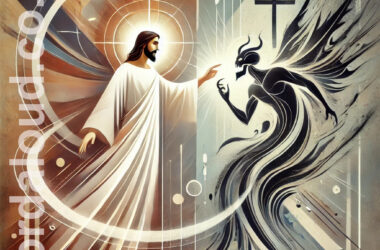
Satan In The Bible | Our Enemy | Enemy Of Man | All Biblical References By Name Of Satan | Lord, Protect Us From Satan | Faith In Jesus | Love Revealed By Jesus Christ
The Book of Job contains the first explicit mention of Satan by name in the Bible, a significant development in the Hebrew Scriptures. Unlike earlier references to adversarial or evil figures, such as the serpent in Genesis, which are not explicitly identified as Satan, the Book of Job introduces Satan as a distinct character who challenges Job’s righteousness before God. This explicit mention marks a maturation of theological concepts within the Hebrew Scriptures, influenced by historical, cultural, and literary developments [ … ]

Prayer For Children Living In Poverty | Love Revealed By Jesus Christ | The Gospels | Audio Bible KJV
In this verse of Matthew’s Gospel, Jesus emphasizes the value and importance of children in the eyes of God. Jesus welcomes children with open arms and assures us that the kingdom of heaven belongs to such as these. This message highlights the need to care for and protect children, especially those who are most vulnerable. Jesus’ compassion for children is a powerful reminder of our responsibility to ensure children’s well-being and to provide them with the love and support they need [ … ]

Prayer For Christian Renewal | Love Revealed By Jesus Christ | The Gospels | Audio Bible KJV
Heavenly Father, I come before you seeking renewal. My heart longs for a deeper connection with you and a refreshed commitment to living out your will. Transform my mind and spirit, that I may be conformed to your purposes rather than the patterns of this world. Fill me with your Holy Spirit, and guide me in your truth. Renew my passion for your Word and my dedication to following Jesus. Thank you for your unending grace and mercy. In Jesus’ name, I pray. Amen [ … ]

Prayer For Serenity | Love Revealed By Jesus Christ | The Gospels | Audio Bible KJV | Serenity Prayer
‘O God and Heavenly Father, grant to us the serenity of mind to accept that which cannot be changed, courage to change that which can be changed, and wisdom to know the one from the other through Jesus Christ, our Lord, Amen.’ Serenity Prayer [ … ]
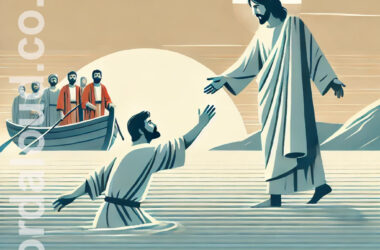
Prayer For God’s Divine Mercy | Love Revealed By Jesus Christ | The Gospels | Audio Bible KJV
Our experience of God’s mercy is transformative. It changes how we see ourselves and how we interact with the world. There are times when we may feel unworthy of God’s love and forgiveness, but God’s mercy is boundless and unconditional. Pope Francis reminds us: ‘God’s mercy is infinite and it is always there for us, ready to heal, to forgive, to restore.’ This infinite mercy invites us to approach God with humility and openness, trusting in God’s desire to forgive and renew us [ … ]
Prayer For Faith | Love Revealed By Jesus Christ | The Gospels | Audio Bible KJV
Faith is not merely a passive acceptance but an active trust in God’s promises. It is a dynamic and living aspect of our relationship with God. When we face life’s challenges, our faith can be tested. These tests are opportunities for growth, allowing us to deepen our reliance on God [ … ]

Prayer for Those Who Have Gone Astray | Love Revealed By Jesus Christ | The Gospels | Audio Bible KJV
In this verse, Jesus shares the parable of the lost sheep, emphasizing Jesus’ care and concern for those who have gone astray. Jesus shows us that every individual is precious and worth seeking out, no matter how far they have wandered. This passage invites us to reflect on Jesus’ relentless pursuit of the lost sheep and Jesus’ deep desire to bring the lost sheep back into his fold [ … ]

Prayer for Refugees | Love Revealed By Jesus Christ | The Gospels | Audio Bible KJV
In this verse, Jesus speaks about welcoming the stranger. Jesus teaches us that caring for those in need, including refugees, is an expression of our love for God. This passage calls us to open our hearts and homes to those who are seeking refuge and safety, reflecting God’s compassion and mercy [ … ]

Prayer for Those Who Do Not Yet Know Jesus | Love Revealed By Jesus Christ | The Gospels | Audio Bible KJV
In this verse, Jesus speaks about being the light of the world. Jesus offers hope and guidance to all who believe in Jesus. This passage invites us to reflect on the mission of bringing the light of Jesus to those who are still in darkness, those who have not yet come to know Jesus personally [ … ]

Faith | George Herbert | Christian Poems | Audio | Word Aloud
‘Faith’ begins with a reflection on human struggle with sin and the difficulty of achieving spiritual clarity. Herbert employs vivid imagery to describe this challenge, asking, ‘Lord, how couldst thou so much appease / Thy wrath for sin, as when man’s sight was dim, / And could see little, to regard his ease, / And bring by Faith all things to him?’ This opening begins to explore how faith transforms human perception, making divine truths clearer [ … ]