
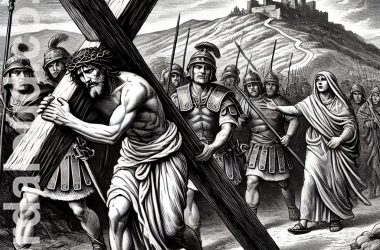
Saint Augustine’s sermon addresses a recurring human tendency: the belief that former times were better than the present. His reflection places suffering within the broader theological framework of punishment for sin and correction for salvation. Affliction is not simply random misfortune but part of the divine pedagogy by which believers are purified and trained in perseverance [ … ]
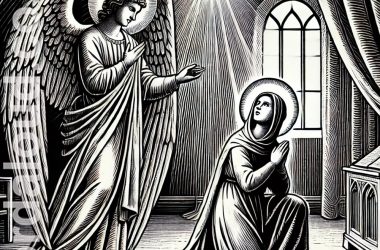
Office Of Readings | Week 20, Tuesday, Ordinary Time | A Reading From The Homilies Of St Bernard Of Clairvaux On The Glories Of The Virgin Mother | She Was Prepared By The Most High And Prefigured By The Patriarchs
Saint Bernard begins with the claim that ‘there was only one mode of birth that was worthy of God, and that was to be born of a virgin’. With this statement he places the Incarnation within a framework of fittingness (convenientia), a theological mode of reasoning that asks what befits the majesty and holiness of God. The divine birth, he argues, required a vessel untouched by stain, a mother who would embody in her body and soul the purity and humility of the Son whom she would bear [ … ]

Office Of Readings | Week 20, Monday, Ordinary Time | A Reading From The Commentary Of Pope Saint Gregory The Great On The Book Of Job | Fights Without And Fear Within
Pope Saint Gregory the Great’s reflection on Job situates the Christian life within a dual struggle: the battle against opposition from without and the struggle against weakness within. Drawing on the image of a soldier, he describes the saint as constantly engaged in warfare, not of worldly conquest but of endurance and teaching. Patience functions as a shield against external aggression, while doctrine becomes the weapon to counter the subtler dangers of persuasion and error [ … ]
Office Of Readings | Week 20, Sunday, Ordinary Time | A Reading From The Homilies Of Saint John Chrysostom On Saint Matthew’s Gospel | Salt Of The Earth And Light Of The World
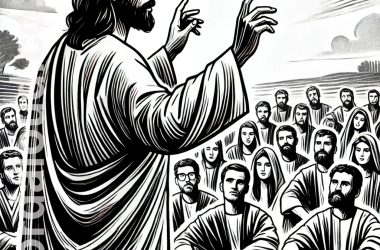
When Saint John Chrysostom interprets the words ‘You are the salt of the earth,’ he sets the task of the disciples in contrast to the prophets of Israel. Whereas the prophets were sent to particular peoples, Christ now sends his followers to all nations. The scope is universal: not one city or one country, but the world in its entirety. By calling them salt, Christ indicates the condition of humankind before his coming. Humanity, in Chrysostom’s description, had ‘lost its savour’ through sin, much as meat without salt becomes liable to decay. Christ alone restores what had become corrupt; the disciples are then charged with preserving this restored creation, preventing the return of corruption through their labour and teaching [ … ]

Office Of Readings | Week 19, Saturday, Ordinary Time | A Reading From The Sermon Of Saint Pacian On Baptism | Oh My God, Oh My Jesus | You Take Away Sin
Saint Pacian continues his reflection on baptism by contrasting two forms of human existence: that of the earthly Adam and that of the heavenly Christ. Humanity inherits from Adam mortality and corruption, but through Christ, the ‘second man’ who came from heaven, believers are promised life that death cannot extinguish. Pacian echoes the words of Jesus in John 11:25: ‘Whoever believes in me, even if he die, shall live.’ Death, therefore, becomes not an end but a sleep from which the faithful are awakened in Christ [ … ]

Office Of Readings | Week 19, Friday, Ordinary Time | A Reading From The Sermon Of Saint Pacian On Baptism | A New Christian Morality | Holy Spirit Of Jesus Christ
Saint Pacian, Bishop of Barcelona in the fourth century, presents baptism as the decisive passage from the old humanity of Adam to the new life in Jesus Christ. Drawing from Romans 5:12–21 and 1 Corinthians 15:45, he sets up a parallel: through Adam’s disobedience, sin and death entered the human race; through Christ’s obedience, grace and eternal life are offered to all. Pacian insists that just as Adam’s descendants inherit his fallen condition by birth, so believers receive Christ’s life by a different kind of descent—not physical but spiritual [ … ]
Office Of Readings | Week 19, Thursday, Ordinary Time | A Reading From The Treatise Of Saint Gregory Of Nyssa On Christian Perfection | We Have Jesus Christ Who Is Our Peace And Our Light
Saint Gregory of Nyssa draws together two biblical images of Christ—peace and light—and makes them measures of Christian authenticity. He begins with peace, taking his cue from Ephesians 2:14: ‘He is our peace, for he has made both one.’ Gregory treats peace not as an abstract quality but as the practical end of reconciliation. Christ has destroyed the ‘enmity’ between Jew and Gentile, and, more fundamentally, between humanity and God. That enmity, he says, must remain dead; resentment and grudges are signs of calling it back to life [ … ]
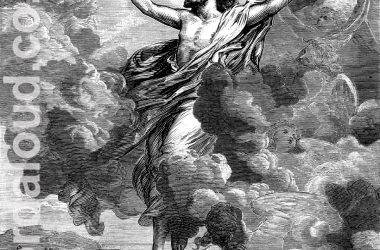
Office Of Readings | Week 19, Wednesday, Ordinary Time | A Reading From The Discourses Of Saint Augustine On The Psalms | Come, Let Us Go Up To The Mountain Of The Lord
Augustine’s meditation draws on the conviction that the Church stands as both the fulfilment of Israel’s hope and the visible sign of God’s promises realised in history. His opening phrase, As we have heard, so also have we seen, comes directly from Psalm 48 (/Vg. 47), a psalm celebrating Zion as the city of God. In its original Old Testament setting, the psalm rejoices in Jerusalem’s security and God’s protection; Augustine applies it to the Church, understood as the true and enduring ‘city of the Lord of hosts’ [ … ]
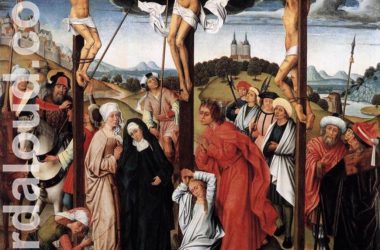
Office Of Readings | Week 19, Tuesday, Ordinary Time | A Reading From The Treatise Of Theodoret Of Cyr On The Incarnation Of The Lord Jesus | By His Wounds We Are Healed
Theodoret takes his starting point from Isaiah 53, the ‘Suffering Servant’ passage, which early Christians read as a direct prophecy of Christ’s passion. The language of wounds, bruises and chastisement is interpreted not as a description of punishment deserved by Jesus himself, but as the cost he bore to heal humanity. For Theodoret, the cross is not only an act of endurance but also a medicine—a deliberate remedy for the sickness of sin [ … ]
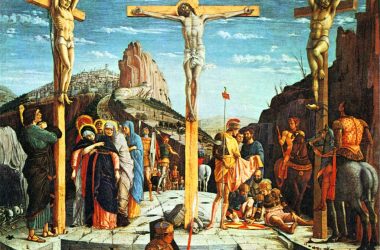
Office Of Readings | Week 19, Monday, Ordinary Time | A Reading From The Treatise Of Theodoret Of Cyr On The Incarnation Of The Lord | I Shall Heal Their Wounds
Theodoret presents the suffering and death of Jesus as a deliberate act of obedience, not a tragic accident. Jesus is shown moving purposefully towards his passion, fully aware of what the Scriptures foretold. He warns his disciples in advance, rebukes Peter for resisting the idea of his suffering, and openly identifies himself to those who come to arrest him. Unlike earlier occasions when Jesus avoided capture, this time Jesus refuses to hide or defend himself [ … ]
Office Of Readings | Week 19, Sunday, Ordinary Time | A Reading From The Dialogue Of Saint Catherine Of Siena On Divine Providence | Bonds Of Love
This passage from Catherine of Siena’s Dialogue on Divine Providence is cast as a prayer, but it also unfolds as a theological reflection. Catherine speaks to God in direct, personal language, yet her words move from personal confession to intercession for the whole Church. She frames her petition in terms of the ‘mystical body’ — a phrase drawn from Paul’s letters, meaning the Church as a living organism bound together in Christ [ … ]
Office Of Readings | Week 18, Saturday, Ordinary Time | A Reading From The Treatise Of Saint Irenaeus Against The Heresies | I Desire Mercy Not Sacrifice
Irenaeus reflects on the words of Hosea, repeated by Jesus, that God desires mercy rather than sacrifice. Irenaeus presents this not as a rejection of ritual worship in itself, but as a statement that God seeks faith, obedience, and righteousness as the basis for human salvation. Jesus uses the prophet’s teaching to challenge those who condemn the innocent, aligning his own authority with that of the prophetic tradition [ … ]
Office Of Readings | Week 18, Friday, Ordinary Time | A Reading From The Spiritual Canticle Of Saint John Of The Cross | I Will Espouse You To Myself For Ever
John begins with a striking claim — that the soul, when united to God and transformed in him, ‘draws from within God a divine breath’. This is not a mere metaphor for inspiration. It expresses his conviction that the life of God flows directly into the soul in such union. The breath is not the soul’s own; it is God’s own life shared with the soul. This draws on Paul’s words in Galatians 4:6: ‘Because you are children, God has sent the Spirit of his Son into your hearts, crying, “Abba, Father.”’ For John, the presence of the Spirit is not simply moral guidance or consolation; it is the living bond of union with the Trinity [ … ]
Office Of Readings | Week 18, Thursday, Ordinary Time | From The Treatises Of Baldwin Of Canterbury | Love Is As Strong As Death | Jesus Christ Is King
In this meditation, Baldwin of Canterbury reflects on the enduring biblical phrase ‘Love is as strong as death’ (Song of Songs 8:6), drawing a sharp and deliberate contrast between two forces — one that ends life, and one that restores it. Death, in Baldwin’s view, is not simply the end of physical existence, but the boundary that love refuses to accept. The passage reveals a deep confidence in Christ’s power not only to endure death but to reverse its finality [ … ]
Office Of Readings | Week 18, Wednesday, Ordinary Time | From The Letter Attributed To Barnabas | The Way Of Light Is Jesus Christ
The passage belongs to a tradition known as the ‘Two Ways’ teaching. This form sets up a contrast between two modes of life. The ‘Way of Light’ represents the path aligned with God’s purposes, and by implication, the ‘Way of Darkness’ is its opposite—marked by self-interest, deception, violence, and disregard for God’s commandments. The use of this form in early Christian literature suggests its role as one of instruction, particularly for converts preparing for baptism or full entry into the community [ … ]
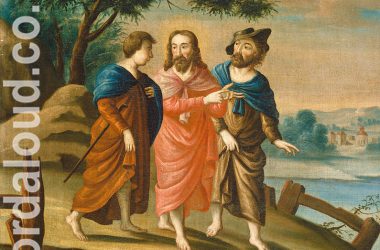
Office Of Readings | Week 18, Tuesday, Ordinary Time | From The Letter Attributed To Barnabas | New Creation In Jesus Christ
The Epistle of Barnabas is an early Christian text that reflects on the meaning of Christ’s suffering, the interpretation of scripture, and the idea of spiritual renewal. This reading describes how the death of Christ leads to the forgiveness of sins and the formation of a new people shaped by that forgiveness [ … ]
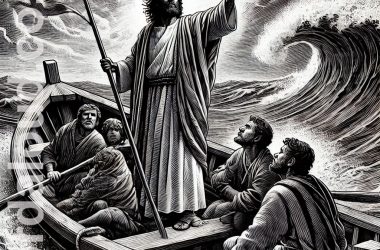
Office Of Readings | Week 18, Monday, Ordinary Time | From The Letter Attributed To Barnabas | New Law Of Our Lord Jesus Christ
Attributed to Barnabas, companion of Paul, most scholars agree the letter was written anonymously between 70 and 135 AD, likely in the Eastern Mediterranean. It is addressed to a Christian audience, probably Gentile, who were negotiating their relationship with Judaism and the Mosaic Law. The destruction of the Jerusalem Temple in AD 70 likely influenced the letter’s critique of sacrificial worship, which could no longer be practised [ … ]
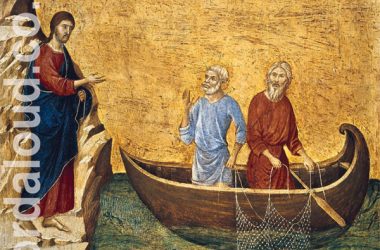
Office Of Readings | Week 18, Sunday, Ordinary Time | The Beginning Of A Letter Attributed To Barnabus | Faith Begins And Ends With Hope, Hope Of Life
This early Christian text, traditionally attributed to Barnabas and likely written by an anonymous Christian teacher in the late first or early second century, reflects on key themes of Christian belief and practice. The author addresses a group of Christians with a greeting of peace, expressing gratitude for the presence of God’s Spirit among them. He states that their spiritual condition has encouraged him to reflect on his own faith and prompted him to share what he has received in teaching [ … ]
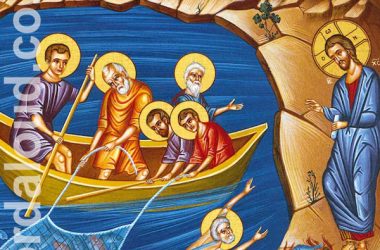
Office Of Readings | Week 17, Saturday, Ordinary Time | A Reading From The Letter Of Saint Ignatius Of Antioch To Polycarp | Avoid Evil Practices | Love Jesus Christ | The Christian Is Not His Own, His Time Belongs To God
Saint Ignatius, Bishop of Antioch, was being transported to Rome under guard to face execution in the Coliseum, likely in the early second century. His letters, written on the way, reflect both his apostolic zeal and a deep concern for the life of the Church in its earliest decades. His correspondent, Saint Polycarp, bishop of Smyrna, was himself a revered figure, a disciple of Saint John the Apostle, and later a martyr. Thus, this is a remarkable exchange: from one soon-to-be martyr to another, entrusted with the care of the flock in perilous times [ … ]
Office Of Readings | Week 17, Friday, Ordinary Time | A Reading From The Letter Of Saint Ignatius Of Antioch To Polycarp | We Must Bear With Everything For God, So That He In Turn May Bear With Us
In his letter to Saint Polycarp, Bishop of Smyrna, Saint Ignatius of Antioch speaks not only as a spiritual father and friend but also as one who writes under the shadow of martyrdom. On the way to his execution in Rome around AD 107, Ignatius pens a letter that overflows with spiritual depth, pastoral wisdom, and a vision of Christian endurance grounded in Jesus Christ [ … ]
Office Of Readings | Week 17, Thursday, Ordinary Time | A Reading From The Instructions Of Saint Cyril Of Jerusalem To The Catechumens | The Church Is The Bride Of Christ
In this reading of Saint Cyril of Jerusalem, we encounter a vision of the Church both radiant and robust—at once the Bride of Christ, the mother of believers, the spiritual city of Jerusalem, and the instrument of eternal life. This rich ecclesial portrait, drawn from the fourth century, is relevant today, offering insights not only into the Church’s theological foundations but also into the spiritual identity of her members [ … ]

Office Of Readings | Week 17, Wednesday, Ordinary Time | A Reading From The Instructions Of Saint Cyril Of Jerusalem To The Catechumens | The Church Is The Assembly Of God’s People
Saint Cyril of Jerusalem, writing in the fourth century, speaks with a clarity and breadth that remains strikingly relevant for the Church today. In this catechetical excerpt, drawn most likely from his Catecheses delivered to those preparing for baptism, Cyril undertakes a profound reflection on what it means for the Church to be both Catholic and the assembly of God’s people. His insight provides not only a robust theological definition, but a spiritually rich vision of what it means to belong to the Church of Christ [ … ]
Office Of Readings | Week 17, Tuesday, Ordinary Time | A Reading From The Homilies Of Saint Basil The Great | Sow Christian Integrity For Yourselves
Saint Basil the Great (c. 329–379), a principal architect of Eastern monasticism and key figure in the development of Christian doctrine and social ethics, was concerned with the responsibility of Christians to care for the poor. This homily reflects Saint Basil’s characteristic blend of theological insight, ethical exhortation and practical instruction. Saint Basil’s language is urgent, vivid and rhetorical, aimed at moving both heart and conscience [ … ]
Office Of Readings | Week 17, Monday, Ordinary Time | A Reading From The Sermons Of Saint Caesarius Of Arles | Divine And Human Mercy
Caesarius preached in early sixth-century Gaul, a time of political instability and economic hardship following the collapse of Roman imperial authority in the West. The Church increasingly took on roles of social support, particularly in cities where civil structures had broken down. As bishop of Arles, Caesarius was not only a preacher but also a reformer and organiser of practical charity. He established hospitals, supported communal care for the sick and destitute, and redirected Church revenues to the relief of the poor [ … ]
Office Of Readings | Week 17, Sunday, Ordinary Time | A Reading From The Homilies Of Saint John Chrysostom On The Second Letter To The Corinthians | Open Your Hearts To Jesus Christ
Saint John Chrysostom’s homily on this passage from Saint Paul’s Second Letter to the Corinthians offers both a theological and pastoral meditation on Paul’s appeal for reconciliation. The homily reflects the Apostle Paul’s deep emotional connection to the Corinthian Christians and provides insight into early Christian understandings of love, leadership, and suffering. Saint Chrysostom draws out the human and divine dynamics at work in Paul’s relationship with the church, showing the warmth and vulnerability of a true apostle [ … ]

Office Of Readings | Week 16, Saturday, Ordinary Time | A Reading From The Homilies Of Saint John Chrysostom On The Second Letter To The Corinthians | We Have Opened Wide Our Hearts To Jesus
In this homily, Saint John Chrysostom reflects on the Apostle Paul’s words to the Corinthian church: ‘Our mouth is open to you, Corinthians; our heart is enlarged.’ (2 Corinthians 6:11) Chrysostom, known for his deep pastoral insight and command of Scripture, explores how love works to expand the heart, just as heat causes material things to expand. He sees in Paul not only a preacher of doctrine but a man whose heart was capacious—so full of love that it embraced both the faithful and the unbelieving [ … ]

Office Of Readings | Week 16, Friday, Ordinary Time | A Reading From The Confessions Of Saint Augustine | Christ Died For All
The Confessions, composed around 397–400 AD, is a retrospective narrative in which Saint Augustine recounts his spiritual development and his theological understanding of the human relationship with God. The Confessions moves from autobiographical content to more philosophical and theological reflection. This passage is a meditation on sin, salvation, and the mediating role of Christ [ … ]
Office Of Readings | Week 16, Thursday, Ordinary Time | A Reading From The Discourses Of Saint Ambrose On The Psalms | Light Of God’s Countenance
Saint Ambrose’s reflection on Psalm 44 (/Vg. 43) considers what might be one of the most persistent experiences in spiritual life: the feeling that God has turned away. Rather than offer abstract consolation, Saint Ambrose interprets this experience through the lens of faith, Scripture, and theology. His aim is to show that even when God seems absent, he remains present in a real and transformative way [ … ]
Office Of Readings | Week 16, Wednesday, Ordinary Time | A Reading From The Imitation Of Christ | The Kingdom Of God Is Peace And Joy In The Holy Spirit
We are invited to turn to God, to seek intimacy with Christ within the soul, and to place ultimate trust in God rather than in worldly concerns. At its heart, the text speaks of the inward kingdom — ‘the peace and joy of the Holy Spirit’ — which exists not in external circumstances but in the soul prepared for God’s indwelling [ … ]

Office Of Readings | Week 16, Tuesday, Ordinary Time | A Reading From The Letter Of Saint Ignatius Of Antioch To The Magnesians | Jesus Christ Within You
Saint Ignatius, bishop of Antioch in Syria, was one of the Apostolic Fathers—Church leaders who lived in the generation following the apostles. His letters were written on route to Rome under Roman guard, and they reflect the mind of a man facing imminent death with confidence and clarity. His impending martyrdom adds a striking authenticity to his call to steadfast faith, humility, and obedience [ … ]
Office Of Readings | Week 16, Monday, Ordinary Time | A Reading From The Letter Of Saint Ignatius Of Antioch To The Magnesians | One Church, One Hope, In Love And Innocent Joyfulness | New Life In Jesus Christ
This extract from Saint Ignatius of Antioch’s Letter to the Magnesians offers valuable insight into the life, belief, and structure of the early Christian Church around the beginning of the 2nd century. Written while Saint Ignatius was being transported under armed guard to Rome for martyrdom, this letter – one of seven authentic epistles – reflects his deep concern for the unity and faithfulness of Christian communities in a time of external pressure and internal challenge [ … ]

Office Of Readings | Week 16, Sunday, Ordinary Time | A Reading From The Letter Of Saint Ignatius Of Antioch To The Magnesians | We Must Live The Name Of Christians
Saint Ignatius of Antioch was a Christian bishop writing in the early 2nd century AD, on his way to martyrdom in Rome. He wrote several letters to Christian communities, encouraging unity and correct belief. This letter is addressed to the church in Magnesia (in modern-day Turkey) [ … ]

Office Of Readings | Week 15, Saturday, Ordinary Time | A Reading From The Treatise Of Saint Ambrose On The Mysteries | The Eucharist | The Word Of Christ
Saint Ambrose, Bishop of Milan, meditates on the mystery of the Eucharist. He urges the newly baptized—and indeed all the faithful—not merely to look at the external appearances of bread and wine, but to trust in the transformative power of Jesus Christ’s own words, which effect what they declare. Saint Ambrose’s reflections, drawn from Scripture and theological reasoning, serve as a foundational testimony to the Church’s belief in the real presence of Jesus Christ in the Eucharist [ … ]

Office Of Readings | Week 15, Friday, Ordinary Time | A Reading From The Treatise Of Saint Ambrose On The Mysteries | Neophytes And The Eucharist
Saint Ambrose is addressing new Christians during the Easter season, shortly after they have received baptism. These ‘neophytes’ have just emerged from the waters of rebirth, wearing white robes to signify purity and new life. Now, he prepares them to receive the Eucharist — not just as a symbol or ritual, but as the real Body and Blood of Jesus Christ [ … ]
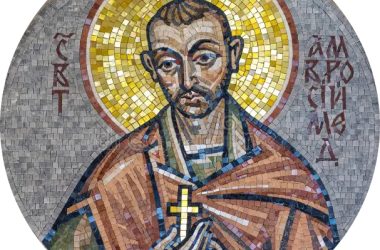
Saint Ambrose Of Milan | A Holy Life Of Authority, Faith, And Song | Christian Faith | Christian Teaching
As bishop, theologian, and composer, Saint Ambrose of Milan shaped the doctrine, liturgy, and moral character of Latin Christianity. Born into the elite of the Roman Empire and trained in classical rhetoric, Saint Ambrose rose from civil office to ecclesiastical leadership under unusual circumstances. His life exemplifies the intersection of Roman civic tradition with the emerging authority of the Christian Church. His writings, hymns, and pastoral actions continue to influence both theological scholarship and devotional practice [ … ]
Office Of Readings | Week 15, Thursday, Ordinary Time | A Reading From The Treatise Of Saint Ambrose On The Mysteries | Instruction On Ceremonies After Baptism
Saint Ambrose of Milan offers a mystagogical catechesis—a reflection on the meaning of the rites that follow Christian baptism. Delivered during the Easter Octave, these instructions were addressed to the newly baptized, known as neophytes, and aimed to deepen their understanding of the sacramental mysteries they had just experienced. Ambrose’s theology is sacramental, scriptural, and symbolic, drawing deeply from the liturgical tradition and the imagery of Scripture to reveal the hidden grace of the sacraments [ … ]

Office Of Readings | Week 15, Wednesday, Ordinary Time | A Reading From The Treatise Of Saint Ambrose On The Mysteries | Water Does Not Sanctify Without The Holy Spirit
Saint Ambrose writes at a time when the Church was still catechising adults over a prolonged period before admitting them to baptism, typically at the Easter Vigil. These catechumens underwent a spiritual and moral formation, echoing Israel’s long preparation for the Promised Land. In Milan, the Lenten season was filled with scriptural instruction, exorcisms, and the rites of scrutiny to prepare them for rebirth through water and the Spirit [ … ]
Meditations On The Love Of Jesus Christ | Reflections On The Gospels And Prayer For Healing With Jesus | In Hardcover And Paperback And On Kindle
This is a book of meditations and reflections on the Gospels, structured to take us from the appearance of the Angel Gabriel to Mary all the way through to Christ’s walking with his disciples on the road to Emmaus, where their hearts burn to know that the Lord Jesus has been with them, where they recognize Jesus in their new life. [ … ]