

Saint Ambrose’s On the Mysteries was addressed to newly baptized Christians in fourth-century Milan, many of whom received baptism at the Easter Vigil. This period was marked by a heightened catechetical emphasis on post-baptismal mystagogy — instructing the newly initiated in the mysteries they had just experienced. The baptistery in Milan itself, where many of these catechumens would have been baptized, is octagonal, symbolising new creation and eternal life [ … ]

Office Of Readings | Week 15, Monday, Ordinary Time | A Reading From The Treatise Of Saint Ambrose On The Mysteries | We Are Born Again Of Water And The Holy Spirit
Saint Ambrose’s catechesis on baptism, drawn from his treatise On the Mysteries, offers a rich theological and scriptural reflection on the rite of Christian initiation, weaving together typology, sacramental theology, and pastoral instruction. Addressed to the newly baptized in fourth-century Milan, this passage exemplifies the mystagogical tradition — the Church’s practice of interpreting the mysteries of the sacraments only after the faithful had experienced them [ … ]

Office Of Readings | Week 15, Sunday, Ordinary Time | A Reading From The Treatise Of Saint Ambrose On The Mysteries | Instruction On The Ceremonies Preceding Baptism
Saint Ambrose begins by recalling the preparatory instruction given during Lent, using Scripture—particularly the patriarchs and Proverbs—as a moral and spiritual guide. This grounding in sacred history was intended to help catechumens internalise the obedience and faithfulness exemplified by their spiritual ancestors. Ambrose thereby affirms that the path of Christian discipleship is a continuation of God’s covenantal relationship with His people [ … ]
Office Of Readings | Week 14, Saturday, Ordinary Time | A Reading From The Discourses Of Saint Augustine On The Psalms | The Lord Jesus Christ Is The True Solomon
In this reflection on Psalm 126, Saint Augustine teaches that the true Solomon is not simply Israel’s famous king, but Jesus Christ himself. Solomon’s name means ‘Bringer of Peace’. While Solomon built the first temple in Jerusalem, Christ builds the true temple, the Church—made not from stones but from living people, drawn from every nation and brought into unity [ … ]
Office Of Readings | Week 14, Friday, Ordinary Time | A Reading From The Letter Of Pope Saint Clement I To The Corinthians | Keep God’s Commandments In Love
Saint Clement I, Bishop of Rome, likely writing around AD 96, addresses this letter to the Corinthian church during a period of turmoil. Corinth was a Roman colony steeped in competition for status and influence, and such cultural factors likely influenced tensions within the Christian community there. The division in question seems to have been caused by a rebellion against duly appointed presbyters, leading to strife and disunity [ … ]
Office Of Readings | Week 14, Thursday, Ordinary Time | A Reading From The Discourse Of Saint Ambrose On Psalm 118(/Vg. 117) | God’s Temple Is Holy, And You Are His Temple
Saint Ambrose echoes a theme common among the early Church Fathers — the soul as God’s temple. Saint Paul’s exhortation in 1 Corinthians 3:16-17, ‘Do you not know that you are God’s temple and that God’s Spirit dwells in you?’ was a foundational text for this spiritual anthropology. Saint Ambrose, like Saint Origen before him and Saint Augustine after him, understood this not merely as a doctrinal point but as a deeply pastoral invitation: the human soul is made to receive and house the divine [ … ]
Office Of Readings | Week 14, Wednesday, Ordinary Time | A Reading From An Ancient Work Called The Teaching Of The Twelve Apostles | The Didache | The Eucharist
The Didache—meaning ‘Teaching’—is one of the earliest extra-biblical Christian documents. Its section on the Eucharist provides evidence of a living liturgical tradition at a time when the Church was still young and not yet institutionally centralised. Scholars generally date it between 70 and 110 AD, situating it within living memory of the apostles [ … ]

Office Of Readings | Week 14, Tuesday, Ordinary Time | A Reading From The Discourses Of Saint Augustine On The Psalms | Psalm 32
Saint Augustine appeals for Christian unity with a characteristic blend of pastoral urgency, theological depth, and spiritual realism. Preaching on Psalm 32, Saint Augustine addresses the tensions between the Catholic Church and the schismatic Donatists of his time. Augustine’s central plea is rooted in love: a love not merely for those within the visible bounds of the Church, but also for those who remain separated — those who, despite their divisions, share the same sacraments, pray the same Our Father, and invoke the same Christ [ … ]

Office Of Readings | Week 14, Monday, Ordinary Time | A Reading From The Letter Of Pope Saint Clement I To The Corinthians | The Communal Good
In his letter to the Corinthians, Pope Saint Clement I issues a passionate appeal for unity, humility, and fidelity within the Church. Writing towards the end of the first century, likely around 96 AD, Clement addresses a community torn by internal conflict, where certain members had unjustly deposed presbyters appointed through apostolic succession. His letter, widely considered the earliest Christian writing outside the New Testament, is both a plea and a theological meditation rooted in Scripture and the tradition of the apostles [ … ]
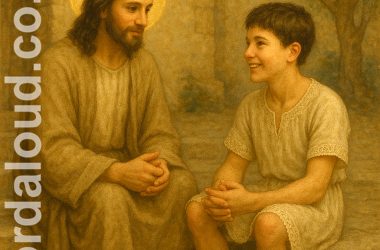
Office Of Readings | Week 14, Sunday, Ordinary Time | A Reading From The Sermons Of Saint Augustine | A Contrite Heart Is A Sacrifice To God
Saint Augustine’s sermon offers a profound meditation on Psalm 51 (‘Miserere mei, Deus’), a penitential psalm attributed to King David after his fall into sin with Bathsheba. In the early Church, Psalm 51 was foundational in catechesis on repentance and featured prominently in the liturgy, especially during Lent. It was often recited or sung by those preparing for baptism or undergoing public penance. By the time Augustine preached this sermon in the late 4th or early 5th century, the Church had already begun to develop a rich theology of repentance that would eventually blossom into the sacrament of confession. Augustine himself was a pivotal figure in shaping the Church’s understanding of the inner dimensions of conversion—a turning not just of actions, but of the heart and will [ … ]
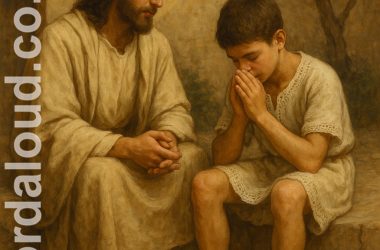
Office Of Readings | Week 13, Saturday, Ordinary Time | A Reading From The Instructions Of Saint Cyril Of Jerusalem To Catechumens | Confess Your Sin
Saint Cyril’s exhortation to catechumens on the cusp of their baptism is both tender and trenchant—a passionate plea for authentic conversion and inward renewal. Saint Cyril’s language, though steeped in fourth-century catechetical formality, rings with timeless clarity: ‘Confess what you have done… if you confess at the acceptable time, you will receive the heavenly treasure.’ The stakes could not be higher, nor the invitation more generous [ … ]
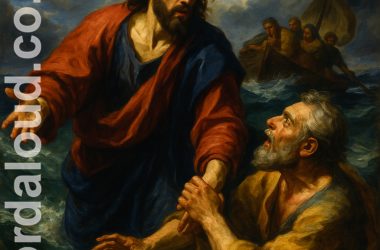
Office Of Readings | Week 13, Friday, Ordinary Time | A Reading From The Book Of Saint Augustine, The Predestination Of The Saints | Jesus Christ, Son Of David According To The Flesh
Saint Augustine draws primarily on Romans 1:3–4, where Saint Paul writes that Jesus was ‘descended from David according to the flesh and declared to be the Son of God in power according to the Spirit of holiness’. For Augustine, these verses encapsulate the mystery of the Incarnation. Jesus Christ, in his humanity, did not become the Son of God by merit, but was predestined to be so from the very moment of his conception by the Holy Spirit in the Virgin Mary [ … ]
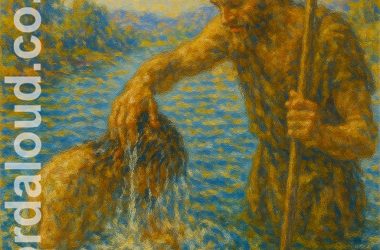
Office Of Readings | Week 13, Thursday, Ordinary Time | A Reading From A Homily Of Saint Jerome On The Newly Baptized
Saint Jerome begins by drawing a direct connection between the deer of the psalm and the newly baptized, freshly emerged from the waters of baptism. The metaphor of thirst is especially apt during this Easter season, when catechumens have completed their Lenten preparation and now experience the fulfilment of their longing in the sacraments. For Jerome, this thirst is not a vague spiritual desire but an acute yearning for the triune God—the Father, the Son, and the Holy Spirit—whom he identifies as the ‘three fountains’ of the Church [ … ]
Office Of Readings | Week 13, Wednesday, Ordinary Time | A Reading From The Way Of Perfection By Saint Teresa Of Avila | Thy Kingdom Come
Saint Teresa wrote during a period of profound spiritual and political upheaval in 16th-century Spain, amidst the Counter-Reformation and a Church in crisis. Her audience included not only cloistered nuns but a wider ecclesial community in need of reform and renewal. Her insight into prayer as intimate conversation with God stemmed from her personal experience of spiritual desolation, ecstatic union, and eventual peace in God. The call for the Kingdom to come ‘in us’ is not abstract: it is grounded in Teresa’s urgent desire that each soul be transformed into a sanctuary where God may reign [ … ]
Office Of Readings | Week 13, Tuesday, Ordinary Time | A Reading From The Sermons Of Saint Augustine | Servant Of Jesus Christ
Saint Augustine begins with what he calls ‘our glory’: the witness of our conscience. Here he draws on Pauline language (2 Corinthians 1:12) to highlight that true moral integrity does not depend on the shifting opinions of others, but on the sincere alignment of heart and action with God’s will. Conscience for Augustine is not a modern autonomous faculty but a God-given echo of divine law, written into the human heart (cf. Confessions X.1.1). It is not infallible — but it is the site of deepest accountability [ … ]
Office Of Readings | Week 13, Monday, Ordinary Time | A Reading From The Sermons Of Saint Augustine | He Is Our God And We Are The Sheep Of His Flock
Saint Augustine opens with a profoundly theological insight: unlike earthly shepherds who receive flocks they did not create, God both made and tends his sheep. This evokes both Genesis and John 1, affirming the Creator as the ongoing sustainer. It also draws on the imagery of Ezekiel 34, where God denounces negligent shepherds and declares: ‘I myself will shepherd my sheep.’ [ … ]
Office Of Readings | Week 13, Sunday, Ordinary Time | A Reading From The Homilies Of Pope Paul VI | We Preach Christ To The Far Ends Of The Earth
The homily draws on the Christological hymn of Colossians 1:15-20, describing Christ as ‘the firstborn of all creation’, the head of the Church, and the one in whom the fullness of God was pleased to dwell. In emphasising that Christ is both ‘the beginning and the end’, Paul VI presents Jesus as the key to understanding human history and the destiny of each person. This is a deeply Pauline theology, with references not only to Colossians but also to Romans 5 and Philippians 2 [ … ]
Office Of Readings | Week 12, Saturday, Ordinary Time | A Reading From The Homilies Of Saint Gregory Of Nyssa On The Beatitudes | God Can Be Found In Man’s Heart
Saint Gregory begins by contrasting superficial knowledge of God with actual participation in God’s life. It is not enough to know about God; we must come to possess Him inwardly. Drawing on the doctrine of the imago Dei (image of God), Gregory teaches that the divine image implanted within us at creation has been tarnished by sin. Yet this image is not destroyed—it can be restored. The human heart, when purified, becomes like a polished mirror capable of reflecting divine light [ … ]
Office Of Readings | Week 12, Friday, Ordinary Time | A Reading From The Homilies Of Saint Gregory Of Nyssa On The Beatitudes | The Hope Of Seeing God
Saint Gregory of Nyssa, of the great Cappadocian Fathers, offers a profound meditation on the beatific vision—the promise that the pure in heart shall see God. His homily explores not only the depth of this promise but the existential and theological tension between divine transcendence and human limitation. As a mystic and theologian, Gregory challenges us to move beyond despair at our weaknesses and embrace the hope made possible by grace [ … ]
Office Of Readings | Week 12, Thursday, Ordinary Time | A Reading From The Homilies Of Saint Gregory Of Nyssa On The Beatitudes | God Is Like An Inaccessible Rock
Saint Gregory takes seriously the words of Matthew 5:8: ‘Blessed are the pure in heart, for they shall see God.’ The Greek term used in the Gospel, katharoi tē kardia, implies not just moral innocence but interior single-heartedness—an undivided orientation toward God. The promise to ‘see’ God (opsontai ton Theon) recalls not physical sight, but the spiritual perception granted to those transformed by grace [ … ]

Office Of Readings | Week 12, Wednesday, Ordinary Time | A Reading From The Treatise Of Saint Aelred On Spiritual Friendship | True And Perfect Friendship | Jesus Christ
Saint Aelred was a 12th-century Cistercian abbot who lived within a spiritual tradition that emphasised both community life and the inner journey to God. His reflections on friendship are deeply shaped by Cistercian ideals of caritas—a love that is disinterested, holy and rooted in the life of Christ. Unlike worldly friendships based on advantage or pleasure, spiritual friendship seeks what is good for the other in God. It is a school of charity, a training ground for grace [ … ]

Office Of Readings | Week 12, Tuesday, Ordinary Time | A Reading From The Treatise Of Saint Gregory Of Nyssa On Christian Perfection | We Must Show Jesus Christ In Our Whole Life
Saint Gregory’s theology is deeply shaped by the Eastern Christian doctrine of theosis, or divinisation. For Gregory, salvation is not merely juridical or moral but ontological: to be saved is to become by grace what Christ is by nature. When Gregory writes that Christians must examine their thoughts, words, and deeds to see whether they are ‘directed toward Christ’, he is describing a dynamic process of transformation. This process, which begins in baptism and continues throughout life, involves increasing conformity to the divine image. In this sense, Christian perfection is not a static achievement but an unending ascent towards God, as expressed in his Life of Moses [ … ]
Office Of Readings | Week 12, Monday, Ordinary Time | A Reading From The Treatise Of Saint Gregory Of Nyssa On Christian Perfection | The Christian Is Another Jesus Christ
Saint Gregory, one of the Cappadocian Fathers and a central figure in fourth-century theology, explores what it means to bear the name ‘Christian’. Drawing heavily from the writings of Saint Paul, he lays out a vision of spiritual transformation in which the believer becomes an ‘alter Christus’ – another Christ [ … ]
Office Of Readings | Week 12, Sunday, Ordinary Time | A Reading From The Treatise Of Faustinus Luciferanus On The Trinity | Jesus Christ Is Priest And King Forever
Writing in a theological climate still shaped by the Arian controversy and the formulation of orthodox Trinitarian doctrine, Saint Faustinus insists upon the unique and eternal status of Christ, who is both anointed by the Holy Spirit and constituted by the Father as the one Messiah. This short treatise not only affirms the dual role of Jesus Christ but also contrasts Christ’s divine anointing with the temporary and hereditary nature of priesthood and kingship in Israel [ … ]
Office Of Readings | Week 11, Saturday, Ordinary Time | A Reading From The Treatise Of Saint Cyprian On The Lord’s Prayer | Prayer Both In Word And In Deed
Saint Cyprian begins by marvelling at the concise and powerful form of the Lord’s Prayer, a summary of all Christian petitions. He references Isaiah to underscore how God’s message is brief yet filled with justice and truth. This is a significant theological point: God’s wisdom is not obscure or elitist. The Lord’s Prayer, taught by Christ himself, is accessible to all – young and old, educated and uneducated. It reflects a democratic grace in Christian spirituality [ … ]
Office Of Readings | Week 11, Friday, Ordinary Time | A Reading From The Treatise Of Saint Cyprian On The Lord’s Prayer | The Peace Of God | We Are God’s Children
Saint Cyprian’s meditation on the Lord’s Prayer provides a vivid theological and pastoral reflection on the condition for receiving divine forgiveness: our own willingness to forgive others. This commentary weaves together profound scriptural insight, liturgical theology, and the early Church’s experience of persecution, showing that divine mercy and ecclesial unity are intimately bound together [ … ]
Office Of Readings | Week 11, Thursday, Ordinary Time | A Reading From The Treatise Of Saint Cyprian On The Lord’s Prayer | We Ask For Bread And Then For Forgiveness Of Sins
This section of Saint Cyprian’s treatise on the Lord’s Prayer turns our attention to the profoundly interconnected petitions: Give us this day our daily bread, and forgive us our trespasses. Cyprian interprets these lines not merely in material or moral terms, but through a rich theology centred on the Eucharist, sin, and salvation [ … ]
Office Of Readings | Week 11, Wednesday, Ordinary Time | A Reading From The Treatise Of Saint Cyprian On The Lord’s Prayer | Thy Kingdom Come, Thy Will Be Done
Saint Cyprian, bishop and martyr of 3rd-century Carthage, continues his reflection on the Lord’s Prayer by turning to its eschatological heart: ‘Thy kingdom come.’ At first glance, this might seem strange—surely God always reigns? Indeed, Cyprian affirms, God’s kingship is eternal. But the petition is not for God’s benefit; it is for ours. We pray not for the beginning of God’s rule, but for the realization of His kingdom in us and for us [ … ]

Office Of Readings | Week 11, Tuesday, Ordinary Time | A Reading From The Treatise Of Saint Cyprian On The Lord’s Prayer | Hallowed Be Thy Name
Saint Cyprian of Carthage, writing in the 3rd century during times of persecution and doctrinal unrest, offers a spiritually profound and pastorally sensitive reflection on the opening petitions of the Lord’s Prayer. His meditation on ‘Hallowed be thy name’ invites us to reflect not only on what we say in prayer, but how we live as those who call God ‘Father’ [ … ]
Office Of Readings | Week 11, Monday, Ordinary Time | A Reading From The Treatise Of Saint Cyprian On The Lord’s Prayer | Our Prayer Is Public And For All
In this portion of his treatise, Saint Cyprian of Carthage underscores the profoundly communal nature of Christian prayer, especially as it is expressed in the Our Father. Writing in the mid-third century amidst persecution and internal divisions, Cyprian offers not only theological reflection but also pastoral guidance on the meaning and practice of unity in prayer [ … ]

Office Of Readings | Week 11, Sunday, Ordinary Time | A Reading From The Treatise Of Saint Cyprian On The Lord’s Prayer | Let Prayer Be Made By A Humble Heart
Saint Cyprian’s reflections on prayer provide a timely reminder of the essential posture a Christian must adopt when approaching God: one of humility, modesty and inward sincerity. He addresses not only the physical form of prayer but the disposition of the heart, drawing together scripture and practice in a coherent and edifying whole [ … ]

Office Of Readings | Week 10, Saturday, Ordinary Time | A Reading From The Discourse Of Saint Ambrose On The Psalms | I Will Sing With The Spirit And I Will Sing With The Mind Also
Saint Ambrose begins his meditation on the Psalms by praising their special role in Scripture: not simply as theological texts, but as a unique blending of prayer, beauty, and doctrine. He writes that a psalm is ‘a blessing on the lips’, ‘a cry of happiness’, and ‘a promise of peace and harmony’. Such language reflects the early Christian sense that the Psalms were the heartbeat of both private devotion and public worship — the school of prayer, to use a phrase echoed by Saint Augustine and, centuries later, by Pope Benedict XVI [ … ]
Office Of Readings | Week 10, Friday, Ordinary Time | A Reading From The Discourse Of Saint Ambrose On The Psalms | The Delightful Book Of The Psalms
Saint Ambrose opens with a sweeping affirmation: though all of Scripture breathes God’s grace, the Book of Psalms possesses a distinctive attractiveness. This is not mere literary charm; it is the fruit of divine inspiration that speaks directly to the human heart. The Psalms do not merely record history or doctrine—they pray, praise, plead, and weep with the reader. They give voice to every spiritual state, forming what Ambrose calls a gymnasium for the soul, a place where each believer can exercise the virtues and train for heaven [ … ]
Office Of Readings | Week 10, Thursday, Ordinary Time | A Reading From The Homilies Of Origen On The Book Of Joshua | The Conquest Of Jericho
Origen’s homily on the conquest of Jericho is far more than a meditation on ancient Israelite warfare. For Origen, the fall of Jericho symbolizes the decisive triumph of Christ over the world, sin, and spiritual blindness. It is a drama of redemption, where the unlikely heroine, Rahab the prostitute, becomes the image of the Church: redeemed, cleansed, and united to Christ [ … ]

Office Of Readings | Week 10, Wednesday, Ordinary Time | A Reading From The Homilies Of Origen On The Book Of Joshua | The Crossing Of The Jordan
This remarkable homily from Origen, one of the most influential theologians of the early Church, invites the Christian to see biblical history not as distant or mythic, but as deeply personal and spiritually present. Drawing on the account of Israel’s miraculous crossing of the Jordan River in the book of Joshua, Origen constructs a rich allegory of Christian initiation, interpreting the Old Testament narrative as a prefiguration of the sacraments and the journey of the soul [ … ]

Office Of Readings | Week 10, Tuesday, Ordinary Time | A Reading From The Letter Of Saint Ignatius Of Antioch To The Romans | Earthly Longings Have Been Crucified
The reading expresses Saint Ignatius’ faith in Jesus Christ as he was escorted to Rome for Christian martyrdom, to be torn apart by wild beasts in the Coliseum. One crucial point of the reading to take away is that Saint Ignatius expresses possible doubt in his own confidence to go through with his martyrdom with courage. He prays that his fellow Christians might support him through prayer to enable him to embrace his witness – his martyrdom – to Jesus Christ and to Christian faith [ … ]
Office Of Readings | Ordinary Time Week 10, Monday | A Reading From The Letter Of Saint Ignatius Of Antioch To The Romans | Christian Witness | Martyrdom
This deeply moving letter from Saint Ignatius of Antioch, composed on his journey to martyrdom in Rome around AD 107, is one of the earliest and most passionate testimonies to Christian witness through suffering. Ignatius, the bishop of Antioch and a disciple of the Apostle John, wrote this letter to the Christian community in Rome to plead that they not intervene in preventing his execution. Far from fearing death, he embraces it as the culmination of his discipleship in Christ. The letter is both a theological reflection and a spiritual testament on martyrdom, discipleship, and union with Christ [ … ]
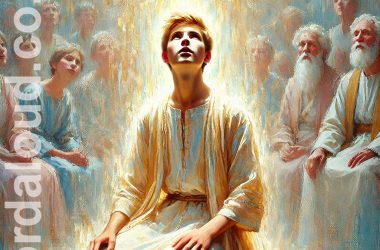
Office Of Readings | Pentecost | A Reading From The Treatise Of Saint Irenaeus Against The Heresies | The Sending Of The Holy Spirit
This passage from Saint Irenaeus’ Against the Heresies provides a foundational second-century witness to the Church’s understanding of Pentecost, the role of the Holy Spirit, and the renewal of humanity through divine grace. Writing in a time when the Church faced doctrinal challenges—particularly from Gnostic sects that denied the goodness of creation—Irenaeus offers a vision of salvation that is incarnational, communal, and cosmic in scope [ … ]