
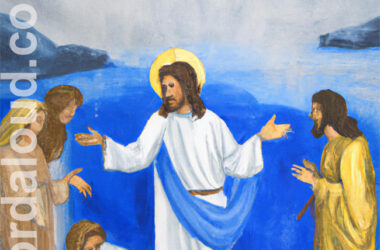
Saint Hilary reflects on the image of the river that gladdens the city of God, drawing together scriptural references to show that the river signifies the Holy Spirit. From the psalmist’s imagery of abundant waters, through Christ’s words in John’s Gospel, the Spirit is described as a source of life flowing from God into believers. The fullness of the river expresses the superabundance of divine gifts: the Spirit is not given sparingly but floods the Church with grace [ … ]
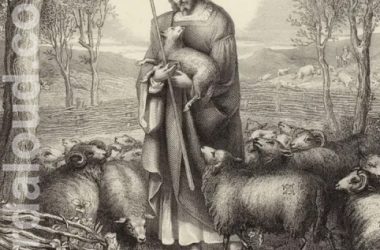
Office Of Readings | Week 25, Friday, Ordinary Time | From The Sermon Of Saint Augustine On The Shepherds | All Good Shepherds Are One In The One True Shepherd
Saint Augustine reflects on Christ’s words: ‘My sheep hear my voice and follow me.’ From this, he draws the principle that all true shepherds are united in Christ, the one true shepherd. Individual pastors do not act independently, for their voice is authentic only when it is the voice of Christ speaking through them. Unity is therefore essential: the many who share in Christ’s ministry form one in him, since division would contradict the reality of the one flock [ … ]
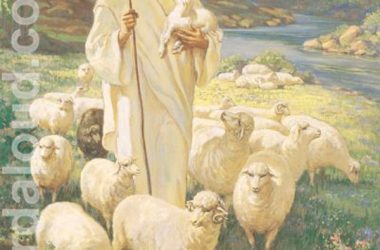
Office Of Readings | Week 25, Thursday, Ordinary Time | From The Sermon Of Saint Augustine On The Shepherds | I Will Feed My Sheep In Good Pastures
Saint Augustine reflects on the divine promise from Ezekiel: ‘I shall feed my sheep.’ He interprets the mountains of Israel as the sacred authors of Scripture, whose writings provide the true and safe nourishment of the flock. For Augustine, the faithful are to graze on these pastures by listening to the Word of God. Teachings that accord with Scripture are to be received; teachings that diverge from it must be rejected. This safeguards the flock from error and ensures that the food they consume is wholesome [ … ]

Office Of Readings | Week 25, Wednesday, Ordinary Time | From The Sermon Of Saint Augustine On The Shepherds | Do What They Say, Not What They Do
Saint Augustine addresses the duty of pastors to speak the truth even when that truth provokes resistance, and he warns the flock to distinguish between authoritative teaching and faulty example. He draws on Ezekiel’s imagery of negligent shepherds and on the watchman motif (Ezekiel 3:17–21): a pastor who fails to warn sinners bears responsibility for their ruin; a pastor who speaks the prophetic word but the people ignore it has done his duty [ … ]
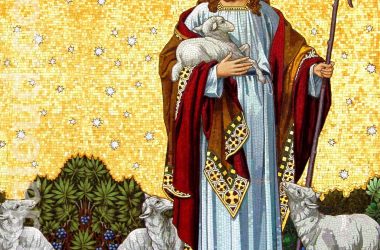
Office Of Readings | Week 25, Tuesday, Ordinary Time | From The Sermon Of Saint Augustine On The Shepherds | The Church, Like A Vine, Growing And Spreading Everywhere
Saint Augustine reflects on Ezekiel’s image of scattered sheep and applies it to the life of the Church. Scattering is linked to pride, which leads individuals to pursue earthly goods rather than finding their life ‘buried in Christ’. Pride isolates, generating division and self-concern, while love unites through communion in the Church. The Church, as mother and shepherd, responds by seeking out the lost, binding up the weak, and maintaining unity across the whole world [ … ]
Office Of Readings | Week 25, Monday, Ordinary Time | From The Sermon Of Saint Augustine On The Shepherds | Be Urgent In Season, Out Of Season
Saint Augustine confronts the pastor’s duty to seek those who stray and to call back the lost, even when that task is resisted or resented. He frames the obligation in stark terms: sheep wander; wolves and robbers threaten; the shepherd must go after the weak and the scattered. The passage presses a practical point about pastoral courage. The preacher must ‘preach the word; insist upon it’ (cf. 2 Timothy 4:2) whether the hearers welcome or reject it [ … ]
Office Of Readings | Week 25, Sunday, Ordinary Time | From The Sermon Of Saint Augustine On The Shepherds | On Weak Christians
Saint Augustine continues his reflection on Ezekiel 34 and the charge against negligent shepherds. The Lord’s accusation—’You have failed to strengthen the weak’—is interpreted in relation to two categories of believers: the weak and the sick. Augustine distinguishes between the two. The weak are those who sincerely wish to live a good life and even attempt good works, but lack the endurance to withstand trials. Their danger is not wrongdoing but fragility under pressure. The sick, by contrast, are those weighed down by sinful desires that prevent them from doing good at all [ … ]
Office Of Readings | Week 24, Saturday, Ordinary Time | From The Sermon Of Saint Augustine On The Shepherds | Offer The Bondage Of Consolation
Saint Augustine develops his teaching on pastoral responsibility by focusing on how shepherds should address the realities of suffering and temptation in the Christian life. He begins with the principle from Hebrews 12:6: “God chastises every son whom he acknowledges.” This verse provides both warning and reassurance: chastisement is not a sign of rejection but of belonging, since even Christ, though sinless, endured suffering in the flesh. By sharing in discipline, the faithful are confirmed as adopted children of God and coheirs with Christ [ … ]
Office Of Readings | Week 24, Friday, Ordinary Time | From The Sermon Of Saint Augustine On The Shepherds | Prepare Your Soul For Temptation
Saint Augustine continues his critique of negligent shepherds by focusing on what they fail to provide for the flock. The concern here is not only with material exploitation, but with a more fundamental dereliction: the refusal to prepare believers for the trials that accompany the Christian life [ … ]
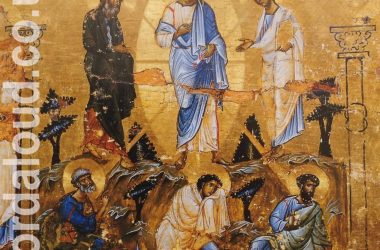
Office Of Readings | Week 24, Thursday, Ordinary Time | From The Sermon Of Saint Augustine On The Shepherds | Be A Model For The Faithful
Saint Augustine turns to the destructive power of bad example. Having already examined how negligent shepherds fail to feed or protect their flock, he now shows that their own behaviour can actively corrupt those they lead. Pastors are not only teachers by their words but also models by their lives. When their conduct contradicts the Gospel, they undermine the faith of the strong and damage the weak [ … ]
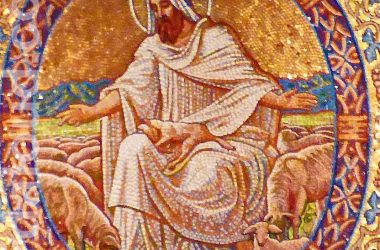
Office Of Readings | Week 24, Wednesday, Ordinary Time | From The Sermon Of Saint Augustine On The Shepherds | Let Each One Seek Not What Is His But What Is Jesus Christ’s
Saint Augustine continues his interpretation of the prophet Ezekiel’s condemnation of negligent shepherds (Ezekiel 34). His focus now turns from ‘milk’ to ‘wool’, using these images to explore the dangers of pastors seeking their own comfort and honour rather than Christ’s glory and the good of the flock [ … ]
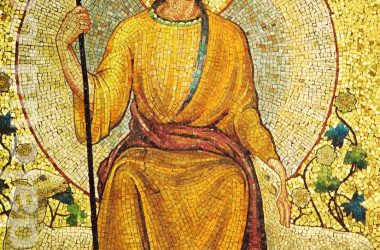
Office Of Readings | Week 24, Tuesday, Ordinary Time | From The Sermon Of Saint Augustine On The Shepherds | Paul’s Example
In his sermon, Saint Augustine turns again to the responsibilities of Christian pastors, drawing his example from the Apostle Paul. The passage is shaped by Paul’s words in his letter to the Philippians (Philippians 4:10–20), written from prison, in which he acknowledges the gifts sent by the community. Augustine highlights Paul’s dual emphasis: while grateful for material help, Paul’s deeper joy lies in the spiritual fruit shown by the generosity of the Philippians [ … ]
Office Of Readings | Week 24, Monday, Ordinary Time | From The Sermon Of Saint Augustine On The Shepherds | Shepherds Feeding Themselves
Saint Augustine reflects on Ezekiel 34, where God condemns unfaithful shepherds who exploit the flock for their own benefit while neglecting their pastoral duties. The text distinguishes between the shepherds’ concern for themselves and their neglect of the sheep. The imagery of consuming milk and wearing wool symbolises the material benefits that leaders receive from their communities. These are not illegitimate in themselves, as Paul’s writings indicate, but they become corrupt when they are detached from genuine pastoral care [ … ]
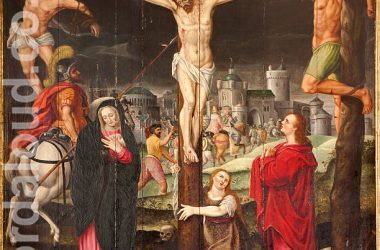
Office Of Readings | Exaltation Of The Holy Cross | A Reading From The Homilies Of Saint Andrew Of Crete | The Glory And Exaltation Of Christ Is The Cross
Saint Andrew of Crete describes the Cross as both the lowest point of human suffering and the highest point of divine action. He frames the Cross as the moment in which apparent defeat is revealed as the means of victory, and where humiliation becomes the setting of glory. This tension is already present in the New Testament: Paul declares that the Cross is ‘foolishness’ to the world yet the ‘power of God’ for salvation (1 Corinthians 1:18), while John’s Gospel presents the crucifixion as the very moment of Christ’s exaltation (John 12:23–32) [ … ]
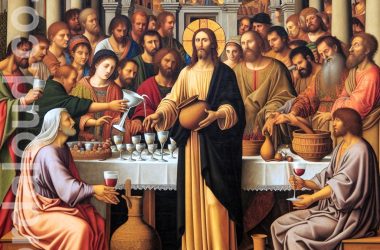
Office Of Readings | Week 24, Sunday, Ordinary Time | The Beginning Of The Sermon Of Saint Augustine On The Shepherds | We Are Christians And Appointed Leaders
Saint Augustine opens his sermon on pastors with a reflection that sets out the responsibilities of Christian leadership within the Church. He begins by affirming that Christ alone is the true Shepherd, the source of salvation and hope. The faithful are his flock, and all pastors serve only in relation to Christ’s own care [ … ]
Office Of Readings | Week 23, Friday, Ordinary Time | A Reading From The Sermons Of Blessed Isaac Of Stella | Without The Church, Jesus Christ Will Not Forgive
Blessed Isaac of Stella reflects on the close unity between Christ and the Church, especially in relation to the forgiveness of sins. He begins by affirming that two things belong to God alone: the right to receive confession and the power to forgive. Yet, he immediately links this divine prerogative with the mystery of Christ’s union with his bride, the Church [ … ]
Office Of Readings | Week 23, Thursday, Ordinary Time | A Reading From The Commentary Of Saint Bruno On the Psalms | If I Forget You, O Jerusalem
Saint Bruno reflects on the longing expressed in Psalm 84[83]: ‘How lovely are your tabernacles, O Lord of hosts.’ He interprets this not only as a reference to the Temple of Jerusalem but as pointing beyond it to the heavenly Jerusalem, the eternal dwelling place of God. For Bruno, the psalmist’s desire is ultimately for the courts of heaven, where blessedness consists in unending praise of God [ … ]
Office Of Readings | Week 23, Wednesday, Ordinary Time | A Reading From The Sermons Of Saint Bernard | On Degrees Of Contemplation
Saint Bernard describes contemplation as a gradual ascent, moving from self-knowledge to the knowledge of God. His framework reflects a well-established monastic tradition of distinguishing between different stages of prayer: meditation, self-examination, contrition, and finally contemplation [ … ]

Office Of Readings | Week 23, Tuesday, Ordinary Time | A Reading From The Sermons Of Saint Bernard | I Will Take My Stand To Watch And See What The Lord Will Say To Me
Saint Bernard reflects on the challenge of listening to Christ’s words and persevering in discipleship. He recalls the moment in John’s Gospel when some of Jesus’ followers turned away because they could not accept his teaching about the Eucharist (John 6:60–69). This becomes for Bernard a symbol of the two possible responses to God’s word: some recognise it as spirit and life, others find it hard and seek consolation elsewhere [ … ]
Office Of Readings | Week 23, Monday, Ordinary Time | A Reading From The Sermon Of Pope Saint Leo The Great On The Beatitudes | Great Peace Have Those Who Love Your Law
In his discussion of the beatitudes, Leo Saint Leo the Great moves from the promise made to the pure of heart (‘they shall see God’) to the blessing of the peacemakers (‘they shall be called sons of God’ Matthew 5:9). He links the two by noting that only a purified heart can receive the vision of God without pain, for the divine light that consoles the pure would be torment for those who cling to sin. The cleansing of the soul, therefore, prepares for both vision and peace [ … ]
Office Of Readings | Week 23, Sunday, Ordinary Time | A Reading From The Sermon Of Pope Saint Leo The Great On The Beatitudes | Christian Wisdom
Pope Saint Leo the Great moves from Christ’s blessing on the meek to those beatitudes pronounced on those who ‘hunger and thirst for righteousness’ (Matthew 5:6), the merciful (v.7), and the pure of heart (v.8). His reflection reveals the interconnectedness of these dispositions, which together form a path of Christian wisdom [ … ]
Office Of Readings | Week 22, Saturday, Ordinary Time | A Reading From The Sermon Of Pope Saint Leo The Great On The Beatitudes | Happiness Of Christ’s Kingdom
Pope Saint Leo the Great continues his exposition of the Beatitudes, moving from the blessing on the poor in spirit to those pronounced on those who mourn and on the meek (Matthew 5:4–5). His reflections trace both the inner character of these dispositions and their eschatological fulfilment [ … ]
Office Of Readings | Week 22, Friday, Ordinary Time | A Reading From The Sermon Of Pope Saint Leo The Great On The Beatitudes | Blessed Are The Poor In Spirit
Pope Saint Leo the Great’s exposition of the first Beatitude, ‘Blessed are the poor in spirit, for theirs is the kingdom of heaven,’ (Matthew 5:3) sets poverty of spirit in relation to both material poverty and spiritual detachment. His reflection is situated within the wider Christian tradition that viewed the Beatitudes as the programme of the Christian life, and particularly as an introduction to the Sermon on the Mount [ … ]

Office Of Readings | Week 22, Thursday, Ordinary Time | The Beginning Of The Sermon Of Pope Saint Leo The Great On The Beatitudes | I Will Put My Law Within Them
Pope Saint Leo the Great situates the Sermon on the Mount within the wider pattern of salvation history. Christ’s ministry begins with acts of physical healing that attract crowds, but these serve as a preparation for his deeper teaching. The miracles are signs intended to draw attention to the doctrine that heals the soul. Thus, Leo highlights the shift from outward cures to inward remedies, presenting Christ as both healer of the body and physician of the heart [ … ]
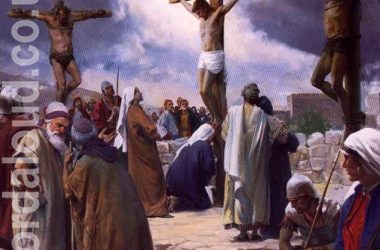
Office Of Readings | Week 22, Wednesday, Ordinary Time | A Reading From The Commentary Of Origen On Saint John’s Gospel | Christ Spoke Of The Temple Of His Body
Origen’s reflection on Jesus’ words in John’s Gospel, ‘Destroy this temple and in three days I will raise it up,’ (John 2:19) draws together several layers of meaning. At the literal level, Jesus refers to the temple in Jerusalem, a central symbol of Israel’s covenant with God. Yet Origen, following John’s own interpretation (John 2:21), sees that Jesus is ultimately speaking of his own body, which would be destroyed in death and raised in resurrection [ … ]
Office Of Readings | Week 22, Tuesday, Ordinary Time | A Reading From The Imitation Of Christ | The Truth Of The Lord Endures For Ever
In this reading, the soul is brought face to face with the reality of divine judgement. The author begins with a description of God’s holiness and majesty in contrast to human frailty: ‘even the heavens are not pure in your sight.’ This recalls the words of Job’s friend Eliphaz: ‘Behold, God puts no trust in his holy ones, and the heavens are not pure in his sight.’ (Job 15:15) The implication is that if even angels are judged, mortals cannot presume on their own strength or goodness [ … ]
Office Of Readings | Week 22, Monday, Ordinary Time | A Reading From The Imitation Of Christ | I Have Taught My Prophets
The reading, presented as the voice of Christ addressing the disciple, reflects the central themes of The Imitation of Christ — listening to God’s word with humility, preferring eternal truth over temporal vanities, and persevering in faith through both trials and consolations [ … ]
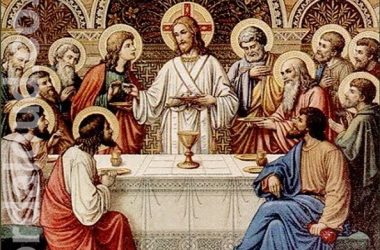
Office Of Readings | Week 22, Sunday, Ordinary Time | A Reading From The Sermons Of Saint Augustine | The Lord Has Had Mercy On Us
Saint Augustine’s sermon explores the relationship between divine grace and human works. He begins by stressing the importance of living according to what is heard and sung in worship: the word of God should not only be received but should bear fruit in deeds. Hearing is like planting a seed, but only action demonstrates that the seed has grown [ … ]
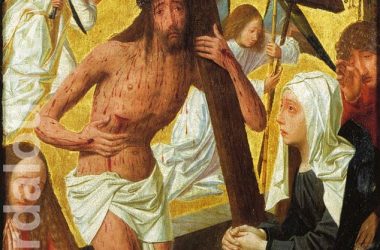
Office Of Readings | Week 21, Saturday, Ordinary Time | A Reading From The Homilies Of Saint John Chrysostom | Do Not Adorn The Church And Ignore Your Afflicted Brother
Saint John Chrysostom, preaching in the late fourth century, sets out a contrast between external honour given to Christ in the liturgy and the practical demands of charity. His central argument is that Christ’s body is not only present in the Eucharist but also in the poor, the hungry, the imprisoned, and the stranger. To neglect the afflicted while adorning the sanctuary is to dishonour Christ himself [ … ]
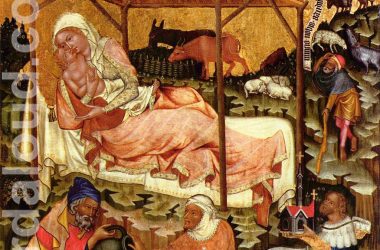
Office Of Readings | Week 21, Friday, Ordinary Time | A Reading From The Commentary Of Saint Jerome On The Book Of Joel | Return To Me With All Your Heart
Saint Jerome’s reflection on Joel 2:12–18 draws attention to the biblical theme of repentance, particularly the inward transformation of the heart. Joel’s summons, ‘Return to me with all your heart,’ is not merely a call to external practices such as fasting, mourning, or tearing garments, but to a conversion of the interior self. Jerome insists that the rending of garments, a traditional sign of grief in the ancient world, must be replaced by the rending of the heart. This aligns with prophetic teaching elsewhere in the Old Testament, where God prefers inward change over ritualistic displays (cf. Hosea 6:6; Amos 5:21–24) [ … ]
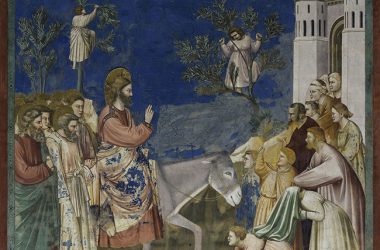
Office Of Readings | Week 21, Thursday, Ordinary Time | A Reading From The Instructions Of Saint Columban | You Are All Things To Us, O God
Saint Columban continues his meditation on Christ as the fountain of life, drawing together biblical imagery from the prophets, the Psalms, and the Gospel of John. The text highlights the central Christian conviction that God is the source of all that sustains life, both physical and spiritual [ … ]
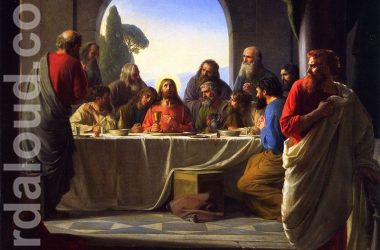
Office Of Readings | Week 21, Wednesday, Ordinary Time | A Reading From The Instructions Of Saint Columban | Taste And See The Goodness Of The Lord
Saint Columban (c. 543–615) was an Irish monk and missionary whose work helped to shape early medieval monasticism in continental Europe. His writings, including sermons and monastic rules, reveal a spirituality that is both ascetic and deeply scriptural. The passage we have today develops a theme central to his teaching: the inexhaustible desire for Christ as the fountain of life and bread of life [ … ]
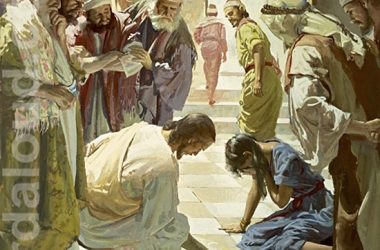
Office Of Readings | Week 21, Tuesday, Ordinary Time | A Reading From The Homilies Of Saint John Chrysostom | Temptations Of The Devil | Paths Of Repentance
In this passage, Saint John Chrysostom sets out five distinct ‘paths’ by which Christians may repent of sin. His approach is notable for its simplicity and accessibility. He does not treat repentance as a single act confined to sacramental confession or to extraordinary ascetical practice, but as a set of daily habits open to every believer, regardless of wealth or circumstance [ … ]
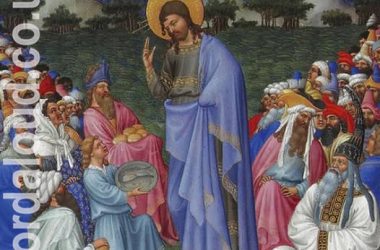
Office Of Readings | Week 21, Monday, Ordinary Time | A Reading From Commentary Of Saint Thomas Aquinas On Saint John’s Gospel | The Remnant Of Israel Shall Be Fed
Saint Thomas Aquinas meditates on Christ’s self-revelation as the Good Shepherd (John 10:11). This image, deeply rooted in Scripture, conveys both pastoral care and sacrificial love. It recalls the Old Testament tradition of God as shepherd of Israel (e.g. Ps 23:1; Ez 34:11–16) and the prophetic promise that God would raise up faithful shepherds after His own heart (Jer 3:15) [ … ]
Office Of Readings | Week 21, Sunday, Ordinary Time | A Reading From The Second Vatican Council’s Pastoral Constitution ‘Gaudium Et Spes’ On The Church In The Modern World
This passage from the Second Vatican Council’s Pastoral Constitution on the Church in the Modern World (Gaudium et spes) situates Christian hope within both the temporal and eternal dimensions of human existence. It speaks of the transformation of the universe, the destiny of humanity, and the relationship between earthly progress and the kingdom of God [ … ]
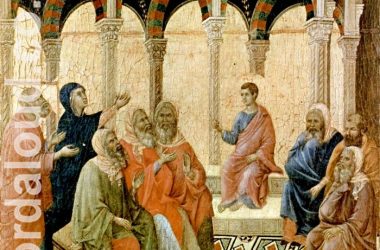
Office Of Readings | Week 20, Saturday, Ordinary Time | A Reading From The Discourses Of Saint Ambrose On The Psalms | Through His Blood, Jesus Christ Reconciled The World To God
Saint Ambrose of Milan continues his exposition of the psalms by dwelling on the theme of Jesus Christ as the universal reconciler. His reflection builds on two interconnected truths: the sinlessness of Christ and the all-sufficiency of his sacrifice [ … ]
Office Of Readings | Week 20, Friday, Ordinary Time | A Reading From The Discourses Of Saint Ambrose On The Psalms | The Man Christ Jesus, The One Mediator Between God And Men
Saint Ambrose of Milan (c. 340–397), one of the Latin Fathers of the Church, offers in this commentary a theological reflection on Psalm 49(48), where it is written: ‘Brother cannot redeem brother, nor give to God a ransom for him’ (Ps 49:7). Ambrose interprets this in light of Christ’s unique role as Redeemer, contrasting human limitation with divine sufficiency [ … ]

Office Of Readings | Week 20, Thursday, Ordinary Time | A Reading From A Sermon Of Saint Baldwin Of Canterbury, Bishop | A Flower Grew Up From The Root Of Jesse
Saint Baldwin of Canterbury (d. 1190), a Cistercian monk and later Archbishop of Canterbury, draws together Scripture, liturgy, and devotion in a meditation on Christ as the fruit of Mary’s womb. His sermon situates Marian devotion firmly within Christology: honouring the Virgin leads directly to contemplation of her Son [ … ]